Why the AI Stock Drop Could Help Small Caps

What Is Happening with Big Tech and AI Stocks?
High-flying artificial intelligence (AI) stocks have dominated market headlines for months. However, recent trading moves suggest that a broader shift might be taking place across the financial landscape.
A major chip-focused exchange-traded fund (ETF) recently closed nearly 14% below its October high. At the same time, semiconductor stocks suffered an eight-session losing streak—marking a 16-year record for consecutive declines.
This extended slide has sparked intense debate among Wall Street analysts. Many investors are now questioning whether the AI stock bubble is beginning to crack under macroeconomic pressures.
Why Falling Tech Stocks Could Help the Wider Economy
You might naturally wonder how a drop in major tech stocks could benefit anyone else. According to Richard Bernstein, global head of macro at Janus Henderson, it comes down to how money gets allocated across the market.
In a recent CNBC interview, Bernstein explained that huge amounts of cheap capital have poured into the AI data center industry. Meanwhile, traditional non-tech businesses faced much tighter funding conditions.
"If valuations adjust across the rest of the market, borrowing becomes cheaper for the wider economy."
When speculative tech valuations reprice downward, capital can flow back toward traditional businesses. This shift helps lower borrowing costs for smaller firms that were previously crowded out by Wall Street's focus on mega-cap tech.
Small Caps and the Repricing of Corporate Capital
Small-cap stocks offer an early look at how this transition could unfold. Smaller companies rely heavily on short-term credit, making them very sensitive to moves in borrowing costs.
Recently, small-cap indexes saw gains over several consecutive sessions as long-term interest rates began to fall. Lower interest rates help ease debt maintenance costs for these businesses.
However, the overall picture remains mixed. As the CNBC host noted during the interview, small-cap indexes were still down overall for the week despite those short-term rallies.
In addition, credit default swap (CDS) spreads—a key indicator used to measure corporate default risk—have widened. This widening indicates that investors still maintain doubts about broader corporate earnings growth.
Federal Reserve Tightening and Sticky Inflation
A major driving force behind these market adjustments is the Federal Reserve. The U.S. central bank raised its benchmark interest rate by a quarter point (0.25%) on September 16, marking its first interest rate hike since 2023.
While many market participants expect the Fed to pull off just a single rate increase, Bernstein firmly rejects that outlook.
He points to recent economic reports as proof of an ongoing inflation issue. Recent readings for consumer, producer, and import prices all came in hotter than expected.
In fact, core import prices are currently rising faster than core consumer prices. This flips a key macroeconomic trend that had remained consistent for the past 30 years.
"The United States is now importing inflation."
Are Markets Signaling Recession Concerns?
As persistent inflation strains households, market performance across different sectors is beginning to shift. Consumer staples—companies that manufacture essential everyday goods—have started to perform slightly better.
Bernstein interprets this rotation into defensive assets as a sign that subtle recession concerns are entering investor psychology.
Other market commentators express similar concern. Economist Peter Schiff argues that a majority of U.S. equities are already experiencing a bear market behind the scenes.
Goldman Sachs data supports this observation. Their findings reveal that the median stock in the S&P 500 index is currently trading 16% below its recent peak, even if headline indexes appear resilient.
Looking Ahead: Finding Market Leadership Outside Big Tech
If overall market conditions favor broader participation over concentrated mega-cap gains, AI infrastructure and tech stocks could face continued headwinds.
Bernstein acknowledges that a broader economic rebalancing might not immediately benefit data center operators or giant tech firms.
Still, he expects long-term investment opportunities over the coming years to emerge outside the narrow tech leadership that defined the past two to three years.
Investors navigating these shifts should keep in mind that past market trends and asset returns do not guarantee future performance. Economic environments can change quickly based on central bank decisions and global economic factors.
Latest blog posts


XRP Ledger Prepares Bug Fixes for New Lending System
XRP Ledger validators are voting on critical software fixes for an institutional lending feature before it officially launches.
|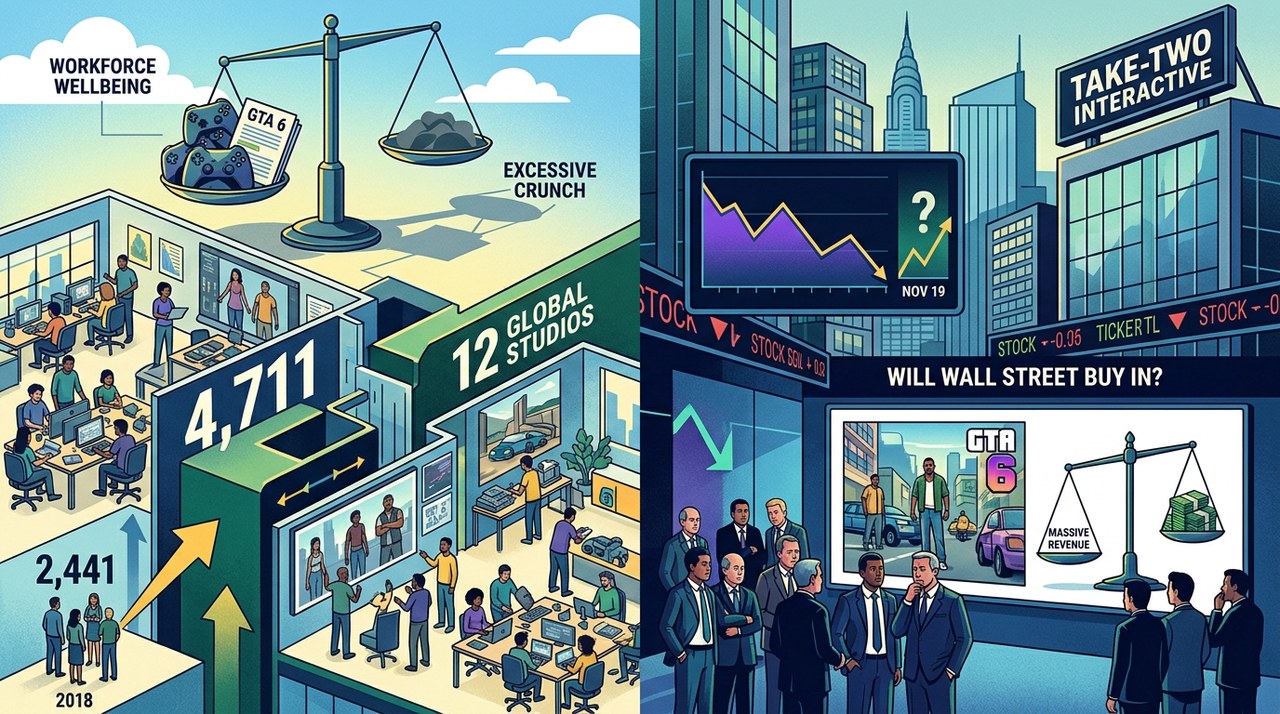
Rockstar's GTA 6 Overhaul: Will Wall Street Buy In Nov 19?
Rockstar Games doubled its team and revamped studio culture for GTA 6. Here is how Take-Two's financial goals and launch plans stack up.

Could the Fed Hike Rates Earlier Than Markets Expect?
Financial expert Ben Emons suggests the Federal Reserve might raise interest rates before December, driven by sticky inflation rather than political elections.