


Shiba Inu Supply Drops as Reserves Eye 86 Trillion
What Is Happening with Shiba InuSHIB-0.16% Exchange Reserves?
If you have been keeping an eye on Shiba Inu (SHIB), you might have noticed a shift in how tokens are moving around. After experiencing weeks of sharp price swings and heavy selling pressure, the market is showing signs of a subtle shift.
Recent on-chain data shows that traders are steadily pulling their SHIB tokens off centralized exchanges. Right now, total exchange reserves sit at around 87.06 trillion SHIB, following a 0.1% decline over a 24-hour period.
Market analysts note that if this outflow trend continues, total reserves sitting on exchanges could soon drop down toward the 86 trillion SHIB threshold.
Understanding Exchange Netflows: A Simple Analogy
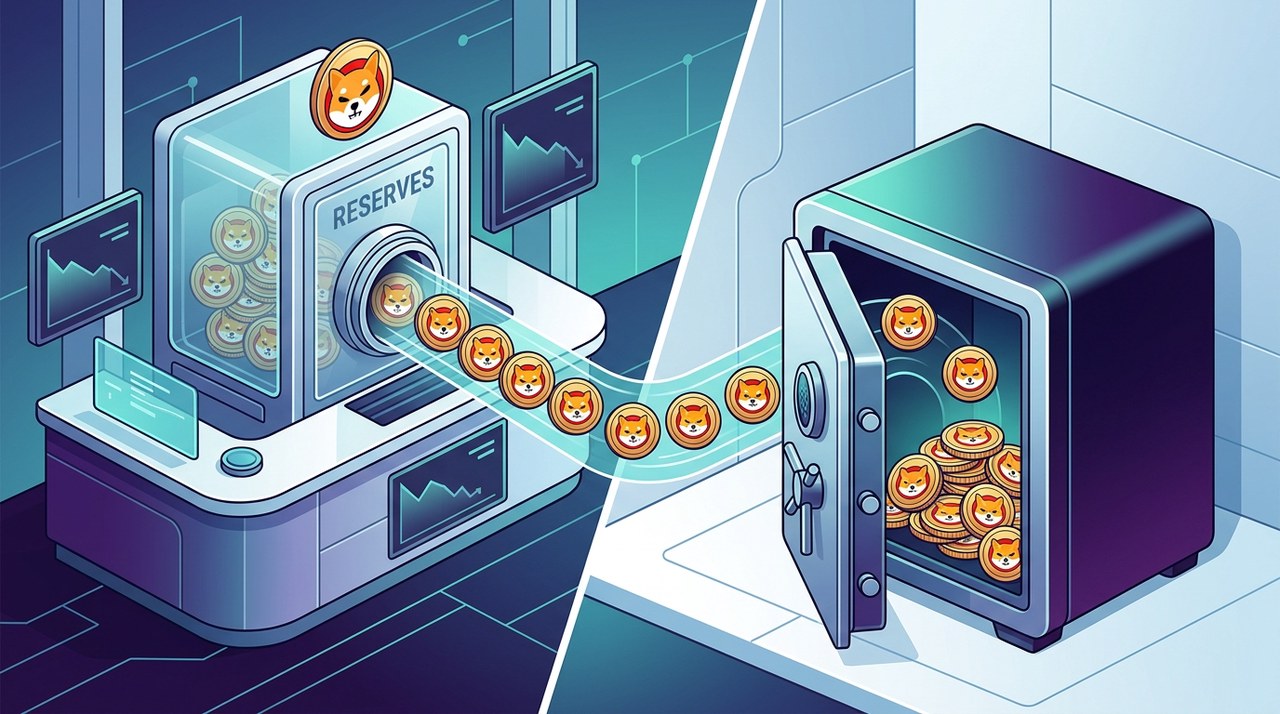
To make sense of these large numbers, it helps to imagine a crypto exchange like a store display counter.
When tokens sit on an exchange counter, they are ready to be traded or sold instantly. When traders move tokens off exchanges into private wallets, it is like taking items off the shelf and storing them in a personal safe at home.
Recently, SHIB recorded a negative exchange netflow of 33.94 billion SHIB, reflecting a 1.25% drop in netflows over the last day.
In simple terms, a negative netflow means more tokens left exchanges than entered them. This indicates that holders are choosing to keep their tokens put rather than listing them for sale.
What Does This Mean for the Price of SHIB?
It is easy to look at shrinking exchange supplies and assume prices will shoot up right away. However, market trends depend on multiple factors beyond exchange balances.
A drop in exchange reserves mainly signals that immediate sell-side pressure is easing. It suggests buyers are stepping in to accumulate tokens during price dips, but future price action will depend on overall demand.
Here is a realistic look at how different market scenarios could play out:
- Bullish Scenario: If buyer demand continues to grow while reserves drop toward 86 trillion SHIB, lower selling pressure could help spark upward price momentum over time.
- Bearish Scenario: If broader crypto market conditions turn negative or major holders decide to dump tokens back onto exchanges, SHIB could face downward price movements despite current outflows.
- Sideways Scenario: If trading volume remains low, the token might consolidate and trade within a stable range without dramatic moves in either direction.
Past performance of digital assets is not an indicator of future returns. You can view updated real-time market data anytime at bitkub.com.
Other Key Activity in the Shiba Inu Ecosystem
Token reserves on exchanges are not the only metric moving right now. Token burns also continue to play a key role in community discussions.
Blockchain trackers reported that approximately 152 million SHIB tokens were recently sent from Coinbase to unspendable dead wallets. Burning permanently removes tokens from the circulating supply.
At the same time, the wider altcoin market experienced notable movements, with tokens like Dogecoin (DOGEDOGE+0.16%), UniswapUNI+1.16%, and EthereumETH+0.35% showing price recoveries, alongside broader industry updates such as Bitwise holding over half a billion XRPXRP+1.00%.
The Bottom Line for Crypto Observers
Tracking exchange inflows and outflows provides great context on trader behavior. While shrinking reserves suggest that selling pressure is cooling off, smart investors always look at the full picture—including general market sentiment and macroeconomic trends—before making decisions.
Latest blog posts


US Imports Bitcoin While Exporting Digital Dollars: Here's Why
A new Chainalysis report reveals US institutions are accumulating Bitcoin while the rest of the world relies on dollar-backed digital assets.
|

Black Monday Explained: Will Wall Street Crash on Oct 19?
Traders are buzzing about Black Monday as October 19 approaches. Here is the history, current market fears, and what it means for Bitcoin.
|