
Ripple CEO: XRP Can Power a 24/7 Internet of Value
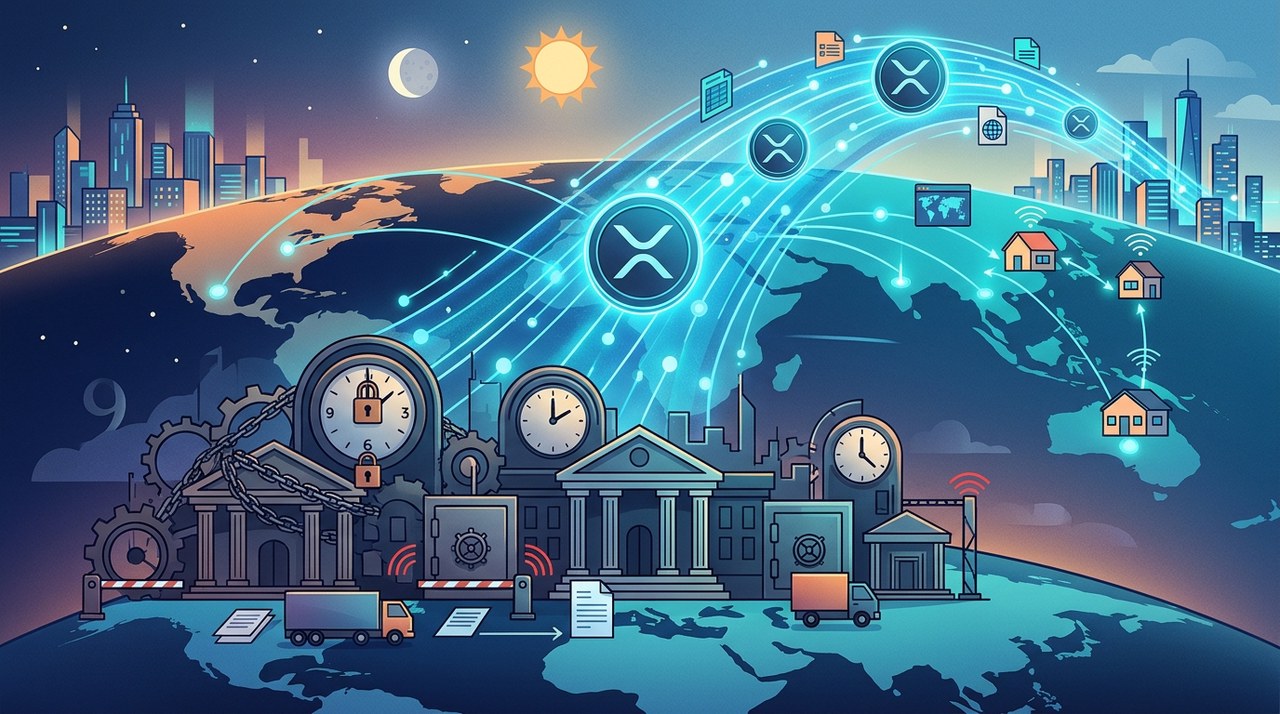
Why the 9-to-5 Financial System Is Behind the Times
Have you ever wondered why you can stream a live video from across the world in a fraction of a second, but sending money to another country can still take several business days? In an interconnected digital world, legacy banking hours feel like a relic from another era.
Speaking at the annual RippleXRP-0.29% Swell conference in New York on Wednesday, Ripple Chief Executive Officer Brad Garlinghouse highlighted this exact frustration. He pointed out that the modern global economy no longer operates on a traditional nine-to-five schedule.
Today, people and businesses operate around the clock. Garlinghouse emphasized that users expect their money and assets to travel across borders with the exact same speed, freedom, and flexibility that defines their daily lives.
What Is the 'Internet of Value'?
To understand the vision Garlinghouse laid out, it helps to compare money movement to how data travels on the internet today.
When you send an email or post a message online, it travels instantly anywhere in the world. It does not matter if it is midnight on a Sunday or a public holiday. Information moves seamlessly, continuously, and at virtually zero cost.
"Garlinghouse said users expect their assets to travel across borders with the same speed and flexibility as their daily lives, placing XRP at the center of this transition."
The phrase Internet of Value describes a world where value—whether it is fiat currency, digital assets, or loyalty points—moves as effortlessly as information moves on the web today. In this vision, financial settlement happens instantly, 24 hours a day, 7 days a week, and 365 days a year.
How Traditional Banking Creates Friction
To see why Ripple is advocating for a new approach, we can look at how traditional cross-border payments currently function through legacy networks like SWIFT.
When a payment travels internationally through legacy rails, it often moves through a long chain of intermediary banks. Each bank in the chain must verify and process the transaction during its local working hours.
- Strict operating hours: Legacy banks close on weekends and national holidays, creating long settlement delays.
- High intermediary fees: Every bank in the transaction routing chain takes a processing cut.
- Trapped liquidity: Financial institutions must keep pre-funded accounts (Nostro/Vostro) filled with local foreign currency around the world.
- Processing errors: Manual handoffs and outdated software often lead to delays or failed transfers.
These inefficiencies add significant friction and costs for international trade, small businesses, and individuals sending remittances back home to their families.
How XRP Functions as a Liquidity Bridge
At the core of Garlinghouse’s message is how digital assets like XRP can eliminate these structural roadblocks.
Instead of requiring banks to tie up billions of dollars in foreign currency accounts worldwide, Ripple uses XRP on the XRP Ledger (XRPL) to serve as a bridge currency between different fiat moneys.
- A sender in the United States initiates a transfer in US Dollars (USD).
- The USD is instantly converted into XRP on an exchange or payment gateway.
- XRP travels across the XRP Ledger, settling in 3 to 5 seconds.
- The XRP is converted into the destination currency (such as Japanese Yen) and deposited directly into the recipient's account.
This automated bridging process slashes transaction times from days to seconds while drastically lowering operational costs.
Key Takeaways from Ripple Swell in New York
The annual Ripple Swell conference brings together corporate executives, banking leaders, fintech founders, and regulators from across the globe to talk about the future of finance.
During his key remarks in New York on Wednesday, Garlinghouse made it clear that financial infrastructure must evolve alongside global consumer demands. Businesses operate globally every single hour of the day, and payments infrastructure must keep pace.
Balanced Perspective: Opportunities and Real-World Risks
While a 24/7 instant payment network offers undeniable convenience, it is important to examine both the potential benefits and the inherent risks of blockchain adoption.
On one hand, real-time settlement could free up massive amounts of idle capital for financial institutions and lower remittance fees for millions of workers worldwide.
On the other hand, broader adoption faces several real-world hurdles that market participants should keep in mind.
- Price Volatility: Digital assets can experience short-term price fluctuations. While settlement occurs in seconds, rapid market movements remain a operational risk that institutions must manage carefully.
- Regulatory Uncertainty: Global regulations for crypto assets vary greatly by country, affecting how quickly banks can integrate public blockchains.
- Market Competition: Stablecoins, Central Bank Digital Currencies (CBDCs), and alternative payment rails are also competing to dominate the cross-border payment landscape.
As with all digital assets, past performance is not a guarantee of future performance. Readers interested in learning more about asset valuations and live order books can check out Bitkub Market for real-time market data.
The Road Ahead for Digital Payments
Brad Garlinghouse's speech at Ripple Swell highlights a fundamental shift in how the world thinks about money. As consumer expectations shift toward instant, around-the-clock service, legacy systems are under increasing pressure to modernize.
Whether powered by XRP, regulated stablecoins, or upgraded banking networks, the transition toward a true 24/7 Internet of Value is already transforming international payments.
Latest blog posts



OpenAI AI Solves Math Puzzle: Is Bitcoin Safe?
OpenAI's AI model disproved a 27-year-old math hypothesis. Here is why Bitcoin and Ethereum encryption remain safe despite the breakthrough.
|

Kevin O'Leary Eyes IBM Stock Over Bitcoin Quantum Concerns
Kevin O'Leary is looking at IBM stock as quantum computing fears and regulatory delays weigh on institutional Bitcoin investment.
|


Big Banks Join DTCC Tokenized Securities Service
Wall Street giant DTCC has launched a tokenization service, enabling major banks to trade digital representations of traditional securities.
|