
Over 11 Million Bitcoin Has No Known Owner: Here Is Why
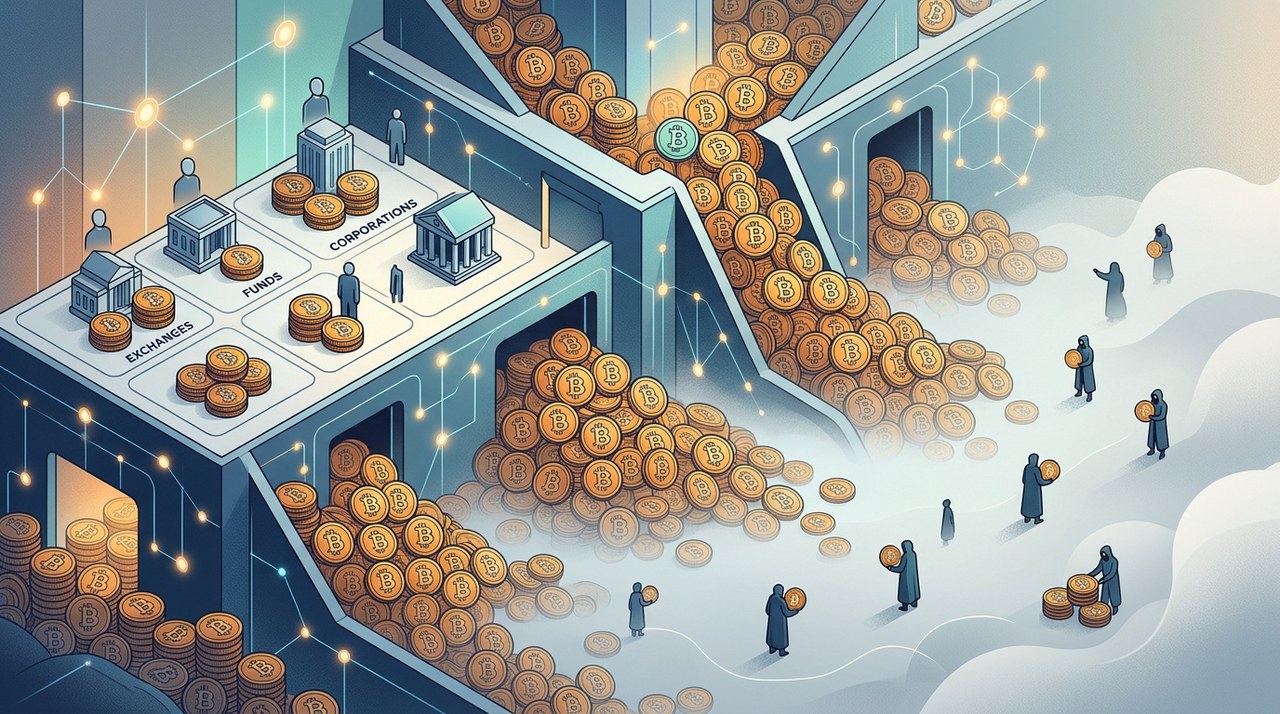
The Mysterious 55 Percent of Bitcoin's Total Supply
Have you ever wondered who actually owns most of the world's Bitcoin? With headlines constantly talking about Wall Street giants, massive crypto exchanges, and nation-states buying up digital currency, you might assume that big institutions control the market. However, blockchain data tells a surprisingly different story.
According to research from Galaxy Research, roughly 11.1 million bitcoin out of the total 20.1 million coins mined so far sit in wallet addresses that cannot be tied to any known company, fund, exchange, or government. That is about 55% of all the bitcoin currently in existence.
At a market price around $84,459.46 per coin, that unidentified pile represents hundreds of billions of dollars. It shows that despite massive corporate adoption over recent years, a enormous portion of the network remains in the hands of anonymous holders.
Past performance of digital assets is no guarantee of future results.
What Is Self-Custody and Why Is It Driving This Number?
To understand why so much bitcoin has no named owner, it helps to review how the network operates. Bitcoin is a public ledger where every transaction is visible to anyone in the world. Computer networks called miners verify these transactions and receive newly created coins as a reward.
A bitcoin address functions much like an account number on this public ledger. Anyone can see how many coins sit inside an address, but the account number itself does not contain your name, home address, or social security number. Blockchain analytics firms like Galaxy try to connect names to these addresses by analyzing patterns and tracking wallets known to belong to major businesses.
When an address remains unidentified, it often means the owner is using self-custody. Self-custody simply means holding your own secret passphrases (private keys) rather than leaving your digital assets on a centralized exchange or placing them inside an investment fund.
"More than half of all BTCBTC-0.84% supply is sitting in addresses with no known attribution despite all the institutionalization and centralized ownership over the years, still a ton of bitcoin (maybe even most) is held by individuals in self-custody," wrote Alex Thorn, Head of Research at Galaxy.
Unlike traditional stock markets that started with institutional brokers and eventually opened up to regular retail traders, Bitcoin grew from the bottom up. Everyday individual investors were trading and holding coins for an entire decade before Wall Street took notice.
Bitcoin-focused financial institution Xapo Bank highlighted this dynamic in response to Galaxy's research, noting that the sheer volume of unnamed wallets proves early retail investors are still standing strong.
"And why bitcoin is for the people and people 'can be their own bank' Retail have been here for over a decade. Everyone else still catching up," Xapo Bank stated.
The Fine Print: Who Else Is Hiding in the 55 Percent?
While it is exciting to think that regular individuals hold the majority of Bitcoin, researchers caution that not all of that 55% stack belongs to active retail investors. There are several important caveats behind the numbers.
The unidentified holdings likely include:
- Permanently Lost Coins: Millions of coins mined in Bitcoin's early days are gone forever because owners lost their hard drives, forgot their secret passphrases, or passed away without sharing access.
- Early Independent Miners: Coins mined in 2009 and 2010 by early adopters outside the famous 'Patoshi pattern' blocks remain sitting untouched in anonymous addresses.
- Unidentified Institutions: Private corporate treasuries, hedge funds, and Over-The-Counter (OTC) trading desks that arrange private trades off public exchanges may hold funds in untagged wallets.
- Complex Multi-Address Setups: Some institutional custodians intentionally split a single client's balance across thousands of brand-new addresses to enhance security and user privacy.
Who Owns the Other 45 Percent?
If 55% of the supply is a mystery, what about the remaining 45%? Researchers have successfully tagged those addresses, and they contain some of the biggest names in finance and crypto history.
The identified portion includes major centralized trading platforms, spot Exchange Traded Funds (ETFs) such as those managed by BlackRock, and sovereign wealth or law enforcement holdings held by governments like the United States.
The single largest identified entity on the network remains Satoshi Nakamoto, the anonymous creator of Bitcoin. Galaxy tracks Satoshi's holdings separately under the 'Patoshi pattern'—a distinct technical footprint left by the network's earliest miner—which accounts for an estimated 1,123,658 BTC.
What This Means for the Future of Bitcoin
Wall Street entry through spot ETFs has dominated market news for months. Yet, data shows that the foundation of the Bitcoin network remains deeply decentralized.
While self-custody offers users complete control over their financial assets without relying on middlemen, it also comes with personal responsibility. Unlike a bank account, if you lose your private keys in self-custody, no customer support team can recover your funds.
As the ecosystem matures, tracking ownership on a public blockchain will remain an ongoing challenge. For now, the largest piece of the Bitcoin pie belongs to owners whose identities remain unknown.
Latest blog posts


South Korea Considers Delaying Crypto Tax Until 2029
South Korea may postpone its proposed 22% crypto gains tax for a fourth time, potentially moving the enforcement date to 2029.
|
Bank of England Eyes Rate Hikes as Inflation Rises
Bank of England policymakers lean hawkish as rising energy costs drive UK inflation forecasts above 4%, increasing expectations for interest rate adjustments.


A 10.8-Billion-Year-Old Radio Signal Finds a Surprising Home
Astronomers detected FRB 20240304B, a 10.8-billion-year-old radio burst from deep space, using MeerKAT and JWST to trace its birthplace.
|