Bank of England Eyes Rate Hikes as Inflation Rises

What is Happening at the Bank of England?
Have you ever noticed how the price of everyday items seems to subtly creep upward over time? If you live in or follow the economy of the United Kingdom, you are certainly not alone in feeling that pressure.
Officials at the Bank of England (BoE) are paying extremely close attention to these rising costs. Recent economic data reveals that the central bank’s decision-makers are becoming increasingly hawkish. In the world of central banking, being hawkish simply means favoring higher interest rates to cool down economic activity and stop inflation from spiraling.
According to new analytical modeling from Bloomberg Economics, BoE policymakers are currently displaying their most hawkish stance since early 2023. Financial markets have reacted quickly to this shift, pricing in a near-certain interest rate hike at the committee's upcoming meeting on November 5.
Why are Bank of England officials changing their tone so noticeably right now? Let's take a closer look at the key factors driving this change in policy direction.
Decoding Central Bank Tone: The BOESPEAK Model
Tracking how central bankers feel about the economy is not always straightforward. Policymakers are famous for choosing their words with extreme care, often speaking in cautious financial terms that require expert decoding.
To solve this puzzle, Bloomberg Economics developed a specialized natural language processing (NLP) model called BOESPEAK. This computer model analyzes the tone of speeches and public statements made by members of the BoE's Monetary Policy Committee (MPC).
The BOESPEAK index converts public statements into simple numerical scores to track policy sentiment:
- Scores above zero signal hawkish sentiment, showing that policymakers prefer higher interest rates to bring down inflation.
- Scores below zero indicate dovish sentiment, meaning members prefer lower or stable interest rates to support borrowing and economic growth.
The BOESPEAK index jumped noticeably higher following recent public appearances by MPC members, including speeches delivered at International Monetary Fund (IMF) meetings in Bangkok. This sudden spike confirms that central bank officials are growing far more concerned about persistent inflation.
Rising Energy Costs and Geopolitical Pressures
What is driving this sudden shift toward higher interest rates? Dan Hanson, chief UK economist at Bloomberg Economics, points directly to energy markets as the main catalyst.
"The rise in the index is striking and has coincided with the ramp up in energy costs in recent months." — Dan Hanson, Chief UK Economist at Bloomberg Economics
Global energy markets have experienced renewed volatility due to geopolitical tensions, including ongoing conflict involving Iran. When oil and gas prices escalate, the cost of heating homes, transporting goods, and powering factories rises right along with them.
Bloomberg Economics now projects that UK inflation will cross above 4% by early next year. That level is twice the Bank of England's official target rate of 2%. When inflation runs significantly above target, central banks often step in with rate hikes to keep consumer prices under control.
Inside the Committee: Who Holds the Power?
Decisions on UK interest rates are made by the nine members of the Monetary Policy Committee through a majority vote. Back in September, the BoE chose to keep its benchmark interest rate steady at 3.75%.
However, that September decision passed by a narrow 6-3 vote. Because six members voted to hold rates while three voted for a change, it would only take two members switching their positions to completely flip the final decision at the November 5 meeting.
Several key committee members have expressed growing concern about inflation threats:
- Governor Andrew Bailey: Holds a pivotal swing vote on the committee. Bailey pointed out that prolonged high energy prices make an interest rate hike increasingly difficult to avoid.
- Deputy Governors Dave Ramsden and Clare Lombardelli: Both officials echoed Bailey's warnings, emphasizing that international conflicts like the Iran war create ongoing risks for energy price spikes.
- Dan Hanson's Forecast: Hanson expects the committee to approve rate hikes in both November and February. However, he also noted that committee members could partly be talking tough to anchor public inflation expectations.
The Internal Debate: Hawks vs. Doves at the BoE
Despite the hawkish shift in tone, the Monetary Policy Committee is far from unanimous. A clear internal division remains over how to handle the economy.
On one side, hawkish members worry about persistent domestic wage growth. Rising private-sector pay ahead of upcoming 2027 wage negotiations could keep upward pressure on prices, making it harder for labor markets to naturally cool inflation.
On the other side, more dovish committee members urge patience and caution:
- Deputy Governor Sarah Breeden: Stated on October 15 that lessons learned during the 2022 inflation surge taught many businesses to absorb higher costs internally rather than passing every price increase on to customers.
- Alan Taylor and Swati Dhingra: These dovish members favor looser monetary policy, warning that raising interest rates too aggressively could unnecessarily damage economic growth.
How Does the BoE Compare to Other Central Banks?
To understand the Bank of England's current position, it helps to look at the broader global landscape. The BoE has maintained a slightly different pace compared to its international counterparts like the U.S. Federal Reserve and the European Central Bank (ECB).
While the BoE kept its key rate at 3.75% in September, the U.S. Federal Reserve raised its target range to between 3.75% and 4%. A rate increase in November would bring the BoE onto a similar tightening path as the Fed and ECB.
Meanwhile, Asian central banks have also made notable moves. The Bank of Japan raised its interest rate in September to 1.25%, marking its highest benchmark rate since 1995.
Financial market investors currently expect the BoE to implement at least four interest rate hikes by July. However, BoE Chief Economist Huw Pill has openly questioned whether such an aggressive sequence of hikes is realistic.
Looking Ahead: What Should Investors and Consumers Watch?
As the November 5 decision date approaches, market participants will closely monitor incoming employment, energy, and inflation data. Central bank policy outcomes ultimately depend on how these economic factors evolve.
If energy prices remain elevated and wage growth stays strong, the Bank of England may follow through with rate increases to ensure inflation returns toward its 2% target. Conversely, if consumer demand slows significantly or global energy prices stabilize, policymakers might choose to keep interest rates steady for longer.
Understanding central bank policy provides valuable context for all financial markets, including global assets and digital currencies. While central bank actions aim to bring stability to consumer prices over time, interest rate changes directly influence market liquidity, borrowing costs, and general investor sentiment worldwide.
Latest blog posts


A 10.8-Billion-Year-Old Radio Signal Finds a Surprising Home
Astronomers detected FRB 20240304B, a 10.8-billion-year-old radio burst from deep space, using MeerKAT and JWST to trace its birthplace.
|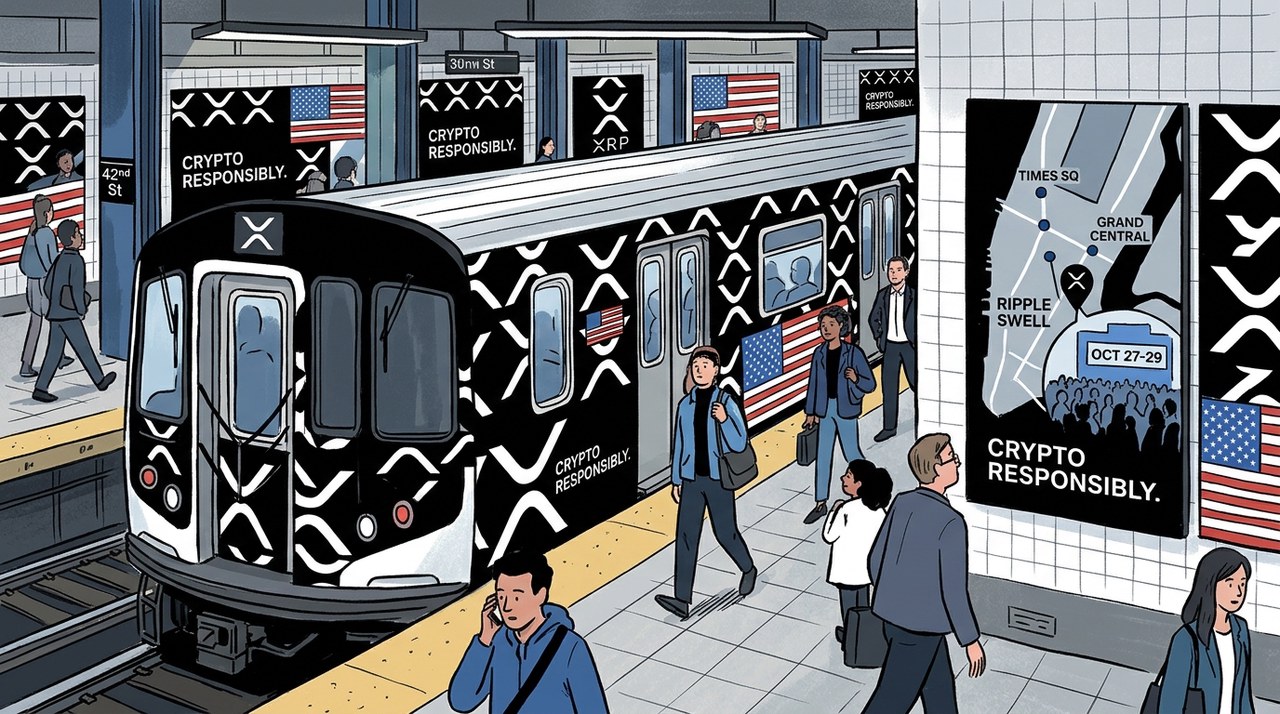


XRP Takes Over New York City Subways Ahead of Ripple Swell
New York City subway cars on Manhattan's 42nd Street feature bold new XRP branding as Ripple prepares for its annual Swell conference.
|


 +2
Stablecoin Market Drops $12.7B: Where Did Cash Go?
The total stablecoin market cap fell by $12.73 billion since May 22, 2026. Here is what the shrinking supply means for crypto liquidity.
|