
New Layertree Scaling Plan Fits Millions on One Bitcoin Output
What Is Layertree and Why Are Developers Talking About It?
BitcoinBTC+0.50% developer Olaoluwa Osuntokun from Lightning Labs recently unveiled a major scaling idea called Layertree.
On October 15, 2026, Osuntokun published a detailed 103-page white paper explaining the new technology.
His main goal is simple: make using Bitcoin far cheaper for millions of people at once.
Best of all, users would keep full control of their money without handing custody to a central party.
How Bitcoin Works Right Now
To understand Layertree, it helps to look at how Bitcoin currently tracks user funds on the blockchain.
Bitcoin uses separate records called Unspent Transaction Outputs, or UTXOs for short.
Think of a UTXO like a physical paper bill sitting in your wallet. Every individual holder gets their own piece of blockchain space.
Because space on the blockchain is limited, moving money requires paying network transaction fees.
When millions of new users join the network, high demand can quickly drive fees up for everyone.
How Layertree Changes the Game
Layertree flips this traditional setup upside down.
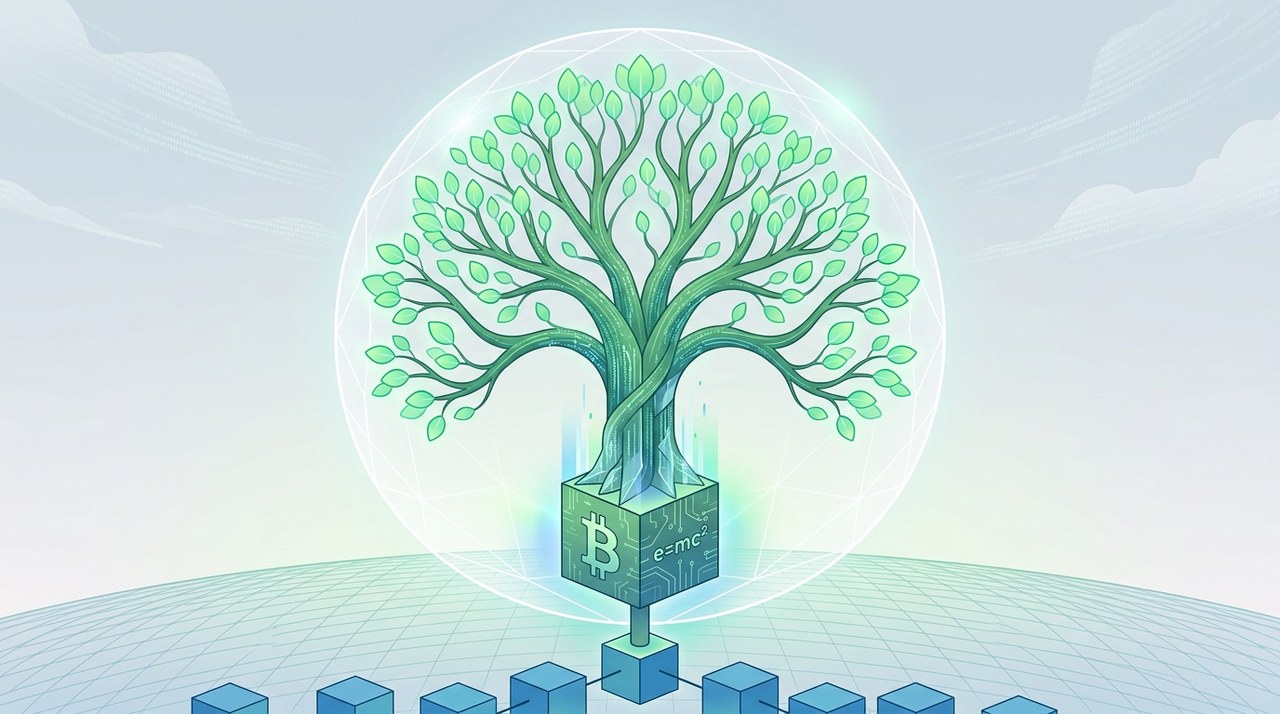
Instead of giving every person their own separate output on the main chain, thousands or millions share just one.
An off-chain mathematical record keeps track of each individual balance behind the scenes.
The Apartment Building Analogy
Imagine a giant apartment building where residents live under one shared roof.
Everyone uses the same main door, but each family owns their private apartment inside.
A building manager handles daily maintenance, but they cannot take away your personal belongings.
In Layertree, an operator manages the group setup, but users retain ultimate ownership of their coins.
How the Technology Tracks Your Bitcoin
Layertree organizes user funds using a mathematical tool called a Merkle-sum tree.
This off-chain record tracks everyone's exact balance without cluttering the main Bitcoin network.
The Bitcoin blockchain can quickly verify true ownership without needing to store every user's account details directly.
Withdrawing Money Without Permission
You might wonder if the system operator can steal your money or block your withdrawal.
The short answer is no. You do not need operator permission to take your bitcoin back.
When you want to leave, you submit a mathematical proof showing how much bitcoin belongs to you.
A smart Bitcoin rule called a covenant verifies your proof automatically.
The system releases your funds and updates the remaining balance for all other members.
There are no mandatory waiting periods or automatic expiration dates on your shared funds.
Looking at the Numbers: Costs and Size Comparison
Osuntokun ran tests on a model designed to support 65,536 positions.
Here is how the data breaks down:
- Single withdrawal cost: Withdrawing individually takes around 1,020 virtual bytes (vB).
- Comparison to basic transactions: That is roughly nine times larger than a standard Bitcoin transaction.
- Comparison to Ark-style withdrawals: It is significantly smaller than the 2,511 vB needed for an Ark withdrawal.
- Group savings: Enrolling 1,000 members together can bring the cost down below 1 vB per person.
The Hurdles: Key Risks and Challenges
Despite its huge potential, Layertree faces major practical and technical obstacles.
1. Operators Control Entry
Operators cannot stop you from taking your money out.
However, they can reject new users and decide who gets to join the pool in the first place.
2. Mass Exit Bottlenecks
Because thousands share a single output, everyone leaves through the same exit door.
If thousands of users attempt to withdraw at once, severe blockchain congestion will follow.
3. User Responsibility
Participants must verify mathematical records before depositing their funds.
If a user forgets to check these proofs, their money could become permanently lost.
4. Bitcoin Protocol Rule Changes Needed
Layertree cannot run on Bitcoin today because current network rules do not support covenants.
The network would need a major protocol upgrade or soft fork to activate these new commands.
While Osuntokun tested code and verified the math, real-world security remains unproven until upgrades happen.
What This Means for the Future of Bitcoin
Layertree presents an exciting vision for affordable, self-custodial Bitcoin scaling.
It balances low fees with personal ownership, though soft-fork requirements mean implementation is still far away.
Past performance of digital assets is not a guarantee of future returns. Always consider short-term market volatility before making digital asset decisions.
Latest blog posts

South Korea Watches Markets After Stock Rout
South Korea's finance ministry is closely monitoring bond, foreign exchange, and money markets after recent stock market volatility.

Australia Drafts Rules for OECD Crypto Tax Standard
Australia's Treasury has published draft legislation to adopt the OECD's Crypto-Asset Reporting Framework and set up local reporting rules.

KOSPI Rebounds 3% as Fed Rate Hike Fears Weigh on Recovery
South Korea's KOSPI index rebounded over 3% after a sharp drop, though rising US inflation data and Fed rate concerns continue to cloud the outlook.