Musk Warns 200 AI Neoclouds Face Extinction
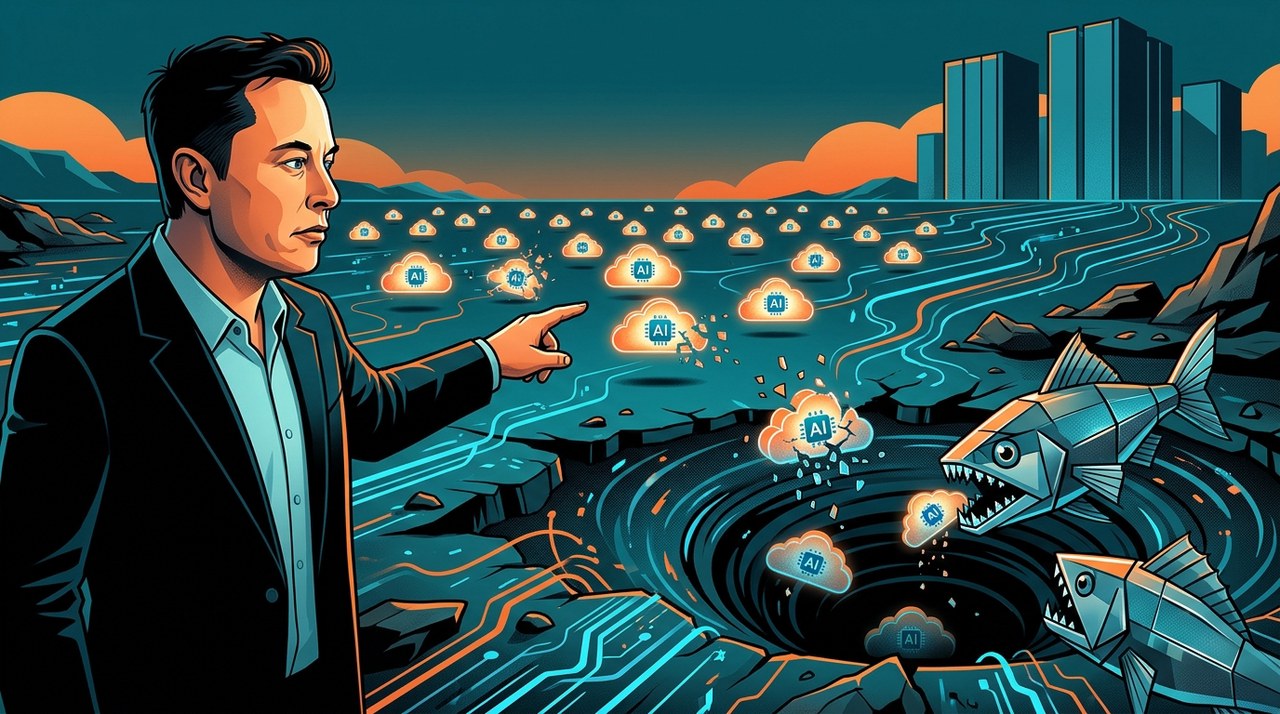
Elon Musk Sounded the Alarm for AI Startup Clouds
High-tech artificial intelligence hardware is getting harder to sustain. Tech billionaire Elon Musk recently issued a stark warning regarding the survival of AI neocloud startups.
Musk warned that over 200 AI neoclouds are facing what he described as a 'guppy-level death.' His comments point to an impending wave of bankruptcies and failures across the specialized cloud sector.
Musk warns over 200 AI neoclouds face 'guppy-level death'.
Gartner Forecast: 80% of Specialist Clouds to Disappear by 2030
Musk's grim prediction isn't just an isolated opinion. It aligns directly with fresh market research from industry analysts at Gartner.
According to Gartner's latest forecast, more than 80% of specialist cloud providers will cease operating independently by 2030.
This means that within the next few years, the vast majority of niche cloud companies will either go bankrupt, get bought out by tech titans, or completely restructure their operations.
What Exactly Are AI Neoclouds?
To understand why this matters, let's break down what an AI neocloud actually is using a simple everyday analogy.
Think of traditional cloud giants like Amazon Web Services, Microsoft Azure, and Google Cloud as massive hypermarkets. They sell everything from simple website hosting to complex database storage.
On the other hand, AI neoclouds are like specialized boutique rental shops. They specifically rent out high-powered graphics processing units (GPUs) tailored to build and train artificial intelligence models.
When the AI boom kicked off, hundreds of these specialized cloud companies launched. They raced to buy thousands of chips and rent them out to eager AI developers who couldn't get fast access from traditional providers.
Why Are Specialized AI Cloud Providers Struggling?
Running an AI cloud business sounds profitable, but the underlying operational costs are brutal. Here are the key challenges smaller cloud providers face today:
- Massive Capital Investment: Purchasing thousands of high-end AI chips requires hundreds of millions of dollars upfront.
- Sky-High Energy Costs: Running AI data centers demands vast amounts of electricity and expensive cooling infrastructure.
- Aggressive Big Tech Competition: Tech behemoths like Microsoft, Meta, and Google are spending tens of billions to build proprietary AI infrastructure.
- Falling Rental Margins: As total chip supply increases, the price charged to rent GPU computing power drops, squeezing margins for smaller companies.
The Looming Cloud Industry Consolidation
The tech industry frequently goes through cycles of explosive growth followed by dramatic consolidation. We saw a similar pattern during the early internet boom, and we are seeing it again in AI infrastructure.
When market research firm Gartner states that over 80% of specialist cloud providers will fail to remain independent by 2030, it highlights a massive structural shakeout.
Only companies with deep financial reserves, cheap access to green power, or unique software advantages are likely to survive on their own.
What This Means for Tech and Decentralized Infrastructure
As centralized AI neoclouds face mounting financial pressure, tech observers are also watching decentralized computing networks closely.
Decentralized Physical Infrastructure Networks (DePIN) aim to aggregate idle GPU power globally through distributed protocols. Instead of constructing giant data centers, these networks connect compute buyers directly with hardware owners.
While decentralized compute offers an alternative model, it also faces hurdles around network latency, enterprise security standards, and hardware standardization.
Whether computing power comes from centralized neoclouds, tech giants, or distributed networks, the ultimate requirement remains unchanged: delivering reliable, cost-effective computing power at massive scale.
What Lies Ahead for the AI Ecosystem?
The warnings from Elon Musk and forecasts from Gartner serve as an important reality check for the fast-moving artificial intelligence sector.
While world demand for AI application development continues to expand, managing physical hardware infrastructure remains a capital-intensive business.
Technology enthusiasts should keep a close eye on how the cloud market evolves as smaller providers consolidate and industry giants expand their footprint.
Latest blog posts


Electrum Bug: How Rogue Servers Stole Bitcoin via RBF
A vulnerability in Electrum allowed malicious servers to trick users into approving fake transactions when speeding up payments. Developers patched the flaw in version 4.8.3.
|

US Allocates $5M to Track Illicit Crypto in the Pacific
The U.S. government launched a $5 million program to train Pacific island law enforcement in tracking illegal cryptocurrency transactions.
|
Why CoreWeave Is Facing Major Debt Pressure
CoreWeave stock has fallen nearly 40% as investors worry about $52 billion in debt, despite doubling its quarterly revenue.
|