Meta Fined $25 Billion: Why Isn't Meta Stock Crashing?

A Record-Breaking Penalty for Meta
Meta has just received one of the largest legal penalties in corporate history. A judge in New Mexico ordered the social media giant to pay a massive $25 billion over how Facebook handled private user data.
You might expect a penalty of that size to send Meta stock into a tailspin. However, Wall Street responded with remarkable calm.
Meta shares actually climbed roughly 2% to trade around $708 on Wednesday afternoon. With Meta currently valued at approximately $1.8 trillion, investors showed almost no immediate signs of panic.
Understanding the New Mexico Court Decision
State District Judge Francis Mathew issued the $25 billion ruling on Wednesday, October 21. This decision followed a landmark jury verdict delivered earlier on September 25.
The jury found that Facebook repeatedly misled consumers regarding privacy protections and its handling of personal details. Here are the key facts behind the court ruling:
- The jury identified nearly 44 million violations of New Mexico state consumer protection laws.
- Under state law, those violations could have theoretically justified penalties exceeding $219 billion.
- Judge Francis Mathew chose to reduce the final fine to $25 billion.
- If collected, the penalty funds are intended for New Mexico's public education system.
Looking Back at the Cambridge Analytica Roots
To understand where this fine comes from, we have to look back to the Cambridge Analytica scandal that erupted in 2018.
During that scandal, a British political consulting firm obtained personal details from as many as 87 million Facebook users. They gathered this data through a third-party personality quiz app without explicit permission.
The data was then used for political profiling, including work linked to Donald Trump’s 2016 presidential campaign.
New Mexico took legal action against Meta in 2021. The state accused Facebook of deceiving residents about how well their information was protected, as well as misleading the public about its content moderation policies.
Why Is Meta Stock Rising Despite the Fine?
Why would a stock rise after taking a $25 billion hit? Financial markets often react to expectations rather than old headlines.
First, the jury verdict happened in September. Investors already knew a huge penalty was coming, so the potential cost was partially priced in.
Gil Luria, a technology analyst at D.A. Davidson, told Reuters that the ongoing legal process means these cases are "unlikely to cause a material impact to Meta's value."
Perspective matters here. At a market cap of $1.8 trillion, a $25 billion penalty represents roughly 1.4% of Meta's total company value.
Additionally, the broader technology sector rallied on Wednesday. The Nasdaq index gained about 1.2%, which gave Meta shares extra market support.
The Growth of Muse AI
Another primary reason for investor optimism is Meta's rapid progress in artificial intelligence. The launch of its Muse AI assistant has generated significant momentum:
- Meta launched the Muse AI assistant on September 8.
- The app quickly reached 10.9 million downloads.
- Daily active users grew to 2.5 million by October 16.
Meta stock has gained roughly 15% since Muse launched, even after pulling back slightly from its October peaks. Past performance of stock prices does not guarantee future results, but these numbers show high initial consumer interest.
However, Meta has spent significant advertising money to promote Muse. Whether the company can turn that download popularity into long-term profits remains to be seen.
Earnings Reports and Massive Capital Spending
For short-term traders, Meta's third-quarter earnings report represents a much larger focus than legal penalties.
Wall Street analysts expect Meta to report approximately $63.3 billion in revenue. That figure would mark an impressive 24% annual growth.
Looking ahead, Meta has projected between $130 billion and $145 billion in capital expenditure for 2026. Most of this funding will support AI infrastructure and core business tools.
Investors are keen to see if advertising growth can comfortably support those huge spending commitments.
Options traders were pricing in a potential 6.3% move in Meta shares by the end of the week around earnings. That potential swing made the earnings announcement a bigger short-term factor than the New Mexico court ruling.
When Will Meta Actually Pay the Money?
Meta is expected to appeal the decision in higher courts. The company will likely argue that the fine is excessive and that the state failed to establish actual consumer harm.
An appeal process can easily take years. Meta may also request a court-approved stay to delay paying the penalty while legal arguments continue.
Through appeals, the penalty could be reduced, overturned, or resolved through a lower settlement amount.
However, delaying payment carries risk. Reports from Source New Mexico state that the judgment carries a 15% annual interest rate while unpaid.
If the full penalty survives after years of appeals, that 15% interest rate could increase Meta's total financial obligation considerably.
What It Means for Investors
For now, investors appear far more focused on Meta's quarterly earnings and AI initiatives than legal penalties.
The $25 billion fine remains an ongoing legal matter to watch. Whether market optimism holds steady will depend on Meta's business performance and how much of that judgment actually gets paid in the end.
Latest blog posts
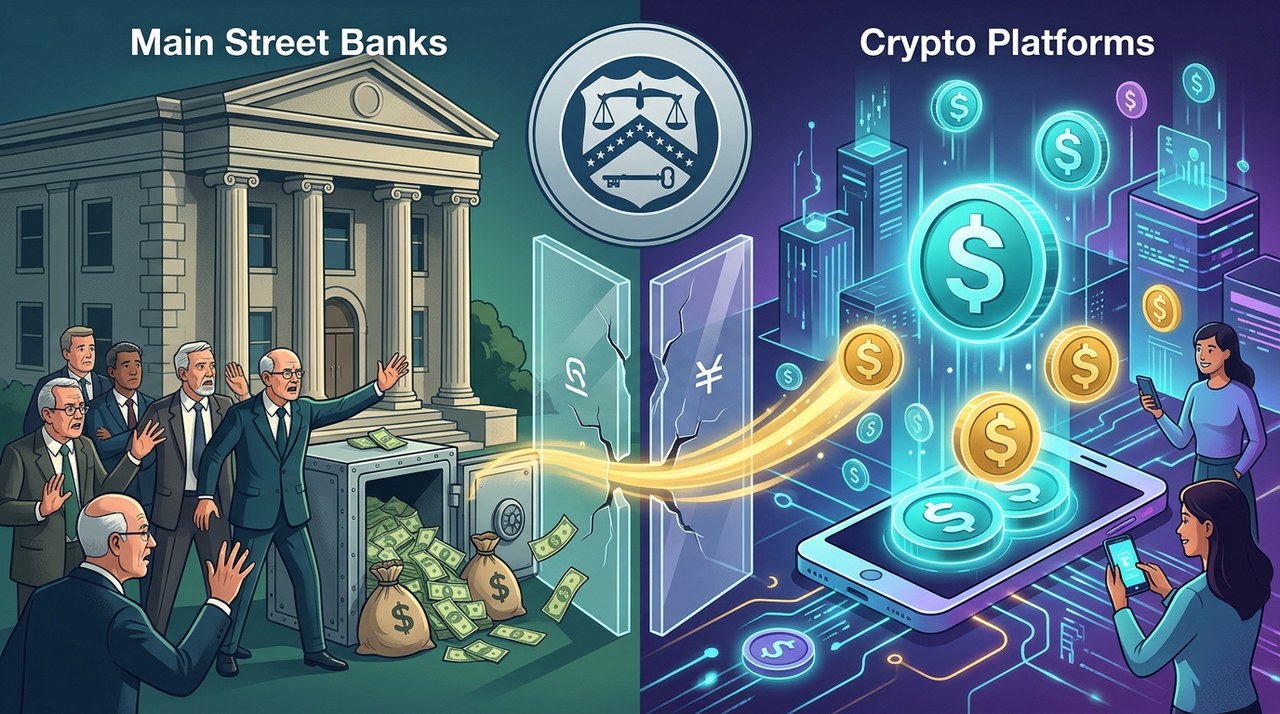

OCC Faces Banking Backlash Over $850 Billion Stablecoin Threat
U.S. banking groups are criticizing the OCC's new stablecoin rules, warning that indirect yield loopholes could drain $850 billion from local community bank lending.
|
Starlink Powers Wall Street Rallies for United and SpaceX
United Airlines and SpaceX stocks jumped over 6% following Q3 earnings, showing how Starlink satellite internet is shaping both businesses.


How OpenAI's ChatGPT Found Bugs That Shut Down Governments
AI models identified a severe 14-year-old PHP vulnerability, prompting multiple European governments to take their official websites offline.
|