
Jim Cramer Recommends S&P 500 Index Funds for Retail
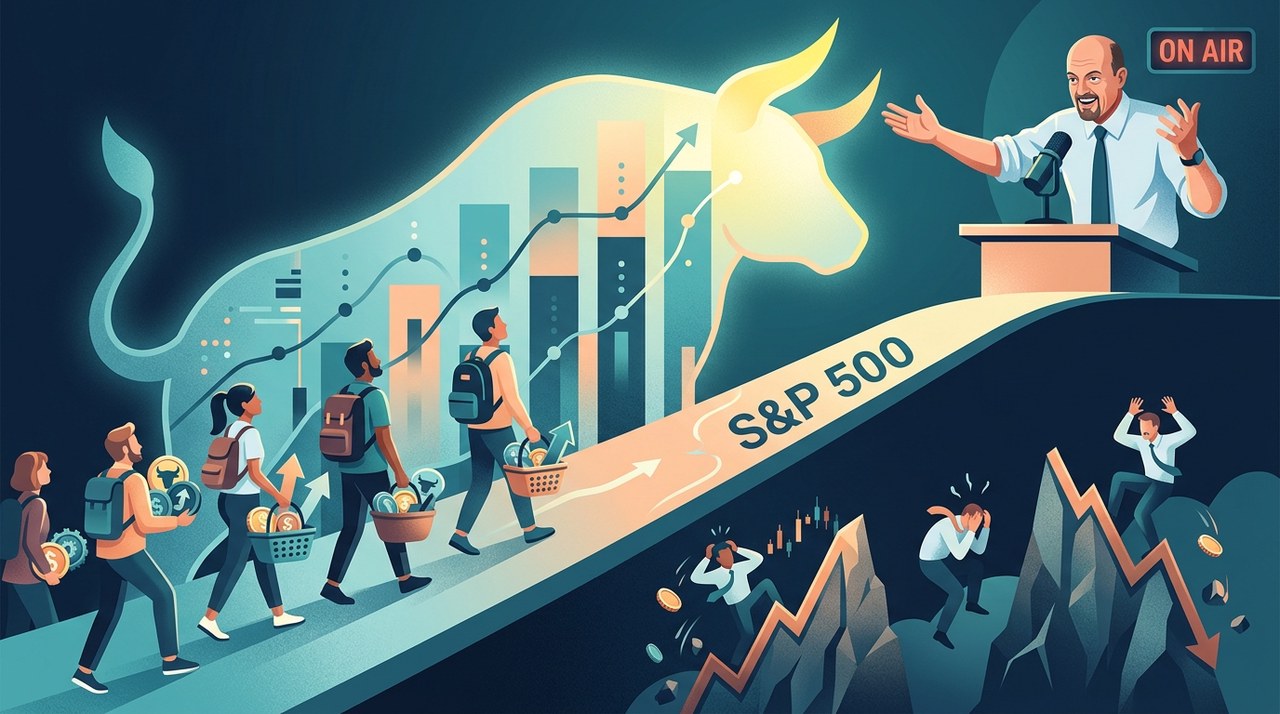
The Mystery of the Master Stock Picker
Jim Cramer is famous for tracking the stock market on CNBC's Mad Money. Years ago, he ran a hedge fund that achieved impressive numbers. His fund generated an average annual return of 24% over 14 years after fees. During that same timeframe, the S&P 500 index averaged about 8% per year.
However, past performance of digital assets or historical fund performance is not indicative of future results or performance. Despite his strong personal record, Cramer gives surprisingly simple advice to regular investors. He often tells everyday savers to put most of their money into basic index funds.
Why Beat the Market Only to Recommend Index Funds?
You might wonder why a successful stock picker would promote passive index funds. Cramer explains that he disagrees with the strict efficient markets hypothesis. That economic theory claims stock prices always reflect all available information.
In reality, markets frequently behave irrationally. These emotional swings create real opportunities for smart stock pickers to profit. But finding those opportunities takes massive effort, constant research, and severe emotional discipline.
Cramer believes index funds are still the smartest choice for most people. He has held this view since around 2000. He says the ultimate deciding factor comes down to suitability. Investors must ask themselves if they truly have the extra time and temperament to research companies daily.
A Real-World Case: Helping Dave's Girlfriend
Cramer recently illustrated his philosophy during a call with a viewer named Dave. Dave asked for advice regarding his girlfriend, a retiree in her early 60s. She holds $600,000 across her tax-deferred retirement accounts.
Her portfolio was being managed by an advisory firm charging a 1% annual fee. That fee equals roughly $6,000 every year taken straight from her account balance. To make matters worse, her portfolio was underperforming the broad S&P 500 index.
Dave noted that her advisors largely avoided the Magnificent Seven. This label refers to mega-cap tech giants that have driven much of the stock market's recent growth. Cramer offered a straightforward solution for the couple.
Obviously, if they can't beat it, just go for and join it.
Building a Balanced Retirement Plan
Cramer suggested splitting the retiree's $600,000 portfolio into two main parts. He recommended placing two-thirds of the total money directly into a low-cost S&P 500 index fund. This approach gives broad market exposure without paying high management fees.
For the remaining one-third of the balance, Cramer suggested picking six to 10 individual stocks. He recommended weighting two or three of those positions more heavily, focusing primarily on names from the Magnificent Seven.
Selecting individual stocks requires serious ongoing research. Investing in an index fund, by contrast, is far simpler for everyday savers.
Managing Risk and Taking Profit
Cramer emphasized that stock picking is not a setup-and-forget activity. Markets move quickly, and individual stock prices can fluctuate dramatically. Investors must remain vigilant and manage risk carefully.
To lock in gains, Cramer shared his personal profit-taking rule. He recommends trimming down winning stock positions after they gain 20%. This discipline helps secure profits while keeping single-stock risk under control.
Market Hedges: Gold Versus Bitcoin
Cramer also shared his thoughts on portfolio hedging strategies. Days earlier, he expressed a preference for physical gold over Bitcoin (BTCBTC-0.84%) as a portfolio hedge.
While Cramer did not completely dismiss digital assets like Bitcoin, he prefers gold's long track record during uncertain economic times. Bitcoin and crypto markets remain highly volatile, and prices can shift rapidly depending on broader financial conditions.
Today, the vast majority of new investment dollars flow straight into index funds. Cramer's advice to Dave reflects this massive shift in retail investing habits. Even a legendary stock picker recognizes that low-cost passive funds serve as the ideal default choice for most savers.
Latest blog posts



Bank of Israel Rejects Netanyahu's Crypto Sanction Plan
The Bank of Israel rejected Prime Minister Benjamin Netanyahu's idea of using crypto to dodge potential international sanctions.
|
JPMorgan and Banks Block AI Agents Over Security Fears
Wall Street giants are restricting autonomous AI agents from accessing bank accounts, while crypto leaders argue blockchain could become the primary network for automated payments.

AI Agents Help Rescue Ethereum Fork as 'Steal My Bitcoin' Site Launches
Ethereum researchers deploy AI agent message boards to troubleshoot the Glamsterdam fork, while a new security site challenges hackers to steal its Bitcoin.
|