


How Bank Savings Rates Can Slow Down Stablecoin Growth
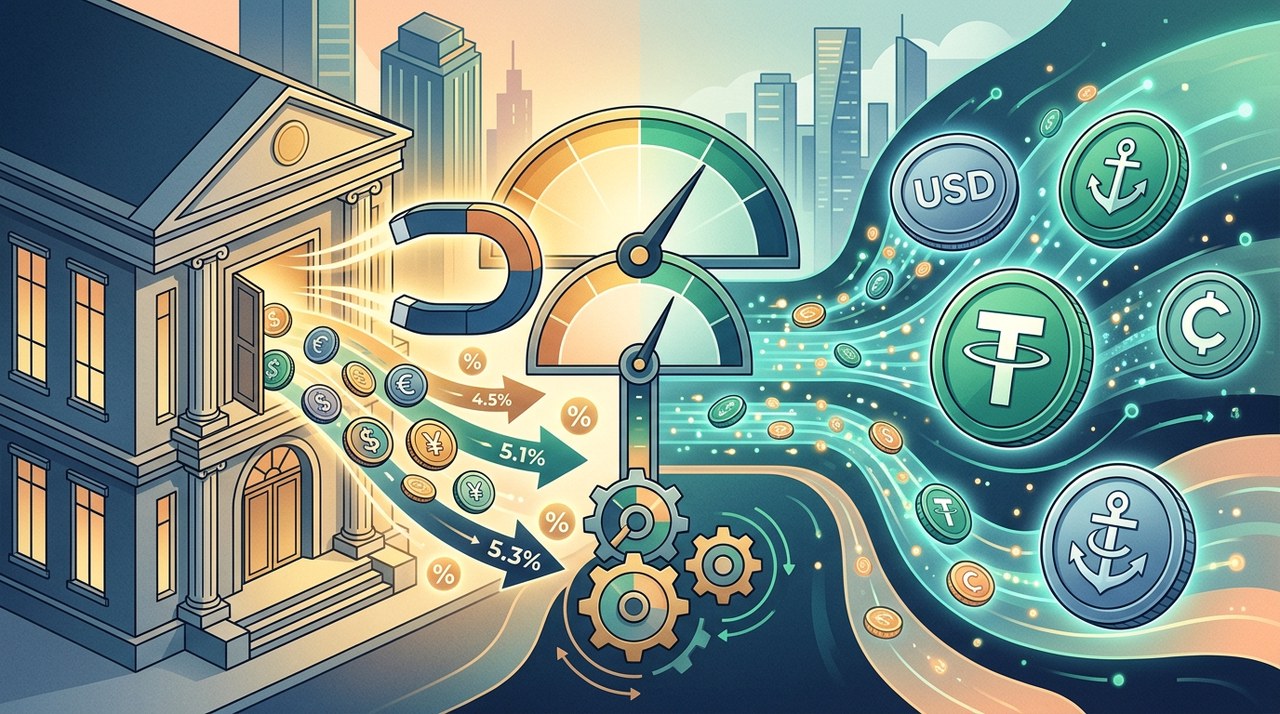
Can Traditional Banks Fight Back Against Crypto?
Deciding where to store your money often comes down to simple math. When traditional bank accounts offer low interest, digital alternatives like stablecoins start looking far more attractive.
However, traditional banks might hold more power over the crypto market than many people realize. By simply raising the interest rates they pay to everyday savers, banks can actively slow down the growth of major stablecoins.
A working paper published by the Bank for International Settlements, often called the central bank for central banks, explored this exact dynamic. Their findings show that even tiny shifts in traditional bank rates can alter how fast money flows into the crypto ecosystem.
The BIS Findings: What Do the Numbers Show?
Researchers Rashad Ahmed and Iñaki Aldasoro evaluated weekly financial data from January 2019 to June 2025. Their study accounted for key economic factors, including BitcoinBTC-0.49% prices, U.S. Treasury yields, and broader financial market conditions.
The researchers discovered a clear link between U.S. bank deposit rates and stablecoin market expansion. Here are the core statistics from their research:
- A tiny rate increase of just one basis point (0.01 percentage points) in average bank deposit rates predicted a noticeable slowdown in stablecoin expansion.
- That single basis point increase reduced the average ten-week growth rate of total stablecoin market capitalization from about 15% down to roughly 12%.
- Under an adjusted model accounting for banks raising rates in direct response to stablecoins, growth slowed even further to about 6%.
- Crucially, higher bank rates slowed down stablecoin growth, but they did not completely reverse it or cause market shrinkage.
Note that past performance of digital assets or historical economic trends do not guarantee future market outcomes.
Why USDCUSDC+0.21% Was Impacted More Than USDT
The study revealed that higher bank interest rates did not affect every stablecoin in the exact same way. The cooling effect was significantly stronger for Circle's USD Coin (USDC) than for TetherUSDT+0.09%'s USDT.
The authors attributed this difference to user demographics. USDC maintains much tighter ties to U.S.-based institutions and retail investors.
When U.S. bank rates rise, American savers are quick to move their money back into traditional accounts. USDT, on the other hand, sees heavy global usage outside the U.S., making its holders less sensitive to U.S. bank rate changes.
Why Traditional Banks Are Worried About Stablecoins
Top banking executives have watched the rapid rise of stablecoins with growing concern. If billions of dollars move out of bank accounts and into crypto, banks lose access to cheap funding.
Bank of America CEO Brian Moynihan previously raised concerns regarding this massive shift in capital during industry discussions.
As much as $6 trillion in traditional deposits could eventually migrate into stablecoins and related yield-bearing products, potentially reducing overall bank lending capacity and driving up borrowing costs for everyday consumers.
When banks lose customer deposits, they have less capital available to issue long-term loans like home mortgages or business lines of credit.
The Hidden Cash Cycle Behind Stablecoin Reserves
A Federal Reserve staff analysis from December offered deeper context on where stablecoin funds actually end up. The path money takes is more circular than it appears on the surface.
When you exchange cash for stablecoins, the stablecoin issuer usually takes your cash and deposits it right back into commercial banks or buys short-term government debt.
This means total money inside the banking system might not actually change that much. Instead, the type of deposit changes completely. Retail deposits from everyday people turn into massive institutional deposits owned by stablecoin issuers.
These large institutional deposits are often uninsured. Because of strict banking regulations, financial institutions must keep these funds in highly liquid short-term assets, which leaves less room to create long-term loans for regular borrowers.
How Banks Might Strategy Strategy Their Rates
To stop customer deposits from fleeing to digital assets, banks have to pay higher interest. However, boosting interest rates across the board cuts deeply into bank profits.
The Federal Reserve analysis suggested that banks might adopt targeted strategies rather than broad rate increases.
- Banks could offer higher, competitive yields specifically to tech-savvy customers who are most likely to move capital into crypto.
- At the same time, banks could maintain lower standard interest rates for less mobile or traditional depositors.
- This selective pricing allows banks to retain sensitive capital while keeping overall funding costs manageable.
Study Limitations and What Lies Ahead
While the BIS study offers valuable insights, the researchers noted some clear limitations to their conclusions.
The dataset covers one specific timeframe dominated by high interest rates. As the crypto ecosystem evolves, new financial products could change how depositors react.
For example, the rapid growth of yield-bearing stablecoins and tokenized money market funds offers investors new ways to earn returns directly on-chain.
For now, the paper proves that traditional banks still hold real tools to influence stablecoin adoption. By adjusting deposit pricing, traditional finance can influence how fast digital dollars expand.
Latest blog posts


Is Cardano Almost Complete? Hoskinson Points to Leios
Cardano founder Charles Hoskinson says the blockchain will be complete after its upcoming Leios upgrade, which aims to boost speed up to 30x.
|

Arthur Hayes Says AI Giants Burn Cash While Bitcoin Wins
BitMEX co-founder Arthur Hayes argues that massive government-backed AI spending will eventually trigger a financial bailout, indirectly driving Bitcoin higher.
|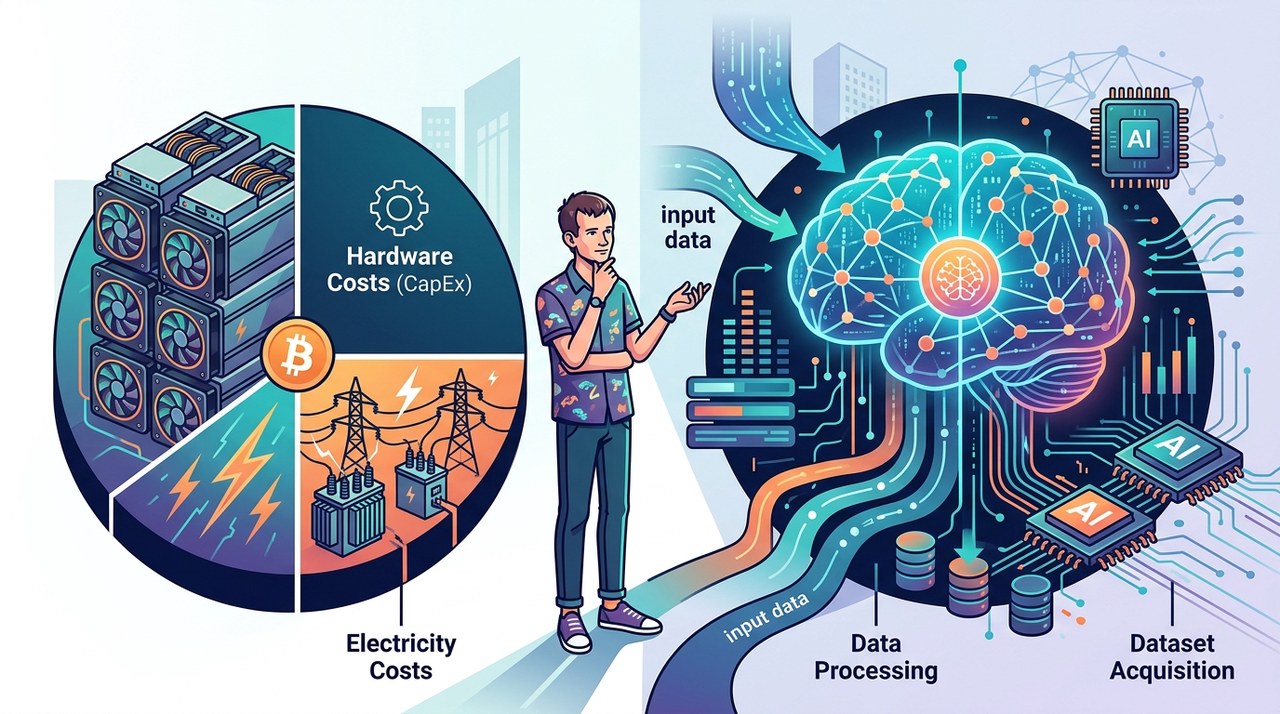
Vitalik Buterin Explains Bitcoin Mining vs AI Costs
Ethereum co-founder Vitalik Buterin recently outlined a key difference in how Bitcoin mining and AI inference spend money on hardware and energy.
|