
Is Cardano Almost Complete? Hoskinson Points to Leios

Is CardanoADA-3.80% Done? Not Quite, Says Charles Hoskinson
If you follow Cardano, you might wonder when the network will reach its final form. Founder Charles Hoskinson recently gave a clear answer during a quick Q&A session on X.
When an X user asked if the Cardano blockchain was completely finished, Hoskinson replied that one major milestone remains before his long-term vision is complete.
After Leios, yes. It has everything I wanted to do.
Hoskinson listed what he wanted to achieve with Cardano. He noted decentralized consensus, community governance and development, EUTXO, Plutus smart contracts, formal security methods, multiple independent nodes, recursive self-improvement, and millions of ADA holders worldwide.
The 'Magnum Opus': Midnight and Privacy Solutions
Before answering the question about Cardano's completion, Hoskinson teased another major concept he has been designing. He described a project powered by Midnight, Cardano's privacy-focused sidechain, as the crowning achievement of his career.
I'm working on a concept that only Midnight can bring to the cryptocurrency space that solves most of the problems. Almost have all of it designed conceptually. It's the magnum opus of my career.
While Midnight focuses on private transactions and confidential smart contracts, it works alongside the main network to address major crypto bottlenecks.
Understanding the Leios Upgrade: How Cardano Plans to Scale
So, what exactly is the Leios upgrade, and why is it the final step for Cardano? Simply put, Leios is a next-generation consensus and scaling upgrade designed to increase network throughput and speed.
To see why Leios matters, we can look at Cardano's current engine. The network currently runs on a consensus protocol called Ouroboros Praos.
Ouroboros Praos was built specifically for high security and true decentralization. However, it was not originally designed for the massive transaction volume required by globally adopted layer-1 blockchains.
How Leios Solves the Speed Bottleneck
Think of Ouroboros Praos like a high-security checkpoint where every single car stops for a thorough inspection. It is safe, but traffic queues up when thousands of cars arrive at once.
Leios upgrades Praos by adding endorser blocks and committee-based validation. These tools allow the network to process transactions in parallel.
Instead of holding up the main line, specialized helper nodes organize and approve batches of transactions in advance. This lets Cardano process much more data without giving up security or decentralization.
Breaking Down the Numbers: From 5 TPS to 1,000+ TPS
The proposed performance gains from Leios are significant. Currently, Cardano handles roughly 5 to 10 transactions per second (TPS).
With Leios, initial mainnet targets aim for around 100 TPS. Over time, that capacity is designed to scale from 2x up to 30x current capacity, depending on parameter choices and validation results.
In testing environments, developers are aiming even higher. In September 2026, Input Output Global (IOG) developers demonstrated approximately 1,000 TPS using Ouroboros Leios in test conditions.
The Roadmap to Launch: Testing the Waters
Major upgrades need extensive public testing before going live on the main blockchain. For Leios, that journey began on June 23, 2026, with the launch of a public testnet called Musashi Net (also known as Musashi Dojo).
The Musashi Dojo testnet rolls out across five distinct phases:
- Phase 1: Earth
- Phase 2: Water
- Phase 3: Fire
- Phase 4: Wind
- Phase 5: Void
According to an update from Input Output, the Musashi Dojo testnet has officially entered its third phase, the Fire phase. This progress moves developers closer to mainnet deployment.
Why Higher Speed Matters for Real-World Apps
Faster transaction speeds allow blockchains to support practical real-world applications that require instant processing.
Here are five key areas where higher throughput could make a meaningful impact on Cardano:
- Global microtransactions: Low fees and faster block times make tiny payments viable for everyday online shopping.
- Supply chain tracking: Businesses can track real-time shipments on-chain without slowing down the network.
- Scalable DeFi: Decentralized finance protocols can process time-sensitive trades and automated liquidations quickly.
- Large-scale digital identity: Governments and institutions can issue digital identities to millions of people at once.
- Real-time voting systems: Secure voting protocols can record and tally millions of votes transparently.
A History of Upgrades and Security Cautions
Cardano's road to full deployment has included several updates. Back in April 2026, Hoskinson signaled that Cardano was entering a major growth phase, paving the way for scaling improvements.
However, ecosystem developments can also attract malicious actors. In September 2026, security alerts went out when hackers temporarily hijacked YouTube channels belonging to Charles Hoskinson and Cardano to run scam livestreams.
As Cardano approaches its final upgrade milestones, users should verify news from official sources and guard their personal assets against phishing attempts.
Past performance of digital assets or historical development milestones do not guarantee future returns or operational outcomes. Always review potential market risks carefully.
Latest blog posts


Arthur Hayes Says AI Giants Burn Cash While Bitcoin Wins
BitMEX co-founder Arthur Hayes argues that massive government-backed AI spending will eventually trigger a financial bailout, indirectly driving Bitcoin higher.
|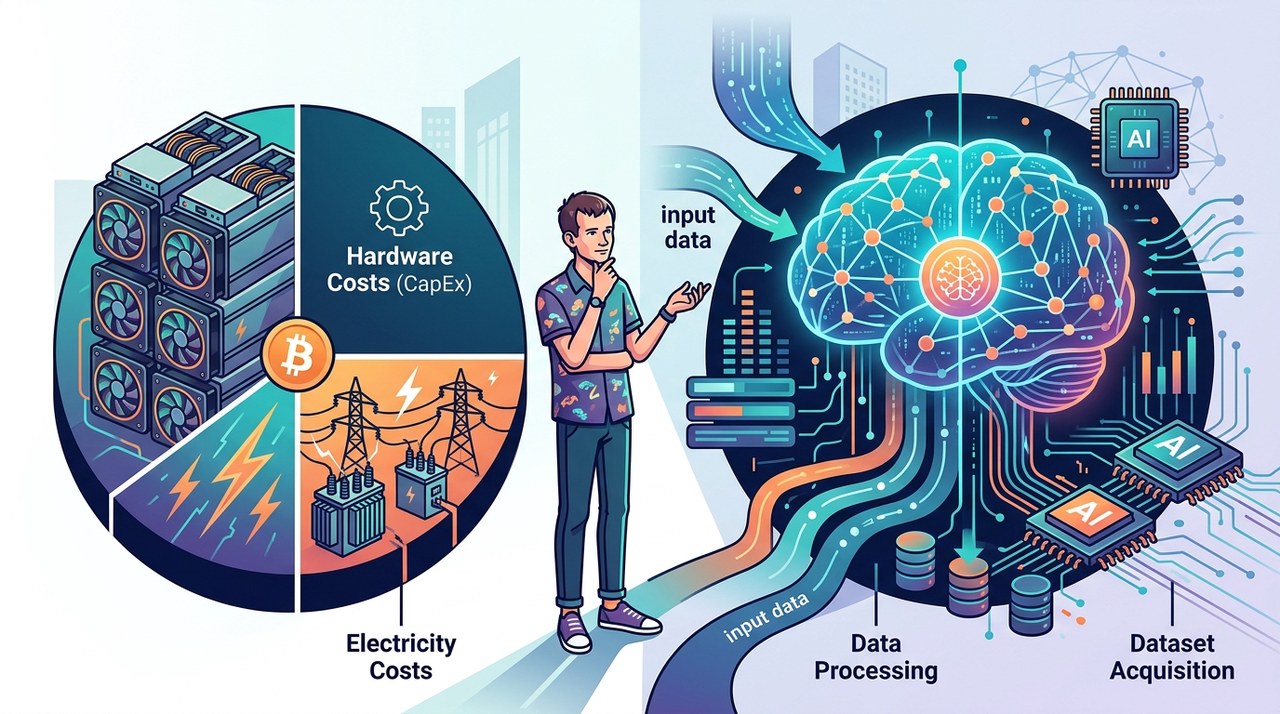
Vitalik Buterin Explains Bitcoin Mining vs AI Costs
Ethereum co-founder Vitalik Buterin recently outlined a key difference in how Bitcoin mining and AI inference spend money on hardware and energy.
|
Apple's First Foldable iPhone Duo Sells Out in Minutes
Pre-orders for Apple's $1,999 foldable iPhone Duo sold out almost immediately, pushing delivery dates into late January for eager shoppers.