


Crypto Law Update: CFTC Suits, UK Tax Rules, and NFT Scams

Welcome to another edition of your weekly crypto law roundup. We break down complex legal developments into clear, simple language so you can stay informed without needing a law degree.
This week's update is brought to you by Law and Ledger, a news segment produced by Kelman Law, a firm specializing in digital asset commerce. This edition was written by Michael Handelsman for Kelman.Law.
Before we dive into the headlines, let's take a quick look at the market context. As of November 1, 2026, BitcoinBTC+1.16% traded at around $78,655 (+1.21%) and EthereumETH+1.81% stood at $2,307 (+1.80%) — though market participants should remain aware of ongoing short-term price volatility.
Past performance of digital assets is not an indication of future performance.
CFTC Sues Utah as Prediction Market Dispute Escalates
On October 27, 2026, the Commodity Futures Trading Commission (CFTC) filed a federal lawsuit against the state of Utah. The CFTC wants to stop Utah from using local gambling laws to restrict CFTC-registered prediction markets.
This lawsuit comes directly after Utah launched a civil enforcement action on October 20 against Kalshi, a popular prediction market platform, along with its related business entities.
Federal Authority vs. State Gambling Laws
The core argument centers on who has the legal right to regulate these markets. The CFTC claims that under the Commodity Exchange Act, it holds exclusive authority over derivatives traded on federally registered contract markets. Therefore, federal law preempts state-level rules.
Utah sees things differently. State officials argue that event contracts based on sports or other real-world outcomes are essentially forms of gambling, which Utah has the authority to ban within its borders.
Utah Files Criminal Charges Against Kalshi Executives
The dispute took a dramatic turn on October 28 when Utah filed criminal charges against Kalshi and its co-founders, Tarek Mansour and Luana Lopes Lara.
The criminal complaint alleges that the founders violated state gambling prohibitions and engaged in a pattern of unlawful activity. Kalshi strongly denies these claims, calling the prosecution an example of severe regulatory overreach.
It is important to note that no defendant has been convicted, and all parties are presumed innocent unless proven guilty.
Key Takeaways for Prediction Market Operators
This shift is major because the CFTC has stepped in as a co-plaintiff right as Utah moved from civil notices to felony charges against executives.
For companies operating prediction markets, federal registration does not automatically eliminate state-level legal risks right now. Courts are still divided on how federal preemption applies.
- Perform state-by-state risk analyses for all offered products.
- Maintain strict geolocation and access controls.
- Review marketing materials to avoid conflicting with local state laws.
- Keep detailed records of location controls and responses to state enforcement notices.
UK Regulator Restricts Offshore Crypto Exchange HTX
On October 29, 2026, the United Kingdom’s Financial Conduct Authority (FCA) announced a formal settlement resolving High Court proceedings against global crypto exchange HTX, formerly known as Huobi.
Under the undertakings presented to the High Court, Huobi Global agreed that it will not knowingly communicate unlawful crypto financial promotions to UK consumers through websites, mobile applications, or social media.
Background of the FCA Action
The legal action began in October 2025. The FCA alleged that HTX repeatedly violated UK financial promotion regulations and failed to communicate constructively with the regulator.
HTX has since taken steps to exit the UK market entirely. According to the FCA, the platform has restricted new user registrations from the UK, disabled UK deposits, and agreed not to actively target UK customers.
The settlement was confidential and does not include an admission of wrongdoing or liability by HTX. This makes it a negotiated resolution rather than a formal legal judgment against the platform.
What Offshore Exchanges Need to Know
This case shows that operating from an overseas jurisdiction does not shield an exchange from enforcement if its promotions reach local residents.
Simply placing a generic geographic disclaimer on a website may not protect a company if local users can still access services or if affiliate networks continue to recruit local customers.
UK Proposes Tax Changes for Stablecoins and DeFi
As part of its October 28 Budget announcement, the UK government confirmed plans to update how digital assets are taxed in the upcoming Finance Bill 2026–27. If approved, these changes will take effect in April 2027.
Treating Eligible Stablecoins Like Fiat Money
The UK government intends to treat qualified stablecoins more like traditional money for tax purposes.
To qualify for this proposed tax status, a stablecoin must meet specific criteria:
- Maintain its value by referencing a traditional fiat currency.
- Be backed by fiat currency or equivalent reserve assets.
- Be widely available to the public for general transaction use.
- Be designed specifically as a payment method.
Under the proposal, individual users and trustees disposing of eligible stablecoins would be exempt from Capital Gains Tax (CGT). However, transitional rules may apply when switching over to the new system.
Returns earned from lending eligible stablecoins would be taxed as savings income, while corporate entities would manage these assets under standard corporation tax rules for loan relationships.
Businesses should note that not all stablecoins will qualify. Algorithmic tokens, private tokens, or tokens not intended for daily payments will likely fall outside these rules.
Tax Deferral for Crypto Loans and Liquidity Pools
The UK Budget also addressed crypto lending and DeFi liquidity pools. The government plans to treat qualified transfers in and out of these pools on a 'no gain, no loss' basis starting April 6, 2027.
Under current rules, transferring tokens into a DeFi protocol can trigger an immediate taxable event, even if the owner keeps economic exposure to the asset. The new proposal defers Capital Gains Tax until the user actually sells or disposes of the underlying economic interest.
This rule applies only to specific qualifying arrangements. Platform mechanics, smart contract rights, and token return structures will determine whether a transaction qualifies.
US DOJ Charges Six in International NFT Fraud Case
On October 27, the US Department of Justice (DOJ) announced criminal charges against six individuals involved in a large-scale NFT investment scam network. The operation was based in Madagascar with links to Southeast Asia and China.
The charges represent allegations made by the government. All defendants are presumed innocent unless proven guilty in a court of law.
How the Alleged Scheme Worked
According to the DOJ, prosecutors allege the group used fake online dating profiles to build trust with targets. Once trust was established, victims were directed to fraudulent NFT investment websites.
Victims were asked to connect their crypto wallets to these fake platforms. Once connected, the operators drained the wallets without the users' permission.
Investigators traced around 74 crypto wallets linked to roughly 800 reported victims. Authorities also unsealed warrants used to seize multiple websites connected to the scam network.
The DOJ noted that its Scam Center Strike Force has now restrained over $1 billion in crypto assets linked to fraud and seized over 700 fake investment websites.
Important Steps for Scam Victims
If you or someone you know falls victim to a digital asset scheme, preserving evidence quickly is critical for recovery efforts.
- Save wallet addresses and exact transaction hashes.
- Take screenshots of domain names, websites, and chat histories.
- Keep account statements, device data, and emails.
- Report details promptly to law enforcement and relevant exchanges.
Acting quickly improves the chances that investigators can track missing funds before they move through mixers or non-compliant platforms.
Disclaimer: This article provides general educational information and does not constitute formal legal advice. Contacting Kelman PLLC or reading this material does not establish an attorney-client relationship.
Latest blog posts
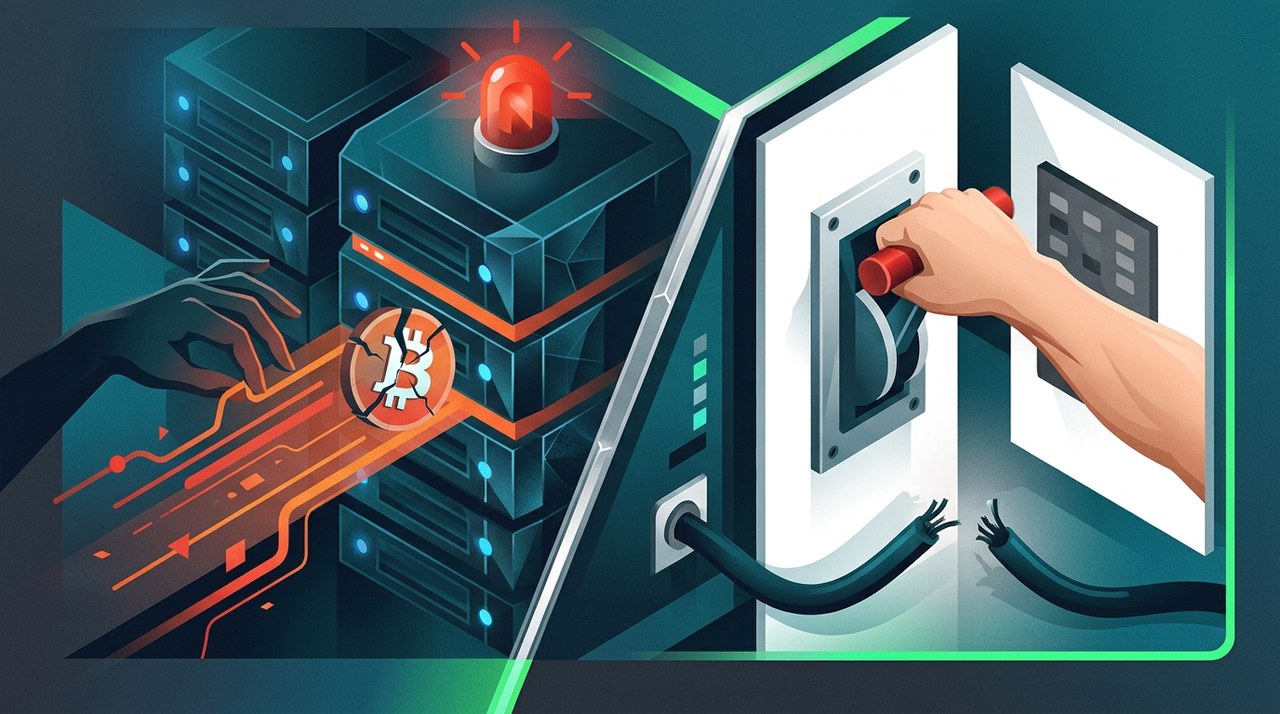
BTCPay Server Urges Shutdown After Hot Wallet Theft Reports
BTCPay Server warned operators to turn off self-hosted servers immediately after attackers began draining bitcoin from connected hot wallets.
|
 +1
BlackRock, JPMorgan, and Visa Advance Crypto Integration
Major financial powerhouses like BlackRock, JPMorgan, and Visa are expanding their blockchain and stablecoin operations, signaling deeper institutional adoption.
|
Only 40 Crypto Firms Survive Brazil's License Deadline
Brazil's strict new regulatory deadline left only 40 crypto firms standing, forcing over a hundred exchanges to exit the market.