

BTCPay Server Urges Shutdown After Hot Wallet Theft Reports
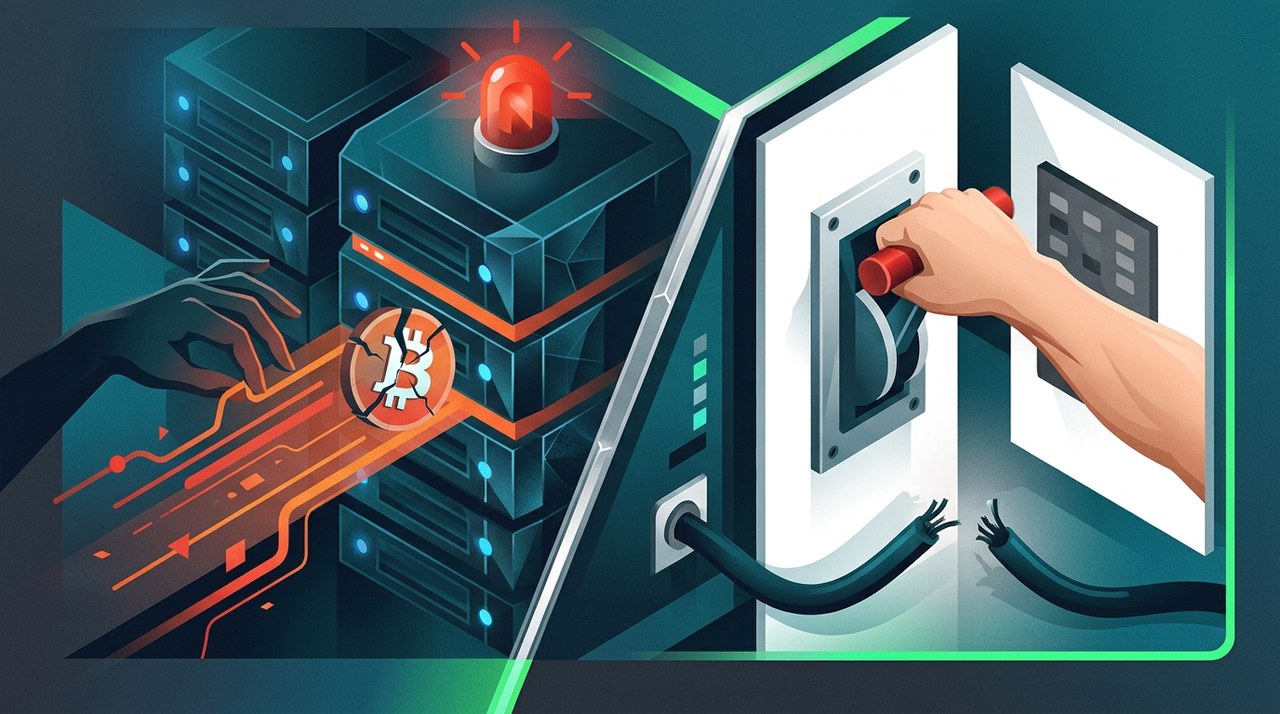
Emergency Alert: BTCPay Server Warns of Active Wallet Drains
On November 1, 2026, the team behind BTCPay Server issued an urgent emergency warning. Security reports revealed that unauthorized attackers were actively sweeping bitcoin out of hot wallets connected to self-hosted payment servers.
Around 22:25 UTC, BTCPay Server's official social media channel posted a direct message instructing all operators to take their instances offline immediately. Users were advised to execute the ./btcpay-down.sh command on their systems until investigators could determine the source of the breach.
Not a drill: shut down your BTCPay Server if you have a hot wallet.
Core contributor Uncle Rockstar Developer underscored the seriousness of the event with that brief alert. Around the time of the announcement, market data showed bitcoin trading near $78,637 (+1.21%) and ethereumETH+1.78% near $2,307 (+1.67%).
As a reminder for all market participants, past performance of digital assets is not an indicator of future returns. You can check current market trends anytime at bitkub.com/th/market/BTC.
What Is BTCPay Server and How Does It Work?
To understand why this alert caused concern across the crypto community, it helps to look at what BTCPay Server does for merchants.
BTCPay Server is popular open-source software that lets store owners accept bitcoin (BTCBTC+0.92%) payments directly from customers. It eliminates the need for middleman payment processors and extra processing fees.
Because operators run the software on their own self-hosted servers, they maintain complete control over their funds and customer data. Think of it like running your own digital register and cash box.
While this setup offers financial independence, it also places security responsibility entirely on the node operator. If the software running behind the scenes contains an unpatched flaw, funds stored in connected hot wallets can be exposed.
Investigating the Breach: Older Software Builds in Focus
Following the emergency announcement, BTCPay Server founder Nicolas Dorier provided additional details from the ongoing investigation.
Dorier's preliminary findings indicated that the compromised systems were running software versions predating version 2.4.2. Attackers reportedly obtained administrator access by exploiting security weaknesses present in those older releases.
Dorier also noted that public demonstration servers running the newer version 2.4.7 had not been targeted or breached. This distinction suggests that the recent emergency software update itself did not introduce the issue, though technical investigations remain active.
The project had previously resolved another vulnerability back in August 2026. That flaw allowed unauthorized attackers to retrieve Lightning Network Daemon (LND) macaroon credentials, which serve as access tokens for Lightning payments. That issue was resolved in version 2.4.2.
At present, developers have not confirmed whether the latest thefts stem from that earlier vulnerability, a different unpatched flaw, or multiple security gaps combined.
The AI Connection: 85 Flaws Patched Days Before the Incident
The timing of the security alert presents an intriguing context. Just three days prior, on October 29, 2026, BTCPay Server released version 2.4.7 after conducting automated code scans powered by Anthropic's open-source security initiative.
That software update patched 85 distinct findings identified by the AI system, categorized across several severity levels:
- 1 Critical severity vulnerability
- 13 High-severity vulnerabilities
- 52 Medium-severity vulnerabilities
- 19 Low-severity vulnerabilities
Throughout 2026, AI-assisted security scanning tools developed by tech companies such as Anthropic, OpenAI, and Google have expanded rapidly. Anthropic's vulnerability program alone identified over 29,000 potential code issues across six months of automated analysis.
However, this incident highlights a practical challenge for open-source tools: releasing security patches does not automatically update independently run servers. If server administrators delay applying updates, their systems remain open to potential exploits.
Merchant Impact and Hot Wallet Safety Lessons
In response to the warning, several merchants and crypto services, including Coincards, temporarily brought their BTCPay Server deployments offline.
For business owners, taking software offline requires balancing payment processing availability against the risk of hot wallet losses.
Nicolas Dorier reminded operators of a core principle in crypto security: hot wallet balances should always be kept to minimum operating amounts that business owners can afford to manage under risk.
As the BTCPay development team prepares a full technical report, the situation highlights an ongoing challenge for the industry: ensuring independent node operators can update their self-hosted systems as fast as new vulnerabilities are discovered.
Latest blog posts

 +1
BlackRock, JPMorgan, and Visa Advance Crypto Integration
Major financial powerhouses like BlackRock, JPMorgan, and Visa are expanding their blockchain and stablecoin operations, signaling deeper institutional adoption.
|
Only 40 Crypto Firms Survive Brazil's License Deadline
Brazil's strict new regulatory deadline left only 40 crypto firms standing, forcing over a hundred exchanges to exit the market.


Why Bitcoin's 'Uptober' Failed to Deliver Gains
Bitcoin dropped 7% in October as AI stock pullbacks, shifting bond yields, and rising oil disrupted long-standing market patterns.
|