
Balaji's Farcaster Plan: A Singapore Social Hub

A New Chapter for Crypto Social Media
Imagine stepping into a bustling town square. You expect interesting conversations, friendly faces, and innovative ideas. Instead, you are greeted by constant noise, aggressive promoters, and endless unwanted flyers. That is how many internet users feel about modern social media platforms today.
Former Coinbase Chief Technology Officer Balaji Srinivasan wants to build a very different kind of digital environment. He is focusing his attention on Farcaster, a popular decentralized social network. His goal is to transform his presence there into a haven for polite, forward-thinking tech builders.
However, creating a clean community requires setting clear boundaries. To kick off his ambitious vision, Balaji recently started a major cleanup process that involved banning disruptive accounts across his digital channels.
Who is Balaji Srinivasan and Why Does His Vision Matter?
To understand this recent move, it helps to know who Balaji Srinivasan is. Balaji is a well-known investor, entrepreneur, and author in the cryptocurrency and technology sectors. He previously served as the Chief Technology Officer at Coinbase and was a general partner at the venture capital firm Andreessen Horowitz.
He is also known for writing the book titled The Network State. In this work, he explores how online communities can form social bonds, organize resources, and eventually build new forms of digital and physical governance. He argues that the internet allows like-minded people to group together and build better social systems.
Recently, Balaji launched an initiative called the Network School. This program focuses on educating people who want to build startups, learn cutting-edge technology, and participate in network states. For Balaji, online social spaces are not just places to post casually. They serve as foundational infrastructure for future digital societies.
What is Farcaster and How Does It Work?
Farcaster is a decentralized social protocol built on top of EthereumETH+3.36% layer-two infrastructure. Unlike traditional platforms like X or Facebook, Farcaster does not rely on a single central server owned by one corporation. Instead, a user's identity and data are connected to their Web3 wallet address.
On Farcaster, users interact through various front-end applications, with Warpcast being the most popular client. One of the network's standout features is called Frames. Frames allow users to turn standard posts into interactive mini-applications directly inside their social feed.
Because Farcaster uses open Web3 technology, it attracts many software developers, crypto researchers, and tech enthusiasts. However, open protocols face a common challenge: they can quickly become targeted by automated spam, scam bots, and low-effort posts.
The Singapore of Social Media Analogy
Balaji compared his goal on Farcaster to creating the Singapore of social media. But what exactly does this comparison mean for everyday users?
Singapore is famous worldwide for its safety, cleanliness, economic vitality, and strict public rules. While Singapore offers world-class infrastructure, it achieves order through active enforcement of civil behavior. Public misconduct and littering are strictly moderated to maintain high societal standards.
Balaji aims to apply a similar philosophy to digital social spaces. He wants to create a high-signal environment where participants treat each other with respect. In this digital hub, abusive behavior, repetitive spam, and bad-faith arguments are quickly removed.
The objective is to foster a haven for techno-optimists. These are individuals who believe technology, science, and human ingenuity can solve major global problems. By enforcing strict conduct standards, Balaji hopes to attract high-caliber builders who are tired of online clutter.
Cleaning Up the House: Why Banning Accounts Was Necessary
Creating a clean online space requires active maintenance. That is why Balaji initiated a wave of account bans across his specific channels and associated hubs.
In open Web3 environments, bad actors often take advantage of permissionless access. Spam accounts send automated replies, deceptive links, and irrelevant promotions. If left unchecked, this behavior drives away thoughtful users who want genuine conversations.
Balaji's ban wave targets accounts that violate community rules, post spam, or engage in disruptive behavior. By removing these accounts, he aims to improve the overall quality of discussion.
Think of it like maintaining a public garden. If weeds are not pulled regularly, they eventually crowd out the healthy plants. In Balaji's view, moderation is basic housekeeping necessary to keep the environment productive.
The Big Debate: Freedom Versus Moderation in Web3
This cleanup initiative highlights an ongoing discussion within the cryptocurrency community. Web3 technology was built on principles of permissionless access and censorship resistance. When a leader moderates users, some community members ask how this aligns with Web3 values.
However, there is an important technical distinction between protocol-level censorship and application-level moderation.
The underlying Farcaster protocol stores user data on decentralized networks, meaning no single person can delete a user's wallet identity or erase their global history. However, individual application developers and channel hosts retain full control over what appears inside their specific feeds.
Decentralized protocols protect your identity, but individual communities have the right to set their own rules.
This structure allows different communities on Farcaster to set custom standards. If an account is moderated in Balaji's channel, that user still retains access to the broader Farcaster network. They can continue posting elsewhere or create their own channels with different rules.
Understanding Techno-Optimism
At the core of Balaji's vision is a philosophical outlook known as techno-optimism. Understanding this mindset explains why community standards matter so much to his projects.
Techno-optimists view technological progress as the primary driver of human growth, wealth, and health. They advocate for building new tools, expanding scientific research, developing artificial intelligence, and growing digital economies.
However, online discussions about technology often decline into cynicism and hostility. Balaji aims to shield techno-optimist groups from these negative cycles. He believes focused, constructive spaces encourage people to build practical solutions rather than argue indefinitely.
Lessons for the Future of Decentralized Social Networks
Balaji's approach on Farcaster demonstrates an evolving trend in Web3 social platforms. As crypto-native platforms mature, they must strike a balance between open access and effective quality control.
Completely unmoderated networks often become unusable due to automated spam. Conversely, heavy centralized control by a single corporate entity can lead to arbitrary rules. Balaji's model represents a hybrid path: open decentralized architecture at the protocol layer, combined with clear community standards at the local channel layer.
Key Takeaways for Readers
- Decentralized identity: Platforms like Farcaster connect user profiles to Web3 wallets rather than central corporate accounts.
- High-standard communities: Balaji Srinivasan's 'Singapore of social media' concept emphasizes civil, constructive, and tech-focused discussion.
- Active moderation: Ban waves are being used at the channel level to eliminate automated spam, scam bots, and disruptive behavior.
- Protocol neutrality: Moderation within a specific channel does not erase a user's wallet identity on the underlying Farcaster network.
- Evolving governance: Web3 social platforms are experimenting with new ways to balance permissionless tech with healthy digital environments.
Looking Ahead in the Web3 Landscape
As Web3 social networks continue to grow, experiments like Balaji's Network School and Farcaster channels provide valuable insights. They show that building successful decentralized networks requires more than smart contracts and crypto tokens; it also requires building healthy online cultures.
While these developments offer exciting new ways to connect and collaborate, readers should keep in mind that digital asset markets and Web3 ecosystems are fast-moving and constantly changing. Always stay informed, examine new technologies carefully, and maintain a balanced perspective when participating in emerging digital communities.
Latest blog posts

 +2
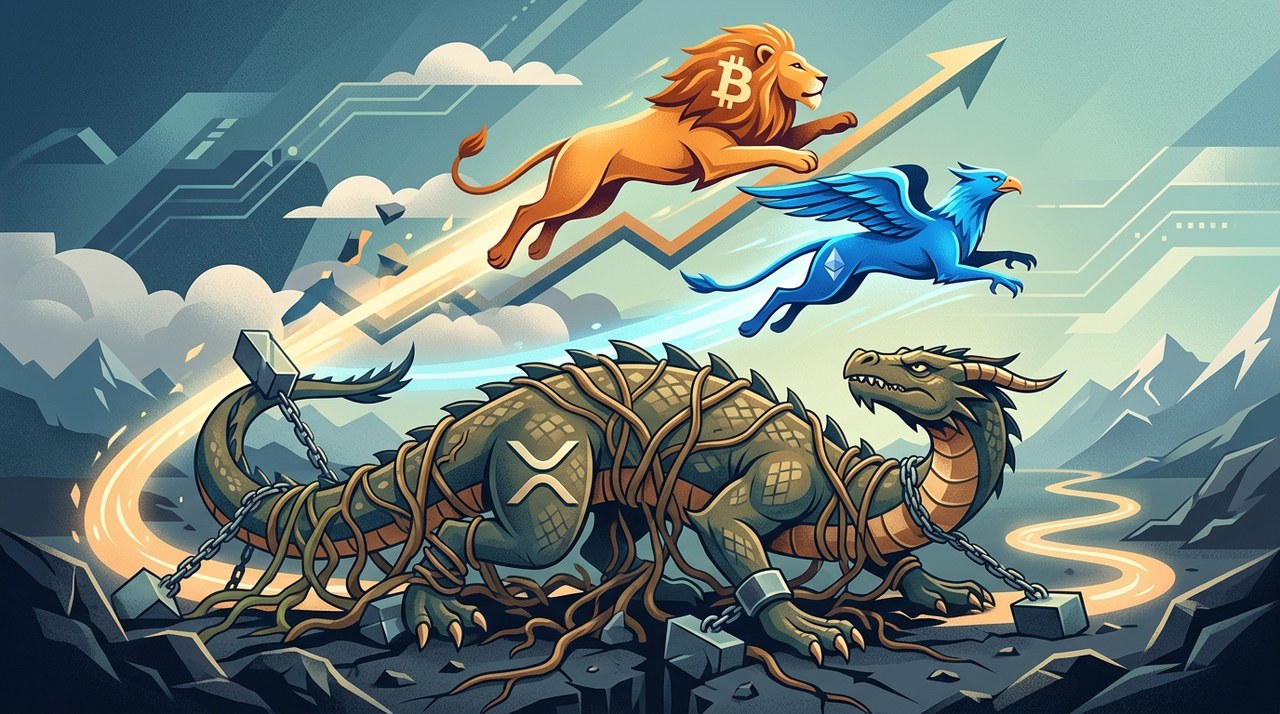
+2Why XRP Has Lagged Behind Bitcoin and Ether
While holding crypto often builds long-term wealth, XRP remains below its 2018 peak due to supply growth, regulatory friction, and shifting market demand.
|

Steve Jobs Got Rich From Pixar Before Apple
Steve Jobs made his first billion not from Apple, but from purchasing Lucasfilm's computer graphics division in 1986 and building Pixar.
|

Anthropic Targets $1.5 Trillion Valuation Ahead of IPO
Anthropic investors are discussing a $1.5 trillion valuation for its upcoming listing as revenue growth moderates amid rising competition.
|