
Anthropic Targets $1.5 Trillion Valuation Ahead of IPO
A Reality Check for Anthropic's Big Public Debut
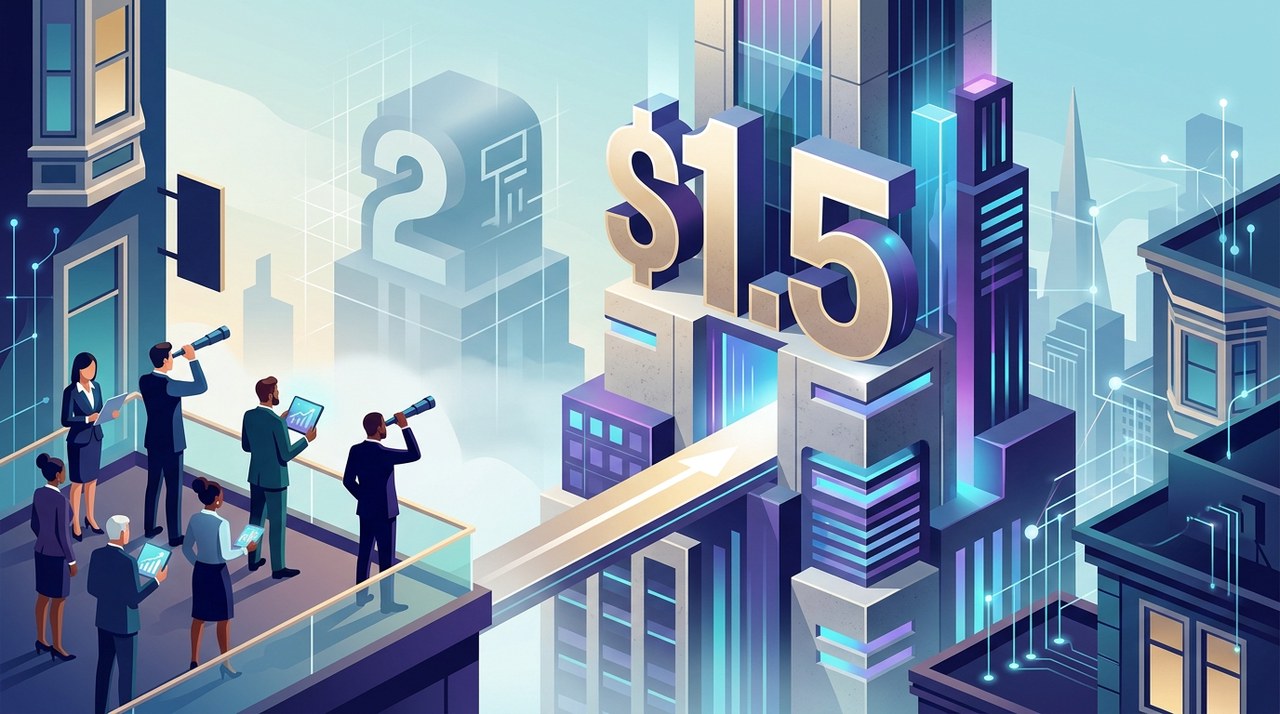
Artificial intelligence powerhouse Anthropic is preparing for a public market debut, but the expected valuation numbers are starting to shift. Investors who attended Anthropic's investor day in San Francisco reported discussions centered around a $1.5 trillion valuation for a planned November initial public offering (IPO). While a multi-trillion-dollar price tag is extraordinary, this figure lands about $500 billion below the $2 trillion valuation that early market optimistic expectations had previously suggested.
The updated discussions highlight how rapidly expectations can recalibrate in the high-stakes technology sector. While AI adoption continues to expand, investors are paying closer attention to quarterly financial trends, enterprise demand shifts, and overall business sustainability before committing capital to major listing events.
Inside the Numbers: Solid Revenue Meets Slower Growth
During the San Francisco presentation, Anthropic shared key financial highlights with prospective backers. The company revealed that it achieved profitability on an adjusted basis during the third quarter, supported by $16.8 billion in quarterly revenue. This revenue marked a 45% increase compared to the previous quarter.
However, that 45% growth rate represents a noticeable step down from the company's momentum earlier in the year. In the second quarter, Anthropic had reported revenue doubling to $11.6 billion. For growth-focused investors accustomed to exponential trajectories, a slowing rate of expansion—even at high absolute dollar figures—can prompt a reassessment of future projections.
It is worth remembering that past financial metrics and past performance do not guarantee future growth or stock valuation outcomes. Historical growth trends should always be viewed alongside broader industry dynamics.
Three Key Factors Behind the Slower Expansion
Several operational and competitive factors contributed to the deceleration in quarterly revenue growth leading up to the investor presentation:
- In-House Model Development: Major corporate clients like Meta and Microsoft have increasingly relied on their own internally developed AI models, reducing their reliance on third-party software.
- Reduction in Model Distillation: Anthropic intentionally scaled back its paid distillation services, a feature that previously generated between 5% and 7% of total company revenue.
- Intense Price Competition: Price pressure across the AI market has accelerated. Anthropic priced its Claude Haiku 5.5 model roughly 75% lower than its predecessor, driven by competitive moves from low-cost Chinese development laboratories.
Skeptical Views and Market Comparisons
Even with a revised target of $1.5 trillion, some market observers remain skeptical of the figure. Independent research firm New Constructs published a report valuing Anthropic at $150 billion—one-tenth of the current investor discussions. The firm, which notably raised warnings about WeWork prior to its initial listing attempt in 2019, argued that Anthropic has yet to demonstrate a fully sustainable long-term commercial structure.
From a market comparison standpoint, a $1.5 trillion valuation would place Anthropic just below private space exploration firm SpaceX, which reached a $1.77 trillion valuation during its June listing. Valuation estimates reflect analyst assumptions about future market conditions; if enterprise adoption accelerates, higher valuations can materialize, whereas deeper price cuts or reduced demand could lead to lower valuations.
Big Tech's Reliance on AI Model Creators
The commercial health of Anthropic holds implications far beyond its own shareholder base. Top technology conglomerates rely heavily on primary AI research firms to drive their cloud and software ecosystems. In August, investor Steve Eisman estimated that Anthropic and competitor OpenAI together account for approximately 70% of AI-related revenues at Microsoft, Amazon, Google, and Oracle.
Eisman characterized this structural concentration as a potential vulnerability for the broader technology sector, noting that any significant slowdown among leading AI model providers could rippleXRP+2.49% through the financial performance of major cloud infrastructure platforms.
Broader AI Market Volatility and Bubble Warnings
The discussion surrounding Anthropic comes during a volatile stretch for technology equities. Prominent financial figures have voiced growing caution regarding market valuations in the artificial intelligence ecosystem:
- Michael Burry highlighted risks of a market correction in AI assets, suggesting valuation adjustments could occur faster than market participants previously anticipated.
- Former BitMEX CEO Arthur Hayes expressed concerns that massive infrastructure spending on data centers could eventually face a sharp economic correction.
- Market Data Impact: According to CNBC, the 20 largest AI and semiconductor companies lost more than $1 trillion in cumulative market value over a single week, with Dell falling 11% on Wednesday and 6.8% on Thursday, while CoreWeave fell approximately 15%.
Short-term stock price fluctuations reflect shifting broader economic conditions and market sentiment. Investors should note that historical stock price movements do not indicate future price action or guaranteed returns.
Setting the Benchmark for Future AI Listings
Despite market headwinds, Anthropic remains positioned to be the first major foundational AI laboratory to list on public exchanges, with its IPO scheduled for November. Rival OpenAI is widely expected to follow with a public listing by early 2027.
Industry analysts expect Anthropic's eventual listing performance to establish the valuation benchmark and pricing structure for the entire AI sector, serving as a key reference point for subsequent public offerings in the software industry.
Latest blog posts


 +2
+2Why XRP Has Lagged Behind Bitcoin and Ether
While holding crypto often builds long-term wealth, XRP remains below its 2018 peak due to supply growth, regulatory friction, and shifting market demand.
|

Steve Jobs Got Rich From Pixar Before Apple
Steve Jobs made his first billion not from Apple, but from purchasing Lucasfilm's computer graphics division in 1986 and building Pixar.
|
Balaji's Farcaster Plan: A Singapore Social Hub
Network School founder Balaji Srinivasan is building an orderly, high-standard community on Farcaster, starting with strict moderation to remove bad actors.
|