

ZEC Whale Buys Nullmask: Major Concentration Red Flags
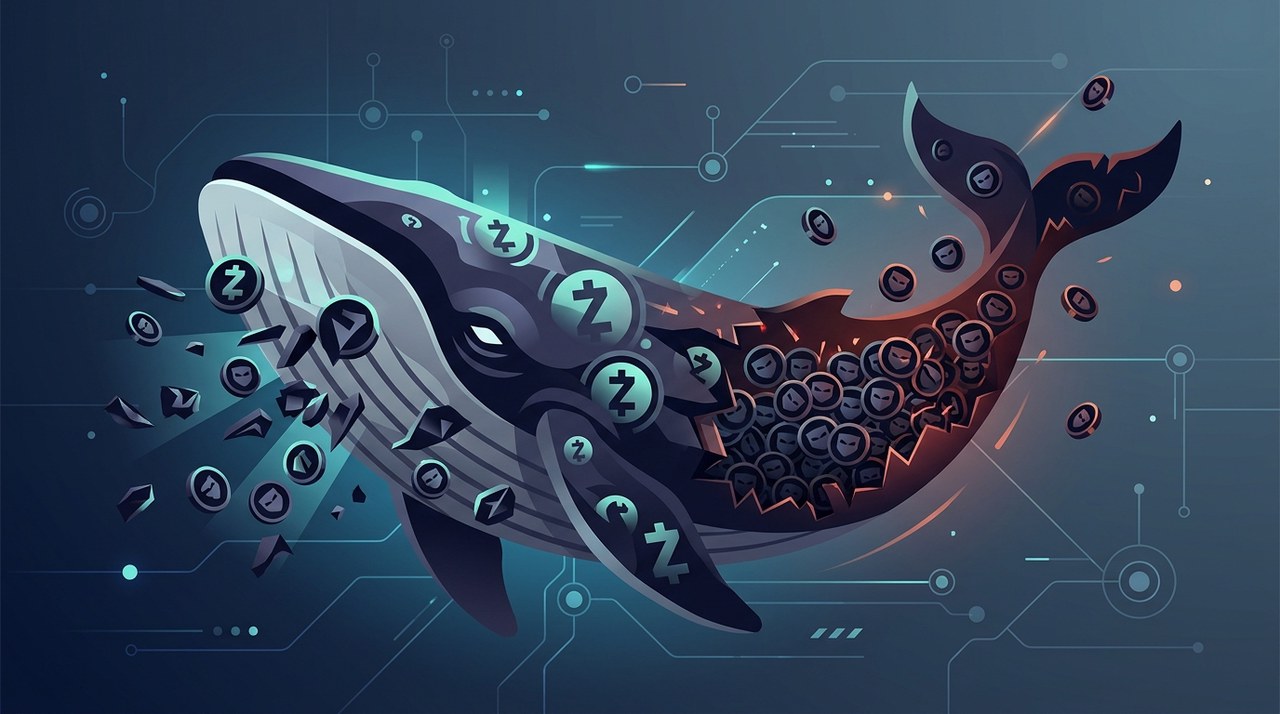
A $15 Million Whale Moves into Nullmask
When a major crypto investor starts accumulating a relatively unknown token, the market usually sits up and takes notice. That is exactly what happened recently when a prominent Zcash (ZEC) whale began buying up Nullmask (MASK) tokens.
According to blockchain tracking data, this investor holds over $15 million in crypto assets, including 10,241 ZEC valued at around $11.69 million. Over a three-day period, this wallet spent roughly $151,000 to accumulate 3.69 million MASK tokens. While this whale activity has created buzz across social media, taking a closer look under the hood reveals several major warning signs that investors ought to know about.
What Exactly Is Nullmask (MASK)?
Before diving into the risks, it helps to understand what Nullmask actually does. Nullmask is a privacy-focused cryptocurrency project designed to enable private token transfers and decentralized swaps using zero-knowledge technology.
Its native token, MASK, operates on the SolanaSOL-1.65% blockchain. The project stands out from typical memecoins because it offers genuine privacy utility rather than relying purely on internet hype. On top of its core privacy tools, Nullmask provides ZEC-related rewards to token holders and has announced plans for future token buybacks.
However, having a functioning product and real technology does not make a token immune to heavy market risks. The underlying distribution of MASK tokens reveals structural vulnerabilities that every trader should consider.
Red Flag #1: Extreme Token Concentration
The biggest concern surrounding Nullmask is how tightly controlled its token supply is. Token concentration occurs when a tiny percentage of wallets holds the vast majority of circulating tokens. If those holders decide to exit their positions, the market can experience extreme volatility.
Data from blockchain analytics platform Arkham reveals striking numbers regarding MASK distribution:
- Single Largest Wallet: One single address holds roughly 384.28 million MASK tokens, representing 39.36% of the total token supply with an estimated value near $16 million.
- Top Six Holders: The six largest displayed holder addresses collectively control more than 50% of the total MASK supply.
- Top Ten Wallets: Additional data from Rug.Tools showed that the top ten wallet addresses controlled approximately 56.12% of the supply on October 18.
To be fair, Arkham data indicates that the largest wallet appears to be consistent with Nullmask's protocol treasury tracked by DeFiLlama, rather than belonging to an independent individual whale. However, this does not eliminate the risk.
Crucial questions remain unanswered: Who holds the keys to this treasury? Are these tokens subject to a strict lockup or vesting schedule? Under what conditions could they enter active circulation? If millions of treasury tokens hit the market unexpectedly, the resulting selling pressure could severely impact MASK's price.
Red Flag #2: Low Liquidity and High Slippage Risks
Another critical issue facing MASK traders is the severe imbalance between its market valuation and its available liquidity pool. Liquidity measures how easily an asset can be bought or sold without causing a drastic shift in its price.
On-chain metrics from Rug.Tools recorded approximately $1.22 million in total liquidity against an overall market capitalization of $23.64 million. Having only $1.22 million in liquidity to support a $23 million market cap creates a fragile trading environment.
In practical terms, this means that even moderate sell orders could trigger massive price slippage—causing token values to plummet rapidly before orders can be filled. Adding to these trading costs, MASK imposes a 3% transfer fee on transactions, which adds extra friction for traders entering or exiting positions.
Red Flag #3: Valuation vs. Adoption Disconnect
A project's long-term sustainability often depends on real user adoption. In decentralized finance (DeFi), this is commonly measured using Total Value Locked (TVL), which tracks the total amount of user assets deposited in a protocol's smart contracts.
On October 20, DeFiLlama reported that Nullmask had roughly $58,000 in protocol TVL. Comparing a $58,000 TVL against MASK's $24 million market capitalization highlights a massive disconnect between actual platform usage and speculative token value.
Furthermore, reported protocol revenues include ZEC rewards received directly by the team's wallet. As a result, these revenue figures should not be viewed as organic income generated from paying users utilizing Nullmask's privacy services.
Key Takeaways for Crypto Traders
Seeing a large crypto whale purchase $151,000 worth of MASK might look like a strong vote of confidence on the surface, but whale movements alone do not guarantee a safe or profitable investment.
If Nullmask successfully expands its privacy tools and attracts genuine organic usage, the protocol could see fundamental growth over time. However, if major treasury holders release tokens into circulation or market sentiment shifts downward, the low liquidity could lead to rapid and severe price drops.
With concentrated ownership, limited liquidity pools, a young protocol ecosystem, and high speculative interest, copying whale trades without proper risk management carries substantial risk. Always remember that past performance of digital assets or historical trading behavior of whales is not a guarantee of future results.
Latest blog posts


 +1
XRP Launches Official X Account, Reaches 111K Followers
Ripple and the XRPL Foundation launched the official @XRP account on X, attracting over 111,000 followers within hours.
|
XT Exchange Adapts as Crypto Focuses on Utility
In 2026, crypto usage stayed steady despite falling token prices, showing how XT Exchange's 8-year evolution meets real user needs beyond trading.
|
ARK Invest Projects Tesla Stock Could Reach $4,400 by 2031
ARK Invest's new model projects Tesla reaching $4,400 by 2031, driven heavily by robotaxis and AI, though key execution risks remain.