


XRP Expert Explains How Network Usage Impacts Token Value
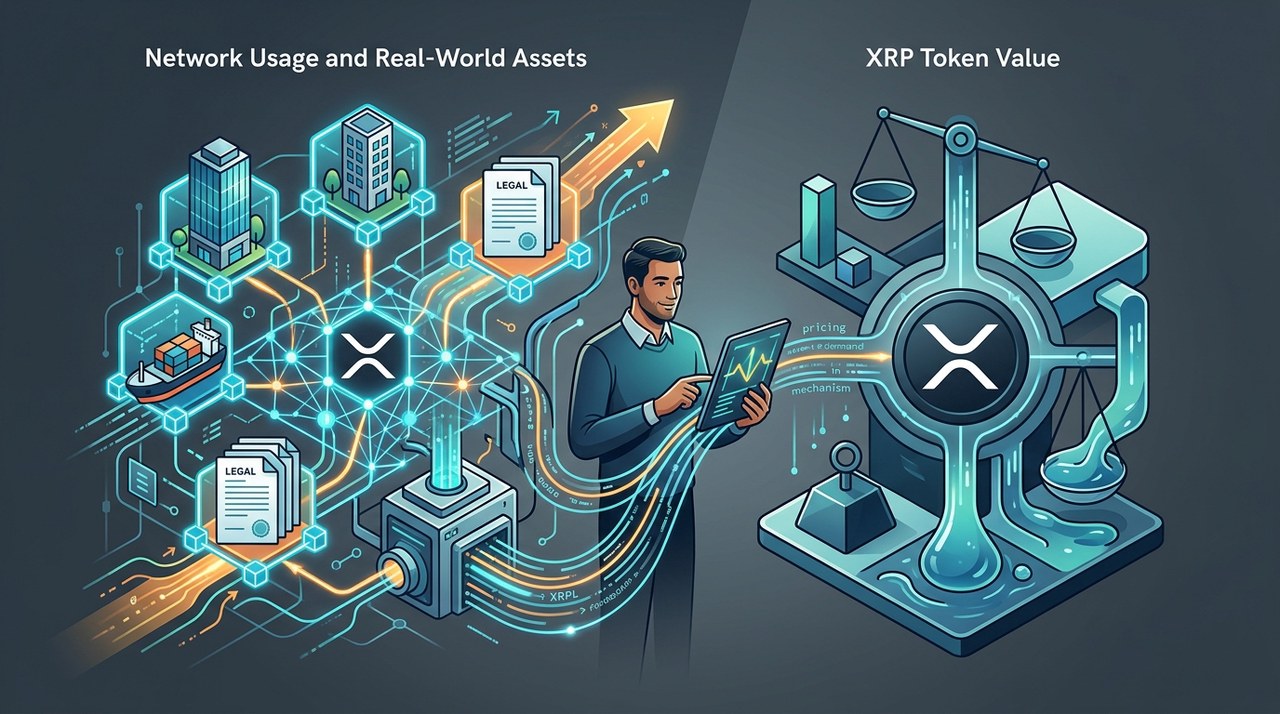
Why Isn't the XRPXRP-1.09% Price Moving with Network Growth?
If you follow cryptocurrency news, you have likely asked yourself this question at least once.
Why doesn't the price of XRP immediately jump whenever the XRP Ledger announces a major new integration?
On Friday, October 23, 2026, crypto news reporter Alex Dovbnya highlighted a key discussion addressing this exact concern.
A well-known XRP Ledger validator known as Vet publicly responded to persistent community confusion.
Vet cleared up common misunderstandings about how tokenized real-world assets, network usage, and token prices connect.
Understanding the Misconception About XRP Utility
Many traders assume that every new project on the XRP Ledger should directly boost XRP's token price right away.
When institutions tokenize real-world assets or launch custom tokens, observers often complain that XRP seems uninvolved.
Vet recently addressed these complaints on social media platform X.
I see sometimes comments saying XRP is not used here, why tokenized assets, price is not moving, etc.
According to the validator expert, these frustrations stem from a basic misunderstanding of how the XRP Ledger operates.
The XRP Ledger is a Multi-Asset Network
To understand Vet's point, we need to look back at the history of the network.
The XRP Ledger was originally designed as a multi-asset network back in 2012.
This architecture means the blockchain was built from day one to host many different digital assets.
It is not designed solely to transfer native XRP tokens.
Businesses and developers can issue custom tokens, stablecoins, and digitized commodities directly on the ledger.
What Essential Roles Does XRP Play?
Even when third parties issue custom assets on the network, native XRP serves critical backend functions:
- Account Reserves: Wallet addresses must reserve a small amount of XRP to prevent network spam.
- Transaction Fees: A micro-amount of XRP is burned during every transaction to protect against network attacks.
- DEX Liquidity: XRP serves as a neutral bridge between disparate trading pairs on the decentralized exchange.
What is Auto-Bridging? An Easy Analogy
One of XRP's most powerful built-in features is a process called auto-bridging.
Imagine you are traveling at an international airport holding currency from Country A.
You want to exchange your cash directly for currency from Country B.
However, no direct trading desk exists between those two specific local currencies.
Instead, the kiosk automatically converts your cash into US Dollars, and then converts those dollars into Country B's money.
XRP fulfills this exact role on the XRP Ledger's decentralized exchange (DEX).
When two custom tokens lack direct trading liquidity, XRP seamlessly acts as the intermediate bridge asset.
This feature provides smooth trading liquidity for what developers call the 'long tail' of tokenized assets.
The Zero Counterparty Advantage
Beyond fees and exchange liquidity, Vet emphasized XRP's most unique fundamental characteristic.
XRP is the only native asset on the XRP Ledger that carries zero counterparty risk.
To understand counterparty risk, consider the difference between a retail gift card and a physical gold coin.
A gift card depends entirely on the issuing store remaining solvent to honor its stored balance.
That issuing store represents counterparty risk.
In contrast, a physical gold coin holds inherent value without relying on any corporation's promise.
More importantly, it's the only native asset on the network without a counterparty - neutral, can't be frozen, and anyone can accept it.
Most issued tokens on a blockchain represent claims managed by external central entities.
Those issuers can freeze accounts or default on obligations.
Native XRP is completely neutral, cannot be frozen by any third party, and can be accepted by anyone across the globe.
The Order of Operations: Adoption First, Price Second
How does growing network adoption eventually connect to XRP's market price?
Vet explained that market participants must understand the proper 'order of operations'.
New institutional partnerships or asset tokenization projects do not cause instantaneous price spikes on day one.
Instead, network adoption builds foundational utility and settlement activity first.
A valuable network is a good place to house money. It's order of operations. Let the price of the native asset be a knock-on effect of large-scale usage and acceptance of the XRP Ledger.
Think of this like developing a new urban business district.
Land values do not soar the minute road construction begins.
First, power lines, roads, and modern office structures must be established.
As major businesses move in and daily commerce expands, property values naturally reflect that underlying activity over time.
Evaluating Scenarios and Potential Market Risks
While expanded network adoption provides long-term utility, future price growth depends on several market conditions.
If real-world transaction volume grows significantly and demand for native bridge liquidity expands, XRP's value could experience structural upward pressure.
However, if global macroeconomic headwinds persist or broader crypto market sentiment turns bearish, token values can drop regardless of underlying utility.
Past performance of digital assets is not an indicator of future results. You can review historic market data and full metrics at bitkub.com.
Recent XRP Ledger Technical Amendments
Alongside conversations about token utility, technical maintenance on the XRP Ledger continues.
As reported by Gamza Khanzadaev on October 22, 2026, a scheduled XRP Ledger Bug Fix Amendment was rescheduled to November 4, 2026.
The temporary delay occurred following a brief dip in active validator voting participation.
Validator consensus remains essential to ensuring that protocol fixes deploy securely across the decentralized network.
Wider Cryptocurrency Market Context
The discussions surrounding XRP take place during a broader period of crypto market developments recorded on October 23, 2026.
Institutional interest in tokenization continues to expand, highlighted by JPMorgan's Tokenized Money Market Funds going live on the SolanaSOL+0.45% blockchain.
In market analysis reports, analysts suggested Bitcoin might remain resilient against tech-sector stock fluctuations tied to artificial intelligence concerns.
Additionally, market insights from Arman Shirinyan noted returning volatility across top cryptocurrencies.
Assets including Monero (XMR), StellarXLM-0.27%, Bitcoin (BTCBTC-0.39%), and HyperliquidHYPE+0.78% recorded noticeable swings amid generally cautious investor sentiment.
Summary of Key Insights
Differentiating short-term market speculation from foundational network growth is critical for evaluating digital assets.
- Multi-Asset Foundation: The XRP Ledger has accommodated tokenized assets and custom tokens since 2012.
- Liquidity Bridge: XRP automatically bridges trades between custom token pairs on the internal DEX.
- Zero Counterparty Risk: XRP is a native asset that cannot be frozen by third-party issuers.
- Order of Operations: Network utilization creates value first, while potential token appreciation acts as a secondary effect.
- Market Awareness: While network growth provides structural utility, external economic conditions still drive price volatility.
Latest blog posts
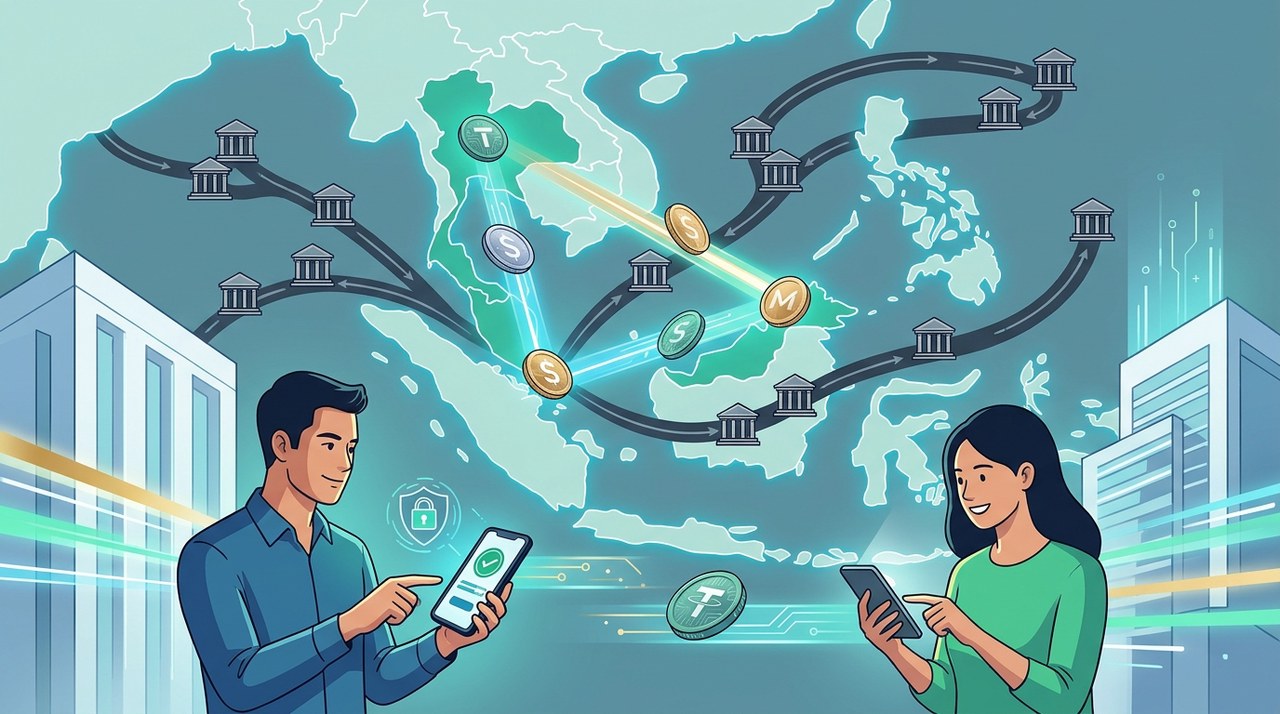

Southeast Asia Unites for Faster Cross-Border Money Transfers
Malaysia and Thailand have joined Singapore's Project BLOOM initiative to test stablecoins and tokenized deposits for cheaper cross-border payments.
|

Bitcoin ETFs Face $635M Outflows as October Turns Red
Thursday's $635 million ETF withdrawals snapped a three-day streak, pushing October into $175 million in net outflows.
|


Soft Underwater Robot Swims in 3D with Just Two Actuators
NC State researchers created a soft underwater robot inspired by feather stars that maneuvers in 3D using only two pneumatic actuators.
|