
What is Mitosis (MITO)?
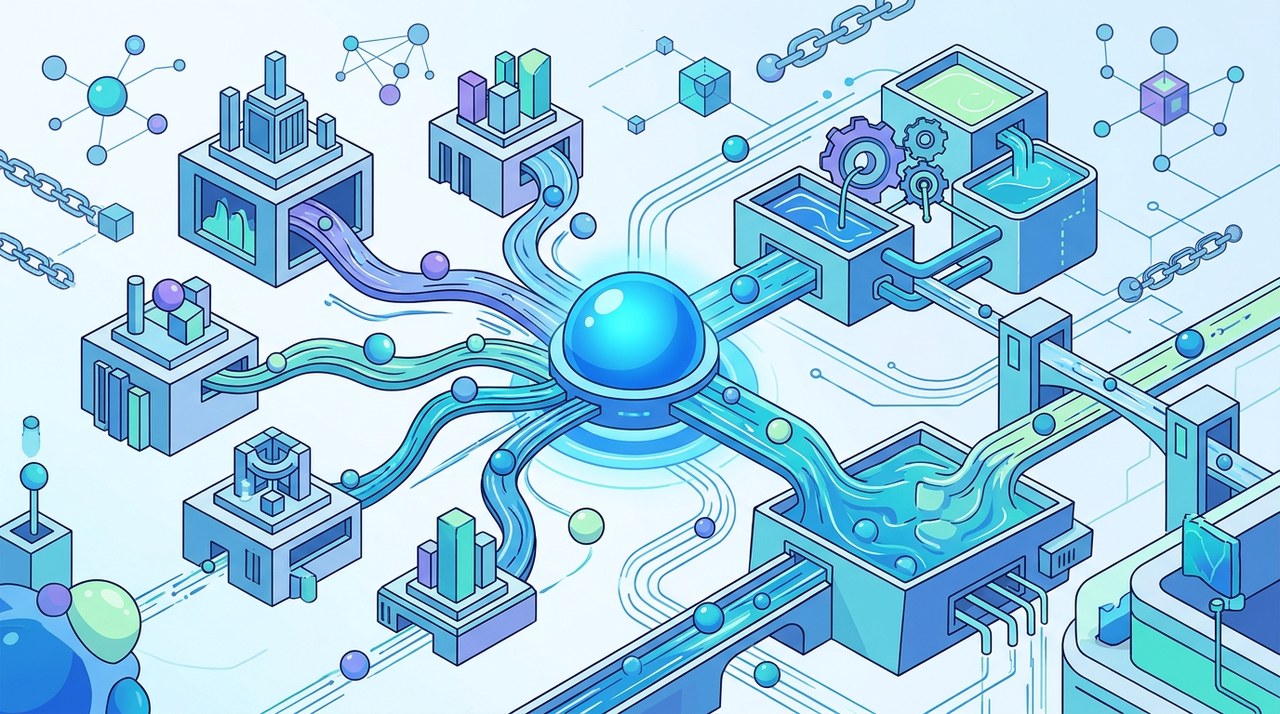
- Mitosis (MITOMITO-1.18%) is a modular liquidity protocol designed to solve cross-chain capital fragmentation in multi-chain DeFi ecosystems.
- It introduces Ecosystem-Owned Liquidity (EOL), replacing short-term liquidity mining with collaborative, protocol-governed yield pools.
- The MITO token powers governance, network security staking, execution fee settlement, and ecosystem yield incentives.
- Mitosis enables cross-chain composability for liquid restaking tokens (LRTs) and collateralized debt positions without sacrificing underlying yield.
- Investors can trade MITO securely on Bitkub Exchange after completing standard account verification and depositing funds.
1. Introduction: What is Mitosis (MITO)?
The rapid expansion of decentralized finance (DeFi) across multiple layer-1 and layer-2 blockchain networks has created a vibrant but fragmented landscape. While the proliferation of distinct network architectures—such as Ethereum rollups, alternative layer-1 networks, and application-specific chains—has expanded overall blockchain throughput, it has introduced a major operational challenge: liquidity fragmentation.
Capital deposited on one blockchain often remains locked within that specific environment, unable to seamlessly move or generate yield elsewhere without incurring high transaction costs, slippage, and security risks associated with conventional bridges. Mitosis (MITO) addresses this fundamental inefficiency by introducing a modular liquidity protocol designed to make cross-chain capital fluid, yield-bearing, and composable across diverse Web3 ecosystems.
At its core, Mitosis introduces a paradigm shift known as Ecosystem-Owned Liquidity (EOL). Unlike traditional liquidity framework models that rely on mercenaries offering short-term yield farming incentives, Mitosis provides an infrastructure where decentralized applications (dApps), networks, and individual liquidity providers (LPs) can collaboratively aggregate, govern, and distribute cross-chain assets efficiently.
2. History and Background of Mitosis
To understand the origins of Mitosis, it is necessary to examine the evolution of decentralized liquidity provision. During the early iterations of DeFi (often referred to as 'DeFi 1.0'), liquidity was primarily governed by liquidity mining programs. Protocols offered high token emissions to attract Total Value Locked (TVL). However, this capital was often temporary; once token rewards diminished, liquidity providers moved their assets to the next high-yield protocol, causing severe capital flight and price instability for native protocol tokens.
Subsequent models introduced Protocol-Owned Liquidity (POL), allowing projects to purchase their own liquidity pools to retain capital stability. While POL reduced capital flight, it created a new problem: capital inefficiency. Assets locked within protocol treasury pools remained idle, unable to participate in yield opportunities across neighboring blockchain networks.
Recognizing these persistent bottlenecks, the developers of Mitosis established a framework designed for the modular Web3 era. By combining cross-chain interoperability standards with programmatic vault architectures, Mitosis was engineered to unlock liquidity trapped inside isolated smart contracts. The protocol's inception aimed to transform static multi-chain assets into yield-producing components capable of flowing across arbitrary execution layers without forfeiting security or underlying asset governance.
3. How Mitosis Works: Architecture and Technical Foundations
Mitosis operates on a hub-and-spoke architecture built to facilitate cross-chain state synchronization and asset composability. The core mechanics of the Mitosis network rely on three primary technical pillars: Ecosystem-Owned Liquidity (EOL), Vault Standardization, and Hub-to-Spoke Messaging.
Ecosystem-Owned Liquidity (EOL)
Ecosystem-Owned Liquidity is the foundational philosophy powering the Mitosis protocol. Under traditional systems, individual users deposit capital into isolated yield vaults, while protocol teams manage separate treasury funds. EOL bridges this divide by pooling user deposits into collective, democratically managed liquidity reserves.
When users deposit cryptocurrency into a Mitosis vault, they receive programmatic claim tokens (often referred to as Hub assets or miTokens). These derivative tokens represent full ownership of the deposited principal plus any accrued yield, while simultaneously allowing the underlying capital to be directed by protocol governance into optimized cross-chain yield strategies.
Matrix Vault Architecture and Derivative Minting
The operational workflow of Mitosis follows a structured multi-step process:
- Asset Locking: Users deposit supported assets (such as ETH, liquid restaking tokens like eETH, or stablecoins) into a Mitosis Matrix Vault on a target source chain.
- State Verification & Hub Minting: Smart contracts emit cross-chain messages verifying the lockup. The Mitosis Hub chain registers the deposit and mints equivalent 1:1 liquid derivative tokens (miTokens).
- Cross-Chain Deployment: These miTokens can then be utilized across participating L2 networks and decentralized applications as collateral, liquidity provision units, or yield instruments.
- Yield Settlement: Realized yields generated across external execution layers are programmatically routed back to the native vault framework, continuously updating the underlying value of the derivative tokens.
Cross-Chain Interoperability Layer
Rather than relying on vulnerable centralized multi-sig bridges, Mitosis leverages cross-chain messaging solutions (such as Hyperlane or LayerZero) integrated alongside secure consensus verification modules. This ensures that state transitions—such as cross-chain token minting, strategy allocation changes, and yield distributions—are cryptographically verified across connected networks.
4. Key Features and Use Cases of MITO
The MITO token serves as the core utility and governance pillar within the Mitosis ecosystem. Its functional design spans protocol governance, economic security, and yield optimization across the network.
Token Utilities
- Decentralized Governance: MITO holders can stake their tokens to receive governance rights. Holders vote on critical protocol decisions, including new network integration, vault asset whitelistings, yield strategy allocation parameters, and fee distributions.
- Staking & Yield Boosting: Users who stake MITO tokens help secure the protocol's consensus and cross-chain message verification layers. In return, stakers can earn protocol fee distributions and elevated yield rates on their active vault deposits.
- Transaction and Execution Fees: MITO is used to cover gas and operational execution fees associated with multi-chain rebalancing strategies managed on the Mitosis Hub network.
- Liquidity Incentive Alignment: Projects building on expanding layer-2 blockchains can utilize MITO token incentive structures to attract sustainable liquidity directly into their native ecosystem vaults.
Primary Web3 Use Cases
Mitosis provides specialized utility across multiple Web3 sectors:
- Liquid Restaking Composability: Mitosis enables liquid restaked tokens (LRTs) to remain active across diverse execution layers, allowing users to earn underlying Ethereum staking yields, restaking rewards, and secondary DeFi strategy yields concurrently.
- Cross-Chain Lending Collateral: Traders can use miTokens as recognized high-efficiency collateral across money market protocols spanning different blockchains without unwinding their primary yield positions.
- Emerging L2 Liquidity Bootstrapping: New layer-2 rollups often struggle with initial capital bootstrap phases. Through Mitosis EOL vaults, new networks can tap directly into pooled asset liquidity without needing to issue excessive, inflationary native token emissions.
5. MITO in the Market: Opportunities and Risks
The market adoption of Mitosis depends heavily on the expansion of multi-chain infrastructure, liquid restaking ecosystems, and general growth within decentralized finance. As blockchain networks continue to specialize, demand for standardized, capital-efficient cross-chain middleware solutions remains a significant focus for market participants.
Market Growth Factors and Scenario-Based Analysis
If total value locked across Ethereum layer-2 rollups and modular networks continues to increase, demand for cross-chain liquidity architecture like Mitosis could grow, potentially driving higher protocol revenues and utility for the MITO token. Conversely, if overall DeFi market activity declines, or if cross-chain activity slows due to emerging unified layer-1 solutions, market usage and protocol yields for Mitosis could adjust downward accordingly.
Risk Considerations
While Mitosis offers technical solutions to long-standing capital inefficiencies, potential users and market participants should evaluate key risk factors:
- Smart Contract Risk: Interacting with complex multi-chain smart contracts exposes protocols to potential code vulnerabilities, bugs, or security exploits.
- Cross-Chain Bridging Risk: Reliance on underlying cross-chain communication layers carries risk if dependent messaging protocols encounter downtime or compromised consensus.
- Market Volatility Risk: Digital asset prices, including MITO and vault-deposited collateral, are subject to rapid market fluctuations. Investors should evaluate their individual risk tolerance before participating.
- Regulatory Uncertainty: Global regulatory environments governing decentralized finance protocols and liquid derivative assets remain subject to ongoing policy changes.
Past digital asset performance is not an indicator of future performance. Readers interested in real-time pricing data and trading volumes can monitor live digital asset metrics on Bitkub Exchange.
6. How to Buy MITO on Bitkub
Bitkub Exchange provides a secure, regulated, and user-friendly platform for buying, selling, and managing digital assets such as MITO. Below is a step-by-step guide on how to acquire MITO on Bitkub:
- Account Registration & Verification: Visit the official Bitkub website or download the Bitkub mobile app. Register an account and complete the required Identity Verification (KYC) process.
- Deposit Funds (THB): Navigate to your Bitkub Wallet, select 'Deposit', and transfer Thai Baht (THB) using mobile banking transfer or QR payment options.
- Navigate to Market Trading: Once your THB deposit reflects in your wallet balance, navigate to the 'Market' tab and search for the MITO trading pair.
- Place a Trade Order: Select your preferred order type. Choose a Limit Order to specify your desired buying price, or select a Market Order to execute the purchase instantly at the best available market price.
- Store and Manage Your MITO: After order execution, your MITO tokens will instantly reflect in your secure Bitkub account wallet. You can hold them securely within your account or transfer them to a compatible self-custodial Web3 wallet.
7. Conclusion: The Future of Modular Liquidity with Mitosis
Mitosis represents a notable evolution in decentralized liquidity infrastructure. By introducing Ecosystem-Owned Liquidity (EOL) and matrix vault structures, the protocol provides an operational framework designed to dismantle cross-chain capital barriers, optimize yield composability, and empower emerging multi-chain ecosystems.
As the Web3 landscape moves toward modular rollups and interconnected execution layers, protocols capable of unifying fragmented liquidity will play a fundamental role in shaping decentralized finance. However, as with all innovative blockchain technologies, potential users must conduct thorough independent research (DYOR) and evaluate both technical and market risks before participating in liquidity management protocols.
Latest blog posts

What is Spark (SPK)?
Spark (SPK) is an innovative decentralized finance protocol designed to power institutional-grade lending and borrowing within the Sky ecosystem. Developed from MakerDAO's Endgame vision, Spark combines capital efficiency, deep liquidity, and decentralized governance. This guide explores Spark's architecture, key features, market role, and safety considerations.
|

What is SUI (SUI)?
Sui is an innovative Layer-1 blockchain built by former Meta engineers that leverages an object-centric data model and the Sui Move programming language. Designed for parallel transaction execution and sub-second latency, Sui aims to deliver enterprise-grade performance for DeFi, gaming, and mass-market Web3 applications.
|

What is Mira (MIRA)?
Mira (MIRA) is a decentralized protocol designed to bring trust and transparency to artificial intelligence systems. By combining off-chain computational pipelines with on-chain cryptographic proofs and cryptoeconomic incentives, Mira allows decentralized applications and autonomous agents to verify AI outputs seamlessly.
|