
What is Mira (MIRA)?
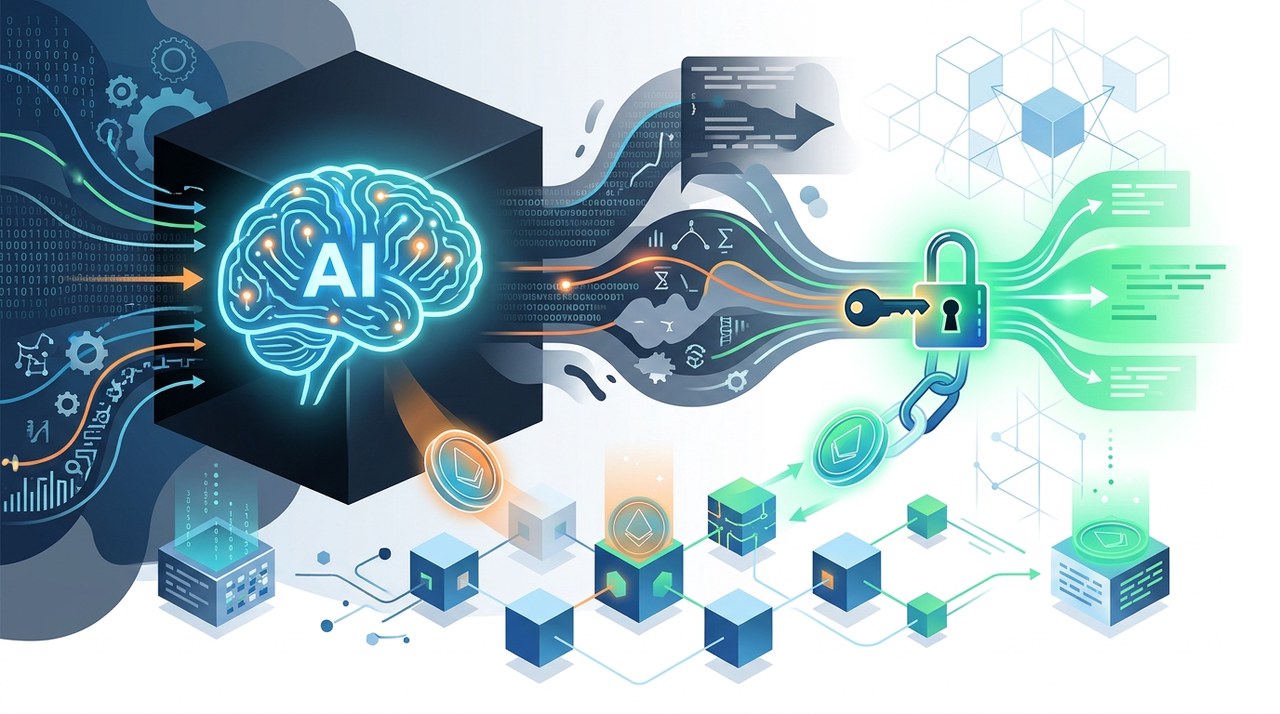
- MiraMIRA+9.32% is a decentralized protocol engineered to provide trust, auditability, and verification for AI model outputs.
- It solves the centralized 'black box' AI problem by using off-chain computation coupled with on-chain cryptographic verification.
- The native MIRA token is utilized for node staking, payment of verification fees, and decentralized governance.
- Potential growth depends on DeAI sector adoption, while token prices remain subject to broader market volatility.
1. Introduction: What is Mira (MIRA)?
As Artificial Intelligence (AI) rapidly integrates into every sector of the modern global economy, a critical challenge has emerged: how can users verify that AI outputs are accurate, unbiased, and untampered with? Traditional centralized AI models operate largely as opaque black boxes, controlled by a small group of technology conglomerates with proprietary code, undisclosed training data, and hidden operational logic. This lack of auditability creates systemic risks, ranging from algorithmic hallucination and hidden bias to single points of control and censorship.
Mira (MIRA) enters the cryptographic landscape as a specialized decentralized protocol engineered to solve this trust deficit. By bridging blockchain technology with advanced machine learning computational pipelines, Mira provides a decentralized trust layer for AI output verification, autonomous agents, and multi-model execution. The protocol ensures that computational tasks assigned to AI systems are verified by a distributed network, bringing transparency, auditability, and decentralization to artificial intelligence.
2. History and Background of Mira
The conceptual foundation of Mira developed in response to the unprecedented expansion of generative AI and Large Language Models (LLMs) in the early 2020s. While centralized tools demonstrated extraordinary problem-solving and natural language capabilities, they simultaneously exposed fundamental vulnerabilities regarding data privacy, model drift, and unmitigated centralized authority.
Recognizing these architectural limitations, the founders of Mira envisioned a framework where AI execution could be broken down, validated, and audited across a decentralized network of independent node operators rather than relying on centralized cloud providers.
Throughout its development, Mira focused on solving the structural bottleneck of verifying complex AI computations on-chain without incurring prohibitive latency or exorbitant transaction fees. By implementing research in economic incentive design, zero-knowledge proofs, and optimistic consensus models, Mira transitioned from an academic concept into an operational Decentralized AI (DeAI) protocol supporting decentralized applications, enterprise pipelines, and autonomous agent networks.
3. How Mira Works: The Technical Architecture
To understand how Mira functions, one must look at how the protocol bridges non-deterministic machine learning outputs with deterministic blockchain consensus engines. Traditional blockchains require every validator to execute identical code to verify state changes, which is far too computationally expensive for heavy neural network inferences.
Task Distribution and Off-Chain Computation
When a decentralized application or user submits a request to the Mira network, the task is parsed and distributed to off-chain worker nodes. These nodes run specialized AI models—ranging from text generation and code audit engines to financial forecasting algorithms—outside the main blockchain execution environment to preserve speed and bandwidth.
Cryptographic Proofs and Multi-Node Verification
Once off-chain nodes complete the computation, they submit output cryptographic commitments to the Mira verification network. Mira employs a multi-tiered verification framework:
- Consensus Sampling: Multiple independent nodes run parallel evaluations of the task output to check for consistency across model responses.
- Optimistic Verification with Fraud Proofs: Outputs are assumed valid unless challenged by verifiers within a dispute window, drastically reducing processing costs.
- Zero-Knowledge Proof Integration: For sensitive enterprise or private data, cryptographic zero-knowledge proofs (zk-proofs) are generated to prove that an AI model ran correctly without exposing the underlying confidential raw data.
Cryptoeconomic Consensus and MIRA Staking
The operational integrity of the Mira network is secured through cryptoeconomic incentives. Node operators are required to lock MIRA tokens as collateral (staking) to participate in task execution and verification consensus. If a node operator submits fraudulent, inaccurate, or altered AI results, a portion or all of their staked MIRA is subject to slashing. Conversely, honest node operators who consistently deliver accurate computational proofs receive network rewards in MIRA tokens.
4. Key Features and Use Cases
Mira offers several features designed to enhance trust, privacy, and decentralization across artificial intelligence implementations.
Verifiable AI Workflows for DeFi
In Decentralized Finance (DeFi), smart contracts rely on accurate data inputs. Automated yield optimizers, decentralized credit scoring models, and algorithmic risk management tools can use Mira to verify AI-driven financial insights before executing multi-million dollar smart contract calls, removing the risk of malicious price feed manipulation or algorithmic error.
Autonomous On-Chain AI Agents
As autonomous AI agents begin making real-time economic decisions—such as managing DAO treasuries, buying and selling digital assets, or negotiating cross-chain liquidity—Mira acts as an immutable audit layer. It ensures that the autonomous agent acts strictly within pre-agreed behavioral parameters and cryptographic rules.
Anti-Hallucination Consensus and Model Integrity
By aggregating and cross-referencing model outputs across a distributed node network, Mira significantly reduces hallucinations in AI applications. Furthermore, the network registers cryptographic fingerprints of model weights and training datasets on-chain, ensuring models have not been tampered with or modified after deployment.
Native Token Utility
The MIRA token serves multiple core functions within the ecosystem:
- Network Gas and Verification Fees: Users and decentralized applications pay in MIRA to request verified AI computations.
- Validator Staking: Nodes lock MIRA to participate in consensus and secure the verification network.
- Decentralized Governance: MIRA token holders can create and vote on protocol upgrade proposals, parameter updates, and treasury resource allocation.
5. MIRA in the Crypto Market
The convergence of Artificial Intelligence and Decentralized Physical Infrastructure / Decentralized AI (DeAI) has become one of the most monitored sectors in the digital asset industry. Investors and developers are evaluating how protocols like Mira can address the inherent risks of centralized AI monopolies.
However, prospective investors and ecosystem participants must conduct thorough research and evaluate the inherent risks involved in early-stage blockchain infrastructure. While the demand for decentralized and verifiable machine learning is expanding, adoption rates depend heavily on technological scaling, cross-chain developer integration, and competition within the DeAI landscape.
Digital asset markets are subject to high volatility. Past performance of digital assets is not an indication of future returns. Market participants can view live pricing metrics and market trends on platforms such as bitkub.com/th/market/MIRA.
From an analytical perspective, if developer adoption increases and more autonomous agent protocols integrate Mira's verification engine, demand for MIRA token utility and staking could experience steady growth. Conversely, if technical execution slows, or if broader macroeconomic conditions cause capital outflows from high-risk sectors, token valuations and network activity could experience downward pressure.
6. How to Buy MIRA on Bitkub Exchange
For users in Thailand seeking to acquire MIRA tokens through a licensed and regulated digital asset exchange, Bitkub Exchange offers an accessible trading platform. Below is a step-by-step overview of the process:
- Register and Complete KYC: Create an account on Bitkub Exchange via the official website or mobile application. Complete the identity verification (KYC) process in compliance with regulatory standards.
- Deposit Thai Baht (THB): Connect your registered Thai bank account and deposit THB into your Bitkub wallet using the instant QR code deposit feature.
- Navigate to the Market: Go to the spot trading menu and search for the MIRA trading pair (e.g., MIRA/THB). You can analyze live market order books and price dynamics directly at bitkub.com/th/market/MIRA.
- Place a Trade: Choose between a Limit Order (setting your target purchase price) or a Market Order (executing instantly at the current best available price). Enter the desired THB amount and confirm your purchase.
- Secure Your Assets: Once the transaction completes, your MIRA tokens will be stored in your Bitkub spot wallet. Ensure your account security is enhanced by enabling Two-Factor Authentication (2FA).
7. Conclusion
Mira addresses one of the most critical infrastructure challenges of the digital age: establishing trust and auditability for artificial intelligence. By combining cryptoeconomic incentives, off-chain computation, and robust verification mechanisms, Mira creates a decentralized trust framework that allows AI applications and smart contracts to operate transparently.
As autonomous AI agents and machine learning pipelines become embedded into financial, operational, and organizational infrastructure, protocols providing verifiable computation will play a foundational role in shaping the decentralized Web3 economy. Market participants should stay informed, evaluate technological developments continuously, and maintain balanced risk management strategies.
Latest blog posts

What is Spark (SPK)?
Spark (SPK) is an innovative decentralized finance protocol designed to power institutional-grade lending and borrowing within the Sky ecosystem. Developed from MakerDAO's Endgame vision, Spark combines capital efficiency, deep liquidity, and decentralized governance. This guide explores Spark's architecture, key features, market role, and safety considerations.
|

What is SUI (SUI)?
Sui is an innovative Layer-1 blockchain built by former Meta engineers that leverages an object-centric data model and the Sui Move programming language. Designed for parallel transaction execution and sub-second latency, Sui aims to deliver enterprise-grade performance for DeFi, gaming, and mass-market Web3 applications.
|

What is Mitosis (MITO)?
Mitosis (MITO) is an innovative modular liquidity protocol built to eliminate cross-chain capital fragmentation in decentralized finance. Through its Ecosystem-Owned Liquidity (EOL) architecture and Matrix Vaults, Mitosis empowers users and protocols to compose yield seamlessly across multi-chain ecosystems. This guide covers how Mitosis operates, the utility of the MITO token, market considerations, and trading guidance on Bitkub Exchange.
|