

What Is a Neocloud? The GPU Powerhouses Behind AI
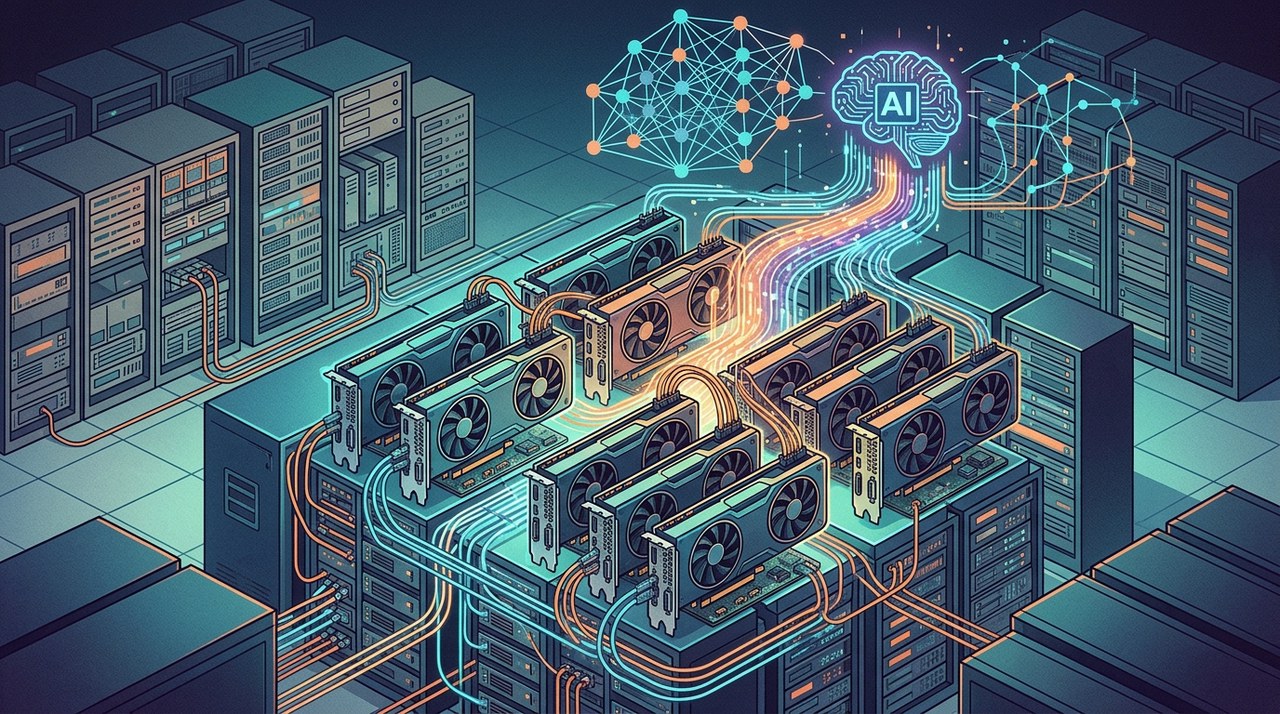
Imagine you want to train a massive artificial intelligence model. To do that, you need thousands of top-tier graphics processing units working together seamlessly. Buying those chips yourself costs a fortune, so where do you go? For years, you would turn to tech giants like Amazon, Microsoft, or Google. But recently, a new kind of company came along to challenge the status quo: the neocloud.
Neoclouds are specialized cloud infrastructure providers that focus heavily on one main job: renting out high-performance Nvidia graphics processing unit clusters to AI startups, research labs, and major tech firms. Interestingly, many of these companies share deep roots with the cryptocurrency industry.
In this guide, we will break down what neoclouds are, how their business model operates, their close connections to crypto miners, and why their stock prices faced significant market pressure in October 2026.
What Exactly Is a Neocloud?
A neocloud is an AI-focused Infrastructure-as-a-Service provider. To understand how they differ from traditional providers, think of standard hyperscalers like Amazon Web Services, Microsoft Azure, or Google Cloud as massive department stores. They sell hundreds of different cloud services, including databases, web hosting, and email servers.
A neocloud, on the other hand, is like a boutique store specializing in high-end compute. They focus primarily on offering raw access to large clusters of powerful GPUs, alongside the specialized networking, storage, and software necessary to handle intensive AI workloads.
Some of the leading names operating in the neocloud market include:
- CoreWeave (Nasdaq: CRWV): The largest pure-play neocloud provider, backed by chipmaker Nvidia. CoreWeave officially went public in March 2025.
- Nebius Group (Nasdaq: NBIS): An Amsterdam-based provider formed from the international operations of technology firm Yandex.
- Lambda, Crusoe, and Fluidstack: Privately held GPU cloud companies. Lambda has been raising capital ahead of a planned initial public offering.
- IREN: A former BitcoinBTC-3.60% mining firm that transitioned into AI hosting and now operates its own dedicated AI cloud infrastructure.
It is important to remember that neoclouds are standard corporate entities rather than blockchain networks. They do not launch native digital tokens; instead, their shares are traded on traditional stock exchanges.
The Deep Crypto Roots Behind the AI Boom
The connection between cryptocurrency and artificial intelligence is much stronger than it appears on the surface. Several major neocloud operators actually started out as crypto mining facilities.
Take CoreWeave as an example. The company was founded in 2017 to mine EthereumETH-5.10% using GPU setups. However, when Ethereum completed its transition to a Proof-of-Stake consensus mechanism in September 2022, traditional GPU mining on the network came to an end. Instead of shutting down, CoreWeave repurposed its vast hardware setup toward supporting AI workloads.
Today, Bitcoin miners are following a similar path by converting their power-dense physical sites into modern AI data centers.
How Does the Neocloud Business Model Work?
The core strategy of a neocloud revolves around securing three incredibly scarce resources: specialized hardware chips, reliable electrical power, and investment capital.
1. Advanced Chips
Neoclouds purchase huge quantities of high-end Nvidia GPUs and connect them using high-speed networking designed for complex machine learning tasks. Having direct access to the latest hardware releases gives them a key advantage over competitors.
2. Power and Real Estate Facilities
Running massive clusters of GPUs requires hundreds of megawatts of electricity and specialized liquid cooling technology. Neoclouds either construct their own data centers or lease fully powered facilities from land site owners, including former Bitcoin miners.
3. Capital and Financing Structures
High-end hardware comes with a heavy price tag and depreciates quickly. To buy these chips, neoclouds frequently use debt financing backed by the chips themselves and secured through long-term customer lease contracts.
Customers—ranging from AI research firms to major enterprise clients—sign multi-year agreements to reserve dedicated GPU capacity, or pay hourly for flexible usage. The neocloud generates revenue from the spread between customer lease payments and the ongoing costs of debt, hardware purchases, and energy supplies.
The Challenge of High Hardware Depreciation
While revenue numbers in this industry can be impressive, hardware depreciation poses a significant operational challenge. Because GPUs lose value as newer generations are introduced, equipment costs must be written off rapidly over time.
For instance, during the second quarter of 2026, CoreWeave reported nearly $1.4 billion in depreciation and amortization expenses against total revenues of approximately $2.6 billion. During the same period, Nebius reported roughly $260 million in depreciation costs alongside total revenue of $582 million.
Why Do Companies Choose Neoclouds Over Big Tech?
If tech giants like Microsoft and Amazon already offer cloud servers, why do clients choose neoclouds? The key advantages come down to operational focus and setup speed.
Traditional hyperscalers must divide their GPU capacity across thousands of internal services and consumer applications. In contrast, neoclouds concentrate exclusively on AI workloads. They can deploy large, dedicated compute clusters quickly and optimize their software environments specifically for model training.
Ironically, traditional cloud giants themselves often become major customers. When their own data centers reach full capacity, hyperscalers turn to neoclouds to rent extra compute power.
A Second Life for Bitcoin Miners
The surging demand for AI compute has created valuable opportunities for energy-rich Bitcoin miners. According to data from research firm Bernstein, in the two years leading up to July 2026, crypto miners finalized 19 major hosting deals representing roughly 7 gigawatts of electrical capacity.
These hosting contracts were valued at over $135 billion combined, involving hyperscalers, neocloud operators, and chipmakers. Notably, this 7 GW figure represents less than a quarter of the 30 GW total power pipeline held across the mining sector.
In this market, access to power infrastructure is critical. Securing grid connections, local permits, and industrial land can take years. Because miners already had these assets in place, they were positioned to pivot quickly.
For example, mining company TeraWulf signed a 20-year lease agreement with AI research company Anthropic for its Kentucky facility. The contract is projected to yield about $19 billion in revenue over its duration—a sum that exceeded TeraWulf's total market value at the time the deal was announced.
Major Industry Partnerships and Agreements
To understand the sheer scale of the neocloud ecosystem, look at some of the major commitments signed across the industry:
- Microsoft: Has been a primary purchaser of external GPU capacity, including a 5-year GPU cloud agreement with IREN valued at approximately $9.7 billion.
- Amazon Web Services: Signed a 15-year lease worth roughly $5.5 billion with Cipher, a former Bitcoin miner turned AI hosting provider.
- Google: Serves as a financial guarantor for lease commitments made by Fluidstack at sites managed by TeraWulf and Cipher.
- Anthropic: Leases compute capacity directly from TeraWulf and accesses additional resources from Hut 8 via Fluidstack.
- Nvidia: Serves as the primary hardware supplier for the sector and holds a direct equity investment in CoreWeave.
Are There Any Neocloud Crypto Tokens?
No, traditional neocloud companies do not issue cryptocurrency tokens. They operate as standard businesses, and their stock can be purchased through conventional brokerage platforms.
However, the Web3 ecosystem offers a decentralized alternative known as Decentralized Physical Infrastructure Networks (DePIN). Protocols like Render (RENDER), Akash Network, and io.net target similar compute demands using a peer-to-peer network structure rather than centralized corporate data centers. Users spend digital tokens to rent GPU power, while hardware hosts earn tokens for sharing their computing capacity.
Past performance of digital assets or corporate operation performance is not indicative of future results. Treat both stock equities and specialized crypto tokens as high-risk, volatile assets.
Market Headwinds and the October 2026 Sell-off
Despite rapid growth, the neocloud sector experienced a notable market pullback in late 2026 as market observers began evaluating long-term profitability.
On October 14, 2026, technology research firm Gartner published a report projecting that over 80% of independent neocloud providers will cease operating as standalone entities by 2030 due to rising cost pressures and limited long-term service differentiation. Gartner further estimated that more than $3.5 trillion in global AI infrastructure investments could face risk of financial impairment by 2030 if current spending levels do not match eventual revenue returns.
Credit markets reflected this caution. By October 21, 2026, yields on CoreWeave's unsecured debt rose toward 15%, while credit default swap prices for its debt increased by 30% within a single month.
Equities in the sector experienced notable adjustments during October 2026:
- CoreWeave (CRWV): Equity fell 29% in October 2026, adjusting its market valuation to around $34 billion (compared to an earlier peak valuation of roughly $90 billion in 2025).
- Nebius Group (NBIS): Declined 27% during the same month, despite maintaining lower net debt levels.
- IREN: Saw its stock price adjust lower by 32% over the same timeframe.
Past financial performance or stock price movements do not guarantee future investment returns.
What Lies Ahead for Neoclouds?
Industry executives remain confident about long-term demand. CoreWeave co-founder Brannin McBee noted that nearly all of the company's scheduled 2027 compute capacity had already been reserved, with client contracts extending into 2028 and beyond.
Whether neoclouds remain independent specialized entities or eventually get acquired by larger technology firms, underlying market demand for high-performance AI computing power remains strong.
If global AI adoption continues expanding rapidly and client revenue matches hardware lease costs, neoclouds could generate stable long-term cash flows to service their debt obligations. However, if enterprise AI spending cools or capital costs remain high, debt-heavy operators may face severe margin compression or consolidation. The central question moving forward is whether these infrastructure providers can generate sustained operational profits to pay down equipment financing over time.
Latest blog posts

Italian Police Bust €110M Mafia Crypto Banking Ring
Italian authorities dismantled a mafia-run underground bank operating behind a car rental storefront, uncovering €110 million in fake invoices and crypto transfers.


Bitcoin Dips Near $81.5K ETF Basis After Trump Comments
Bitcoin dropped 3% alongside falling US stocks following President Donald Trump's comments on Iran, placing prices near a key ETF cost basis.
|
Fireblocks Denies $2.5 Billion Visa Buyout Rumors
Crypto security firm Fireblocks has shut down reports claiming payment giant Visa is looking to buy the company for $2.5 billion.