Italian Police Bust €110M Mafia Crypto Banking Ring
Unmasking a €110 Million Underground Operation
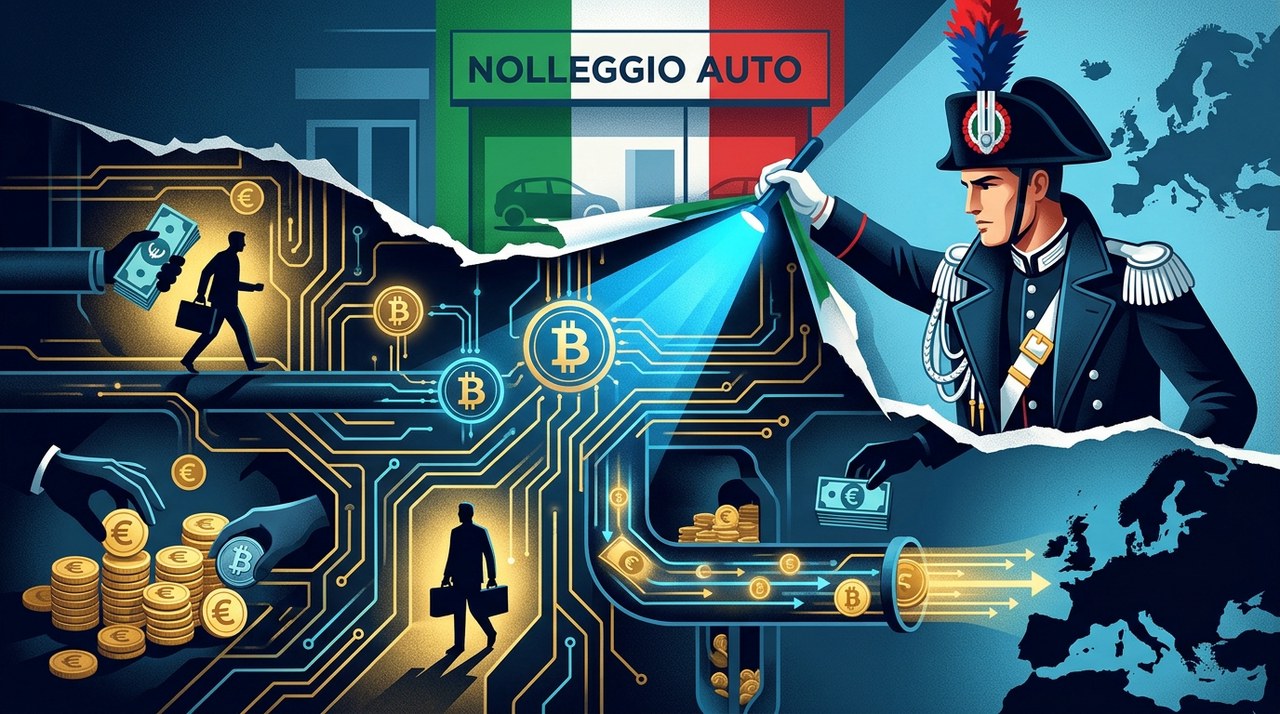
Imagine walking past a neighborhood car rental shop near Milan, assuming it just rents out vehicles for weekend trips. In reality, Italian law enforcement authorities say it was serving as a high-tech financial hub for some of Europe's most powerful criminal organizations.
Italian financial police, known as the Guardia di Finanza, recently dismantled an extensive underground bank operating out of Pero, near Milan. Officials revealed that the network processed over €110 million ($128 million) in fraudulent invoices and moved roughly €68 million ($79 million) across international borders using traditional banks and cryptocurrency.
The international operation resulted in court-ordered restrictions against 30 suspects and the seizure of approximately €21 million ($24 million) in physical and digital assets.
A Car Rental Front for Organized Crime
According to reports from the Italian newspaper La Stampa, prosecutors identified three key figures directing the hub: Giuseppe Piscioneri, Paolo Pelaggi, and Luigi Mercadante. The trio allegedly maintained direct operational ties with three major Italian mafia groups:
- The 'Ndrangheta
- The Camorra
- The Foggia mafia
The network also collaborated with Chinese and Albanian criminal associates. Investigators described the hub as surprisingly professional. Rather than a chaotic street operation, it ran like a corporate financial institution with transaction spreadsheets, high-speed cash-counting machines, and professional couriers transporting large sums of money.
How the Money Laundering Scheme Worked
Authorities estimate the underground bank operated for about three years using a multi-step financial process designed to erase paper trails:
- Fake Invoicing: Shell companies issued bogus invoices to real businesses for services that were never delivered.
- Tax Reduction: Business clients paid the fake invoices to record false expenses, reducing their overall taxable income.
- Cash Kickbacks: Couriers returned physical cash to the clients after deducting a 2% to 5% commission.
- Digital Funneling: Money left in shell corporate accounts was routed through European banks before being converted into digital assets on cryptocurrency exchanges.
The network frequently used USDT, a dollar-pegged stablecoin, to store and transfer funds across digital wallets. Beyond the fake invoice scheme, investigators discovered that the secret bank also processed money from drug trafficking and online crypto investment scams.
Funding Criminal Operations and International Raids
Where did the profits go? Investigators allege that the proceeds were used to purchase weapons and provide ongoing financial stipends to imprisoned mafia members.
The crackdown involved more than 350 police officers and included coordinated legal actions extending into Spain and Switzerland. Out of the 30 court orders issued, authorities placed 16 individuals in detention and 14 under house arrest.
The case also exposed potential corruption inside government ranks. A financial police inspector is currently under investigation for allegedly accepting a €3,000 bribe connected to the network.
Italian law enforcement emphasized that the investigation remains active, and all allegations will undergo full evaluation during court proceedings.
Latest blog posts



Bitcoin Dips Near $81.5K ETF Basis After Trump Comments
Bitcoin dropped 3% alongside falling US stocks following President Donald Trump's comments on Iran, placing prices near a key ETF cost basis.
|

What Is a Neocloud? The GPU Powerhouses Behind AI
Neoclouds are specialized cloud providers renting out Nvidia GPUs for AI models. Here is how they work, their crypto roots, and where they are heading.
|
Fireblocks Denies $2.5 Billion Visa Buyout Rumors
Crypto security firm Fireblocks has shut down reports claiming payment giant Visa is looking to buy the company for $2.5 billion.