
What Happens to Bitcoin if Trump Loses the US Midterms?
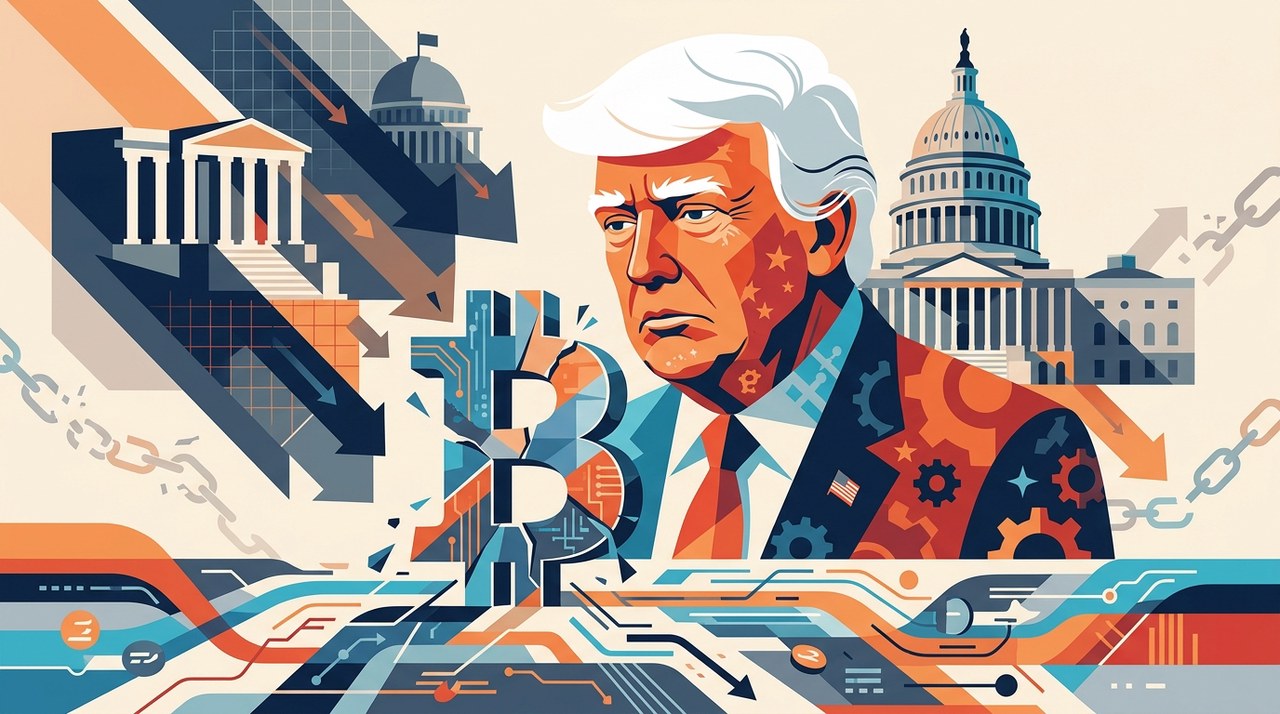
Donald Trump and the Crypto Political Landscape
When Donald Trump won the 2024 presidential election, the cryptocurrency market experienced a notable wave of optimism. Throughout his campaign, Trump positioned himself as a vocal champion for digital assets. He promised to transform the United States into a global crypto superpower.
His platform included several key proposals for the industry. He pledged to create a national strategic BitcoinBTC+0.90% reserve, prohibit central bank digital currencies (CBDCs), and replace strict enforcement with a clearer regulatory structure. Almost two years into his second term, some of these promises have moved forward. However, broader macroeconomic shifts and geopolitical friction have also added uncertainty to the market.
With the upcoming US midterm elections approaching, political control of Congress is on the line. To explore how Bitcoin might respond if the Republican party loses its majority, three widely used AI platforms—ChatGPT, Perplexity, and Google Gemini—were asked to evaluate potential outcomes.
ChatGPT: Short-Term Dips Over Long Bear Markets
OpenAI's ChatGPT suggests that a loss of Congressional control by Republicans could trigger immediate short-term selling pressure on Bitcoin. Under the assumption that a Democratic majority might slow down pro-crypto legislation, the AI projects a potential immediate price drop of 5% to 10%.
In a severe stress scenario—such as unexpected political gridlock paired with negative market sentiment—the AI notes that Bitcoin could pull back by up to 15%. However, ChatGPT emphasizes that this would likely represent a temporary price adjustment rather than the beginning of a prolonged bear market.
If traders have already factored a political shift into current prices, Bitcoin's actual movement after election night could prove relatively muted.
Current polling data and prediction markets reflect growing political uncertainty. For example, prediction platform Kalshi gives Republicans less than a 30% chance of holding both chambers of Congress. This comes despite Trump's recent proposal offering $5,000 stimulus payments if his party maintains legislative control.
Perplexity: Macro Factors Matter More Than Election Headlines
AI platform Perplexity shares a similar perspective, concluding that an election loss for the ruling party would likely cause a brief market correction rather than an immediate structural crash. digital asset markets often absorb political shifts once initial uncertainty resolves.
However, Perplexity outlines specific risk factors that could turn a simple correction into a steeper decline. A major downturn would likely require additional compounding stressors. These include a sustained reduction in spot Bitcoin ETF inflows, unexpected interest rate hikes by the Federal Reserve, or severe deleveraging across derivatives exchanges.
- Potential Support Factors: Sustained institutional ETF buying, stable interest rate policy, and healthy on-chain liquidity.
- Potential Downside Drivers: Sudden reduction in ETF demand, hawkish Federal Reserve rate decisions, or broader macroeconomic shock events.
Google Gemini: Differentiating Headline Shock from Trend Shifts
Google's Gemini model also projects a short-term price correction if Democrats secure control of Congress. The AI model stresses the difference between short-term headline volatility and long-term structural trends.
According to Gemini, political outcomes rarely alter Bitcoin's underlying monetary trajectory on their own. Unless accompanied by a major macroeconomic shock—such as tight central bank liquidity contractions or broader financial contagion—a post-election drop would represent a temporary market reset rather than a trend reversal.
Historical Context: How Bitcoin Behaved in Previous Midterms
Looking back at historical market cycles reveals an interesting pattern during US midterm election years. On-chain analyst Ali Martinez recently pointed out that Bitcoin has frequently experienced notable price declines following midterm voting cycles.
- 2010 Midterms: Bitcoin experienced a post-election drawdown of approximately 72%.
- 2014 Midterms: Bitcoin recorded a post-election decline of roughly 65%.
- 2018 Midterms: The market saw a correction of around 52%.
- 2022 Midterms: Bitcoin pulled back by approximately 27% during a broader market bear phase.
Past performance of digital assets is not a guarantee of future returns. Market conditions, institutional participation, and macroeconomic environments change significantly over time.
Despite these historical drawdowns, Martinez notes that past corrections ultimately took place within longer-term market growth cycles. While short-term political shifts can spark volatility, fundamental drivers such as global liquidity, adoption rates, and network security remain primary factors for long-term price action.
Latest blog posts


Solana Price Analysis: Will SOL Test $100 Before $150?
Solana faces downside pressure near $107 as technical indicators point to key support at $100 and resistance at $115.
|
Do Bitcoin ETFs Remove Custody Risk? Analysts Disagree
A spirited debate on X between Jameson Lopp and Willy Woo highlights the key security trade-offs between self-custody and spot Bitcoin ETF custodians.
|
Apple Hits 22nd Record High of 2026 as Market Cap Nears $5T
Apple stock reached a record high of $348 on Tuesday, bringing its total market value close to $4.98 trillion following fresh product announcements.