Do Bitcoin ETFs Remove Custody Risk? Analysts Disagree
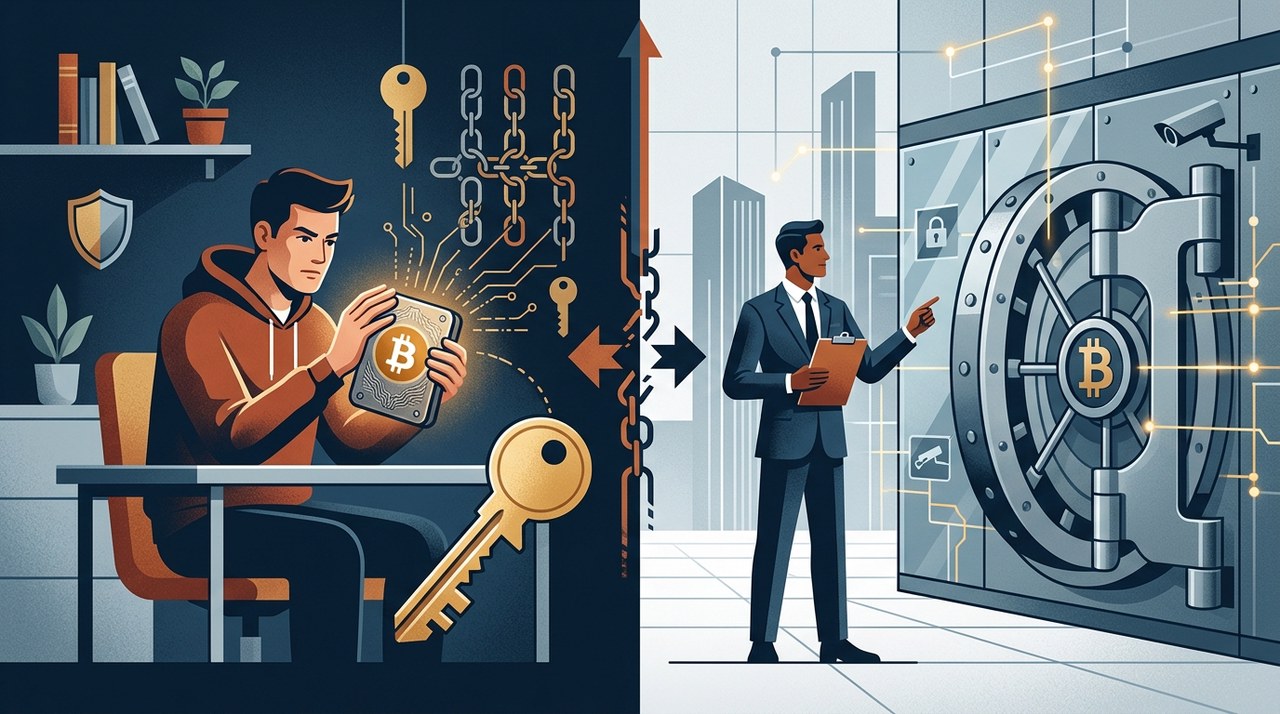
The Big Debate: Who Should Hold Your Bitcoin?
When you buy Bitcoin, where should it actually live? That question has sparked a major debate across the crypto community, setting self-custody advocates against supporters of Wall Street's Spot Bitcoin ETFs.
At the center of the discussion is cypherpunk and security expert Jameson Lopp. He recently argued on X (formerly Twitter) that handing your coins to a third party never removes custody risk—it actually adds new layers of danger.
Let's explore what started this debate, the statistical data brought by analyst Willy Woo, and what these arguments mean for crypto security.
Jameson Lopp: Third-Party Custody Adds Extra Danger
The conversation began when Jameson Lopp criticized claims that Spot Bitcoin ETFs eliminate the worry of losing Bitcoin. Proponents often say ETFs relieve investors of the burden of managing private keys.
Lopp strongly rejected that premise, pointing out that third parties are subject to the same core security vulnerabilities as individuals, along with additional regulatory and corporate risks.
There is objectively NO type of loss that can be solved by giving your bitcoin to a third party. Third party custody is exposed to every self custody risk PLUS MORE!
In short, Lopp believes institutional custodians still have to manage seed phrases and key material. On top of that, investors face counterparty risk, potential insolvency, and government interference.
Human Error vs. Asset Segregation
An X user named Dima offered a counterpoint. He acknowledged that third-party custodians carry counterparty risk, but argued that everyday investors are far more likely to hurt themselves through personal mistakes.
Dima noted that lost seed phrases and phishing attacks ruin many individual holders. He also pointed out that modern ETF custodians offer bankruptcy-remote segregation, keeping customer funds completely separated from the firm's balance sheet.
Lopp rejected the idea that average people cannot manage their own keys, arguing that many simply lack the willingness to put in the effort. He noted that his security firm, Casa, helps many older clients successfully manage their own custody.
Addressing the point about asset segregation, Lopp added:
Segregation doesn't do jack if the underlying asset is lost.
Willy Woo Brings the Data
Bitcoin analyst Willy Woo joined the debate by sharing historical numbers from a December 2025 River report. He argued that regulated institutional custodians perform significantly better in practice than individual holders.
According to the figures Woo posted, historical Bitcoin losses break down as follows:
- Self-custody losses: 1.57 million BTCBTC-1.32% lost by individuals.
- Exchange losses: 1.51 million BTC lost due to hacks and collapses.
- Spot ETF custodian losses: 0 BTC lost.
Woo argued that modern, regulated custodians do a far superior job compared to everyday people storing wealth at home.
Concentration Risk vs. Physical Threats
Lopp pushed back on Woo's data, stating that Spot ETFs have not existed long enough to encounter a major black-swan event. He also highlighted that almost all spot ETFs rely on the same single custodian: Coinbase Custody.
He asked whether it is safer to spread risk across millions of individual self-custodians or concentrate massive wealth inside one single corporate target.
Woo responded by pointing out Coinbase Custody's operational history. Over an eight-year period, Coinbase Custody has not lost any client coins, whereas self-custody lost 136,000 BTC and exchanges lost 13,000 BTC in that same timeframe.
Woo also highlighted physical security risks. Holding large amounts of crypto personally opens individuals up to physical coercion, such as direct attacks. Professional institutional vaults eliminate that personal physical threat.
Coinbase's Track Record Challenged
Lopp challenged the claim that Coinbase has a completely flawless record, stating that the assertion remains in dispute. He referenced accusations made by Ari Paul, founder of BlockTower Capital.
Paul previously alleged on X that Coinbase lost $25 million belonging to his firm years ago. He further claimed that the custodian covered up internal breaches affecting more than a dozen firms and over $1 billion in total assets.
These allegations remain unproven, and Paul stated that legal proceedings regarding the matter are ongoing. Coinbase Support publicly responded to Paul's post, noting they reached out to investigate the issue.
Understanding the Security Trade-offs
This debate highlights that neither storage method is entirely risk-free. Deciding how to store Bitcoin comes down to choosing which set of risks you prefer to manage.
Self-custody offers total financial sovereignty and removes third-party trust, but leaves you fully responsible for key security and operational errors. On the other hand, ETF custodians protect against personal technical mistakes and physical threats, but introduce central points of failure and counterparty risks.
Past security records of digital asset custodians or personal storage methods do not guarantee future performance. Investors should carefully evaluate their own technical abilities and risk tolerance before deciding on a custody strategy.