
Visa Negotiates $2.5B Deal for Crypto Firm Fireblocks

Visa Eyes Major Expansion Into Digital Asset Custody
Global payment giant Visa is reportedly in advanced discussions to acquire the enterprise crypto infrastructure firm Fireblocks.
According to a report by Axios citing multiple sources, the potential acquisition could be valued at around $2.5 billion.
If the deal goes through, it would mark one of the most significant acquisitions of a Web3 infrastructure provider by a traditional financial corporation.
As of now, neither Visa nor Fireblocks has officially confirmed the ongoing negotiations.
What Does Fireblocks Do?
To understand why this potential deal matters, it helps to look at what Fireblocks actually builds.
Think of Fireblocks as a high-tech security engine designed specifically for financial institutions.
Instead of serving everyday retail crypto users, Fireblocks offers behind-the-scenes software for banks, hedge funds, fintech companies, and crypto platforms.
Their system helps these institutions safely hold, issue, and transfer digital assets across different blockchain networks.
Understanding Multi-Party Computation Technology
A key part of Fireblocks' security model is a cryptographic technology called Multi-Party Computation, or MPC.
Imagine a bank vault that requires three separate keys held by three different executives to open.
MPC works in a similar way by breaking a private master key into several secret mathematical shards.
These shards live in separate encrypted environments and come together to sign transactions without ever exposing the complete private key.
This setup significantly lowers the risk of hacking, internal fraud, or lost credentials for large organizations.
Why Visa Might Be Interested in Fireblocks
Visa processes billions of traditional fiat transactions every single day.
However, the underlying infrastructure of global payments is slowly incorporating blockchain technology.
Visa has already been experimenting with stablecoins like USDCUSDC+0.30% for treasury settlement across public blockchains.
By acquiring an established infrastructure provider, Visa would gain several strategic capabilities right out of the box:
- In-house digital asset custody tools designed for enterprise workloads.
- Direct control over key management infrastructure for issuing stablecoins or tokenized real-world assets.
- Built-in compliance monitoring features for tracing digital asset flows.
- Instant relationships with hundreds of institutional clients already using Fireblocks.
Building these complex enterprise tools internally can take years of development, auditing, and regulatory review.
Acquiring a proven leader lets a payment network skip the development phase and scale its crypto offerings faster.
Contextualizing the $2.5 Billion Valuation
A potential purchase price of $2.5 billion is a major investment, but it also reflects broader changes in market conditions.
During the height of the crypto market cycle in early 2022, Fireblocks raised private capital at a valuation near $8 billion.
The reported $2.5 billion figure shows how institutional valuations have reset across the technological sector.
Even with this market adjustment, a $2.5 billion valuation underscores the strong demand for compliant enterprise Web3 tools.
Risks and Regulatory Considerations
While integration between payment networks and blockchain technology presents practical advantages, readers should keep important risks in mind.
First, digital asset markets remain subject to rapid regulatory shifts and market volatility.
Financial regulators enforce strict rules around customer asset protection, anti-money laundering, and operational resilience.
Second, merging legacy payment networks with blockchain technology involves complex technological and security challenges.
Digital asset performance and past institutional adoption trends do not guarantee future technological outcomes or market adoption.
Final Thoughts
Reports of Visa in talks to acquire Fireblocks highlight how traditional payment networks continue to build long-term digital asset strategies.
Whether or not the $2.5 billion deal closes, it shows that enterprise security and infrastructure remain critical building blocks for Web3 integration.
We will monitor further official updates from both organizations as more details emerge.
Latest blog posts



Cardano DRep Steps Down to Focus on Sui Network
A prominent Cardano advocate has resigned from his governance role, highlighting Sui's technology and adoption as key reasons.
|
GRVT Burns 1.1M Tokens as Countdown to Grvt 2.0 Begins
GRVT has burned 1.1 million tokens in its first buyback event, kicking off a series of milestone product releases leading to the launch of Grvt 2.0.
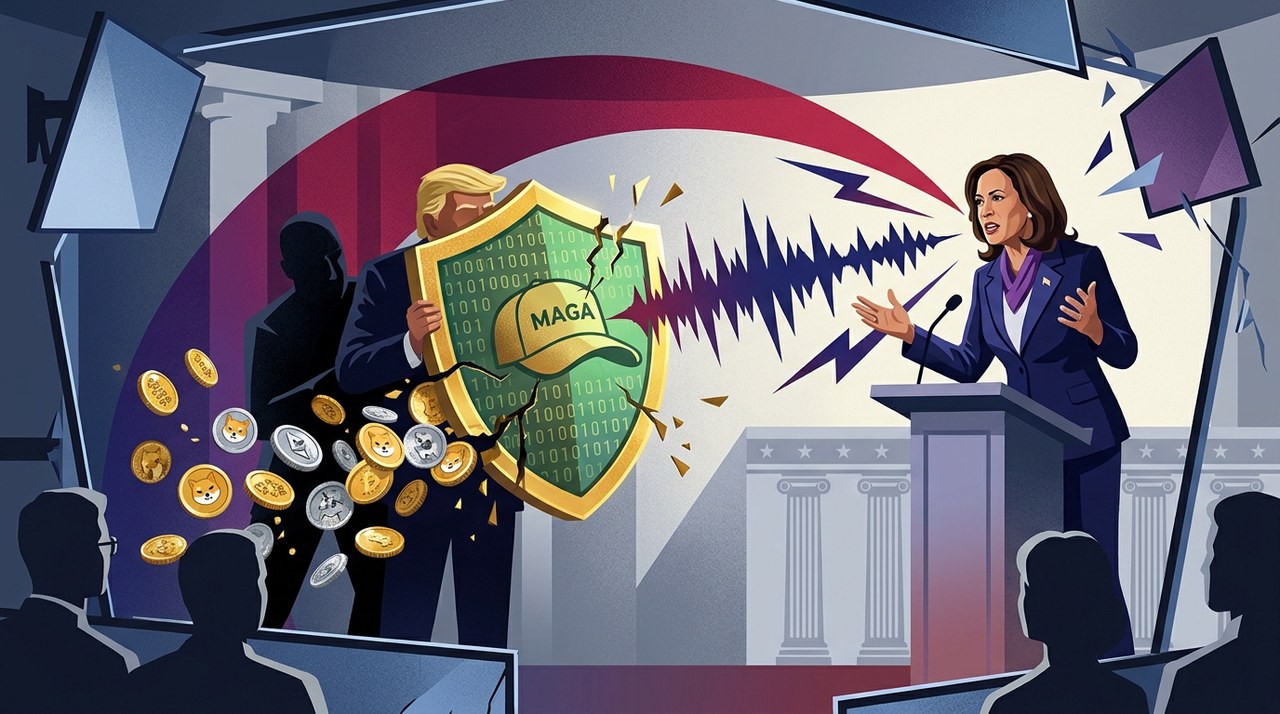

Crypto Becomes a Major Weapon in U.S. Elections
Crypto PACs are spending tens of millions on U.S. midterms, but Democratic candidates are turning the topic into a major campaign battleground over political corruption.
|