
Crypto Becomes a Major Weapon in U.S. Elections
A Surprising Plot Twist in Political Spending
Crypto has officially entered the spotlight in U.S. politics. However, it is not making headlines in the way digital asset companies originally hoped.
Crypto advocacy groups often argue that crypto-focused voters can decide close elections. Yet, when crypto firms spend millions on political ads, they completely avoid mentioning digital assets.
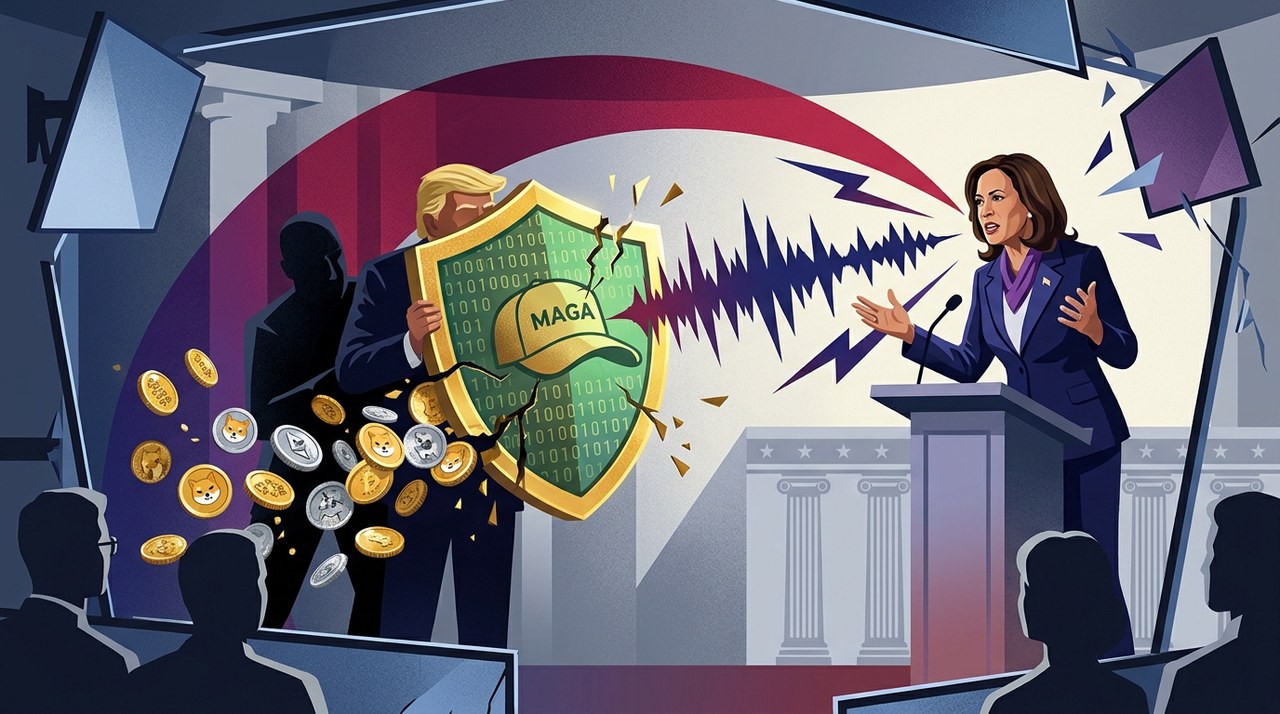
Instead, the topic is making waves because Democratic candidates are using it as a political weapon. They are linking the crypto sector directly to President Donald Trump, corporate influence, and government corruption.
How Democratic Candidates Are Using Crypto as an Attack Point
With public concern over government ethics reaching new highs, several high-profile Democratic politicians are highlighting crypto spending to challenge their opponents.
In Virginia, Senator Mark Warner launched a campaign ad criticizing President Trump and his close allies. The advertisement points out the billions Trump earned while in office, along with a jet he accepted as a gift from Qatar.
Warner's ad specifically highlights that Trump made hundreds of millions of dollars from his personal crypto memecoin.
That's not governing. It's grifting. The corruption needs to stop. — Senator Mark Warner
Meanwhile, former Senate Banking Committee Chairman Sherrod Brown is using opposition crypto spending to build support in Ohio. Brown is running to return to the Senate in what could become the most expensive congressional race in U.S. history.
The crypto-backed super PAC known as Fairshake has poured at least $40 million into opposing Brown. Fairshake previously spent tens of millions trying to defeat him two years ago.
Brown has framed this as a battle between everyday citizens and wealthy tech executives. In his speeches and campaign videos, he frequently pairs crypto companies alongside data centers.
The crypto/data-center crowd are up to $40 million now. They know I'm going to hold them accountable. — Former Senator Sherrod Brown
Brown also accused these tech groups of trying to buy the seat of his Republican opponent, Jon Husted.
They know I'll never work for them... They know I'm going to take them on. — Former Senator Sherrod Brown
Battles Across Other Key States
Ohio and Virginia are not the only states seeing crypto become a campaign issue. Candidates in Florida, Minnesota, and Illinois have also fought against crypto-backed political action committees.
In Florida, Congressional candidate Oliver Gilbert faced $2 million in primary spending from Fairshake. Despite the heavy opposition spending, Gilbert won his primary race and immediately targeted the industry in his campaign messaging.
Trump and his crypto con artist billionaires just put a target on my back. — Oliver Gilbert
Gilbert alleged that crypto interests used dark money to spread false claims about his record. He promised voters that he would actively work to protect senior citizens from crypto scams.
Similarly, Minnesota Senate candidate Peggy Flanagan and Illinois Senate candidate Juliana Stratton encountered strong pushback from crypto organizations during their primary battles. Stratton shared a campaign video describing how a MAGA-backed crypto PAC spent millions on attack ads against her candidacy.
Why Government Corruption is a Key Election Issue
The focus on crypto ties comes at a time when voters are increasingly worried about political self-dealing.
A Fox News survey published this month revealed that government corruption is currently the primary concern for voters. A striking 88% of respondents said they were very concerned about government corruption. This figure ranked higher than worries over inflation, rising gas prices, or healthcare costs.
According to research from advocacy groups like the Center for American Progress, the crypto industry made a distinct choice to align itself closely with Trump and his political movement.
Will Ragland, Vice President of Research at the Center for American Progress, noted that crypto interests have become the largest donor group to MAGA Inc., President Trump's primary super PAC.
Research from Ragland's organization shows that crypto donors contributed almost $89 million to MAGA Inc. This level of support far exceeded contributions from any other major industry.
Additionally, the organization live-tracks President Trump's personal crypto earnings, which currently stand at approximately $2.4 billion.
Short-Term Gains versus Long-Term Political Risks
Aligning with the White House brought some immediate advantages to the digital asset sector. Friendly regulatory leaders dropped certain enforcement investigations and began drafting new industry rules.
However, policy experts suggest this strategy created severe political risks that now threaten the industry's legislative goals.
Ragland explained that while crypto groups supported candidates in both political parties, their heavy focus on Trump created a lasting political backlash.
To some extent, it worked, in terms of seeing investigations dropped and having a direct line into the presidency. It didn't have to be this way for the industry... it'll be an uphill battle to climb back from. — Will Ragland, Center for American Progress
Regulatory Stalemate and the Industry's Response
The close relationship between Trump and digital assets contributed directly to legislative gridlock in Washington D.C.
The Digital Asset Market Clarity Act represented the crypto industry's top legislative goal. The proposed market structure bill aimed to establish clear legal frameworks for digital assets across the United States.
However, because of President Trump's personal financial stakes in crypto, Democratic lawmakers insisted on strict ethics constraints for government officials. Negotiations stalled when proposed ethical rules were deemed insufficient by opponents, preventing the bill from advancing in the Senate last month.
Industry leaders insist their primary focus remains creating bipartisan, permanent ground rules regardless of who occupies the White House or controls Congress.
Lindsay Fraser, Chief Policy Officer at the Blockchain Association, addressed the current political environment in a public statement.
As we all know, politics has become more polarized, and industries across the spectrum have been pulled into that fight at one time or another. But that doesn't change what we push for. We'll keep working with Democrats and Republicans alike, because our focus is on making sure the United States leads in this technology, leads in its share of developers, and leads in innovation. — Lindsay Fraser, Blockchain Association
Campaign Spending Meets Reality at the Polls
To advance its interests, the crypto industry's leading super PAC, Fairshake, continues to spend record amounts of money across congressional races.
Fairshake receives its primary funding from major crypto entities, including Coinbase, RippleXRP-2.19%, and venture capital firm a16z Crypto.
While Fairshake achieved success in several primary races and currently supports dozens of incumbents, its political advertisements deliberately avoid discussing blockchain technology or digital tokens entirely. Instead, a PAC spokesperson confirmed that their ads focus on standard voter concerns.
Despite tens of millions of dollars in campaign spending, voter data suggests crypto remains a minor priority for the average citizen.
A CoinDesk survey conducted in May revealed that digital asset policy ranked near the bottom of voters' overall concerns. Furthermore, the survey showed that voters expressed low trust in the Trump administration's ability to oversee digital financial markets.
Looking ahead to the November 3 elections, the outcome could grant Democrats a majority in either the House of Representatives or the Senate.
If Democrats gain control of Congress, crypto lobbyists will face a significantly harder challenge passing comprehensive federal legislation.
Past performance of digital assets or market trends is not an indicator of future results. Digital asset investments carry risk and high market volatility.
Latest blog posts


Bitcoin ETF Buyers Follow Trends, DWF Labs Research Shows
New research from DWF Labs reveals that Bitcoin ETF investors react to past price movements by buying rallies and selling dips, rather than predicting future returns.
|

SoFi Launches Tokenized Deposit with 4.40% APY
SoFi Bank has introduced SoFi Earn, a new tokenized deposit product offering a 4.40% APY alongside FDIC insurance and 24/7 stablecoin conversion.
|
XRP Ledger Bug Fix Delayed to Nov 4 After Validator Blip
A minor technical delay has pushed back the activation of the XRP Ledger's latest bug fix amendment to November 4 after a brief drop in validator votes.
|