US Crypto Tax Reform: Lummis Urges Action
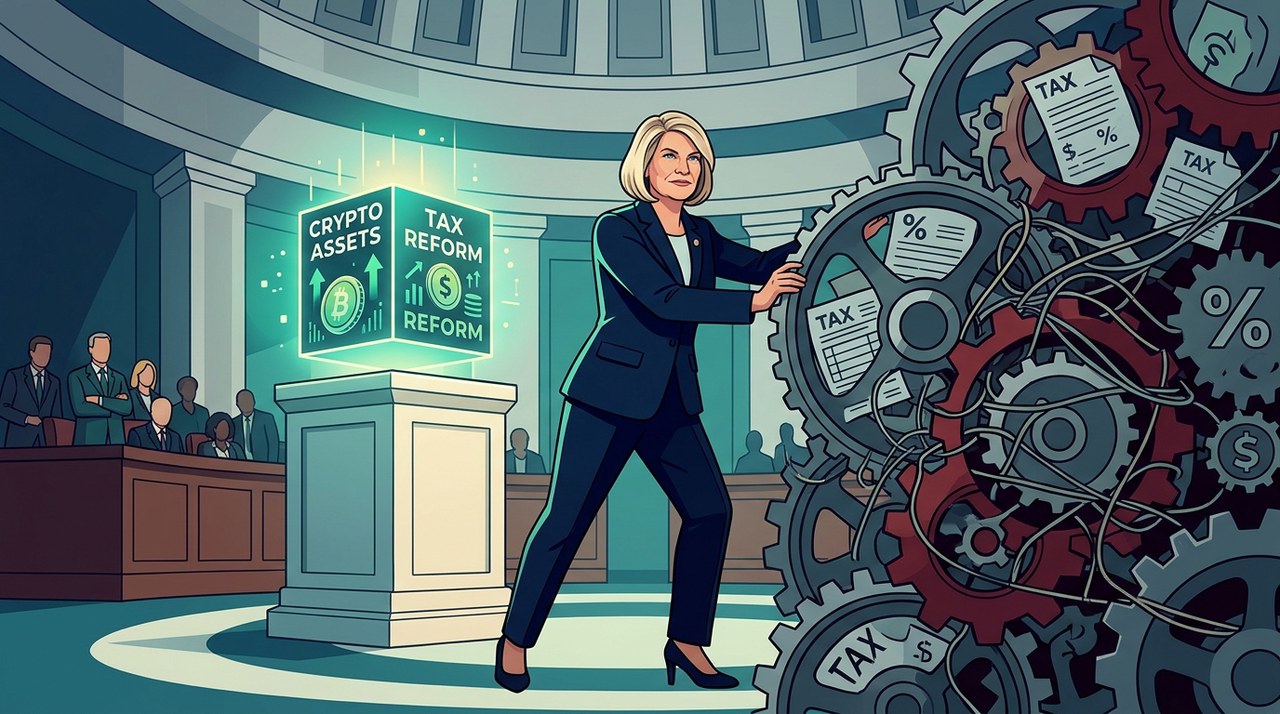
The Big Picture: Why Crypto Taxes Are Making Everyone Sweat
Imagine going to your local coffee shop, buying a cold brew for four dollars with crypto, and then having to calculate your capital gains or losses on that single cup of coffee when tax season rolls around. Sound exhausting? That is the exact reality millions of digital asset users face under current rules in the United States.
The crypto industry has reached a breaking point with these complicated tax frameworks. Industry leaders and lawmakers are raising their voices to demand change. At the center of this battle are the Blockchain Association and pro-crypto lawmakers like Republican Senator Cynthia Lummis, who are calling out political roadblocks in Washington.
What Is the CLARITY Act and Why Is It Stuck?
The CLARITY Act was designed to bring much-needed structure to digital asset regulation. It aims to clarify which digital assets fall under specific regulatory bodies and establish fair reporting requirements. However, despite gaining momentum among industry advocates, the bill remains stuck in the United States Senate.
Pro-crypto advocate Senator Cynthia Lummis has openly criticized Democratic leadership for stalling the legislation. Lummis argues that delay after delay puts the United States at a distinct competitive disadvantage compared to other regions that have already established clear rules.
The gridlock in the Senate means that everyday investors, software developers, and crypto startups are left operating in a grey area. Without explicit legislation like the CLARITY Act, agencies like the Internal Revenue Service rely on rules that do not fit how blockchain networks function.
The Blockchain Association Steps In: Key Tax Proposals
Sensing the growing frustration among users and businesses, the Blockchain Association—a prominent advocacy group representing major Web3 companies—has sent an urgent request to Congress. The group highlighted that current reporting requirements are practically impossible for average users to follow without specialized software or expensive accountants.
To fix these issues, the Blockchain Association outlined several key changes that could immediately make crypto taxes simpler and fairer for everyone involved:
- Tax Exemption for Small Transactions: Creating a de minimis exemption for minor purchases and network fees under $10, eliminating the need to track micro-gains on everyday transactions.
- Clear Rules for Network Fees: Explicitly excluding gas fees and network transaction costs from onerous tax calculations.
- Guidance on Staking and Mining: Clarifying that staking rewards and mined tokens should only be taxed when sold, rather than when created or awarded.
- Realistic Broker Definitions: Tailoring information reporting rules so decentralized protocols and validators are not treated like traditional financial brokers.
Why Current Crypto Tax Rules Are So Hard to Follow
To understand why reform is so urgent, it helps to look at how traditional tax software handles digital assets today. In traditional finance, your bank or brokerage sends you a neat form at the end of the year detailing your interest and capital gains. In crypto, the story is completely different.
Every time you move funds between wallets, pay a network transaction fee, or swap one token for another on a decentralized exchange, you trigger a potentially taxable event. If you make hundreds of transactions a month, compiling your tax report becomes a massive administrative burden.
Furthermore, network transaction fees—often called gas fees—can range from a few cents to several dollars depending on network activity. Having to record capital gains or losses on a $2 gas fee creates immense work for both taxpayers and tax authorities.
Senator Lummis vs. Washington Gridlock
Senator Cynthia Lummis of Wyoming has been one of the most outspoken champions for digital asset legislation in Washington. Her primary concern is that US lawmakers are dragging their feet while other regions move forward with comprehensive frameworks.
Lummis has pointed fingers directly at Democratic leadership for holding back crypto tax reform and regulatory clarity. She argues that partisan politics should not block commonsense legislation that protects consumers while encouraging economic innovation inside the country.
"We need clear, workable rules for digital assets that foster innovation while protecting consumers, rather than pushing technology offshore."
The debate highlights a deep divide on Capitol Hill. While some lawmakers view crypto primarily as a tool for tax avoidance or speculative trading, advocates like Lummis emphasize its potential as foundational technology for the future internet.
Balancing Government Revenue and Innovation
To understand the full picture, it is important to see things from the perspective of regulatory authorities like the IRS and the US Treasury Department. Regulators want to ensure that high-net-worth investors and trading firms pay their fair share of taxes.
The challenge lies in creating a balanced framework that catches actual tax evaders without suffocating regular users who simply want to try out decentralized apps or send small payments. Rules that require tracking $5 network fees end up swamping the system with unnecessary data.
Industry advocates argue that if rules remain too burdensome, American users and developers will simply move to jurisdictions with clearer tax systems. This loss of talent and capital could weaken the long-term competitiveness of the domestic tech industry.
What This Means for Everyday Crypto Users
For everyday crypto users and investors, the call for tax reform offers a glimmer of hope that reporting could get much easier in the future. However, until new legislation or IRS guidance is officially passed, existing tax laws remain in effect.
Investors should continue keeping thorough records of all transaction histories, wallet addresses, and exchange trades. Utilizing specialized crypto tax accounting software can help automate the process of calculating gains, losses, and network fees.
As discussions around the CLARITY Act and the Blockchain Association's proposals continue in Congress, all eyes will be on Capitol Hill to see if bipartisan consensus can be reached before the current legislative session ends.
Latest blog posts


Chainlink Partners with LG CNS: What's Next for LINK?
LG CNS and Chainlink are teaming up to support South Korea's $68 billion crypto market as LINK tests a key support level near $10.79.
|


Official TRUMP Coin Price Prediction: 2026 to 2030 Explained
A deep dive into Official TRUMP coin technical trends, holder behavior, recent ecosystem events, and potential future price scenarios through 2030.
|

Ethereum Whales Cash Out: Why OG Holders Are Selling
Early Ethereum holders are moving millions in ETH to exchanges after holding for nearly a decade, locking in massive historical gains.
|