

Tether Earned $4.5 Billion in 2026 as Bitcoin Outweighs Cushion
TetherUSDT+0.15%'s Financial Snapshot for 2026
Tether recently published its third-quarter financial attestation for 2026. The major stablecoin issuer reported an impressive $4.5 billion in net operating profit over the first nine months of the year. During the third quarter alone, the company brought in around $1.5 billion.
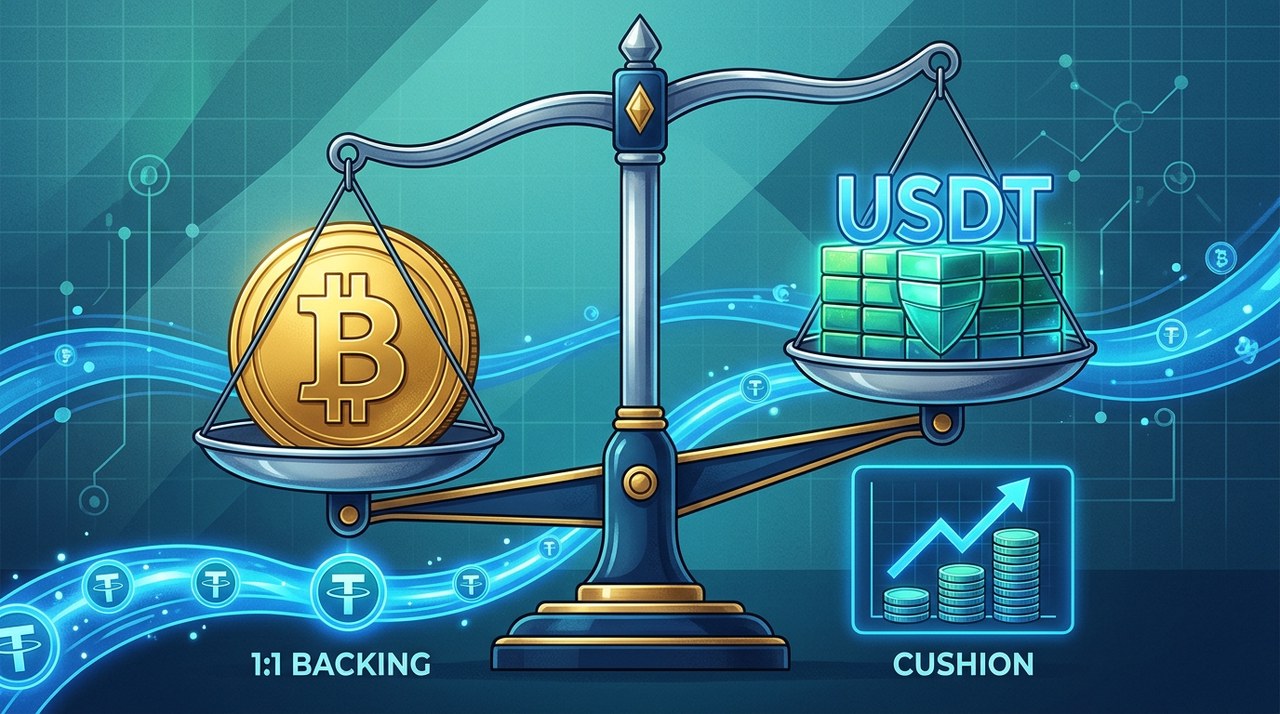
Despite these solid overall earnings, the report reveals an interesting detail. Tether's extra safety cushion currently stands at $7.95 billion. Meanwhile, the company holds $8.37 billion in Bitcoin (BTCBTC-4.62%). This means Tether's Bitcoin stash is now slightly larger than the protection buffer designed to safeguard USDT holders.
Understanding Tether's Reserve Cushion
Think of Tether's cushion as an emergency financial buffer. When users hold USDT tokens, Tether maintains assets to back every token on a 1:1 basis. The cushion is additional value held above that 100% backing. It serves as a safety cushion if underlying asset prices drop unexpectedly.
Over the past three months, this buffer nearly doubled. It rose from $4.11 billion at the end of the second quarter to $7.95 billion in Q3. However, this safety net has seen wide swings over the past year, moving between $8.23 billion and $4.11 billion.
Why Profit Growth Differs From Buffer Growth
You might wonder why $4.5 billion in net operating profit added only $1.66 billion to the cushion over nine months. The explanation comes down to accounting methods used by independent firm BDO.
Tether earns its primary income from interest on stable assets. This includes $132.4 billion invested in US Treasury bills and reverse repos, which are short-term loans backed by government Treasuries. These investments generate standard financial yield.
However, net operating profit does not factor in value changes for volatile assets like gold and Bitcoin. When BDO includes those price fluctuations in the final tally, net buffer growth adjusts to $1.66 billion.
- Second Quarter Movements: Falling gold and Bitcoin prices reduced the cushion to $4.11 billion in Q2, even though Tether earned $1.5 billion in profit that quarter.
- Third Quarter Rebound: A $3.8 billion recovery in asset valuations helped push the buffer back up to $7.95 billion.
- Nine-Month Totals: Total net buffer growth settled at $1.66 billion after accounting for all market movements.
How Gold and Bitcoin Exposure Affects Reserves
Gold and Bitcoin account for $27.45 billion of Tether's reserve pool. When combined with secured loans and other investments, these assets total $47.7 billion. That represents about 25% of Tether's overall reserve holdings.
Because gold and crypto prices change daily, they add variance to the reserve buffer. According to financial calculations by BeInCrypto, a combined 29% drop in gold and Bitcoin prices would fully absorb the $7.95 billion safety cushion.
Credit Ratings and Assessment Standards
This reserve mix previously attracted attention from financial rating agencies. In November 2025, S&P Global Ratings placed USDT at its lowest stability assessment level, rating it as 'weak.' At that time, non-cash assets made up 24% of reserves.
S&P noted specific factors during their review:
- Bitcoin Position Size: Bitcoin holdings surpassed the total size of the cushion.
- Disclosure Details: Limited public information regarding specific custodians and trading counterparties.
- Market Assumptions: Attestations calculate asset values under normal market conditions rather than stress conditions.
The Traditional Reserve Core
The primary backing for USDT relies on traditional cash and cash equivalents. Tether holds $139.6 billion, or roughly 73% of its reserves, in US Treasuries, reverse repos, and direct cash balances.
This traditional liquidity pool secures the majority of the $183.5 billion USDT tokens currently circulating in the market. Accounting firm BDO reviewed and confirmed these aggregate numbers.
"Our responsibility is to make sure USD₮ remains dependable when people need it most, including when markets and financial systems come under pressure," stated Paolo Ardoino, CEO of Tether.
Key Takeaways for Market Observers
Tether remains the largest stablecoin issuer globally and has previously undergone financial audits with major firms such as KPMG. Over $130 billion of its backings sit directly in short-term government debt.
At the same time, maintaining allocations in Bitcoin and gold means the excess cushion will continue to move alongside general financial market trends. Keeping track of reserve reports helps users understand how stablecoin backing structures function.
Past performance of digital assets or corporate operations does not guarantee future results. Digital asset markets experience high price volatility. Always evaluate market details and official reports carefully.
Latest blog posts

Trezor Security Warning: Karpeles Reports Tampered Wallets
Former Mt. Gox CEO Mark Karpeles warns that Trezor hardware wallets sold by a Southeast Asian reseller may contain physical implants.


Solana Expands Stablecoin Market with Hong Kong Venture
Solana Foundation has partnered with Anchorpoint Financial to launch the regulated HKDAP stablecoin, bringing institutional banking access to public blockchain networks.
|


Crypto Biz: Bitcoin Quantum Threats and Banking Moves
A friendly look at Bitcoin's quantum challenges, Ripple's US banking charter, USDC in Europe, and VanEck's new ETF.
|