
Tether Backs Bolivian Fintech Peso to Expand USDT Payments
TetherUSDT+0.09% Backs Bolivian Fintech Peso for Latin American Expansion
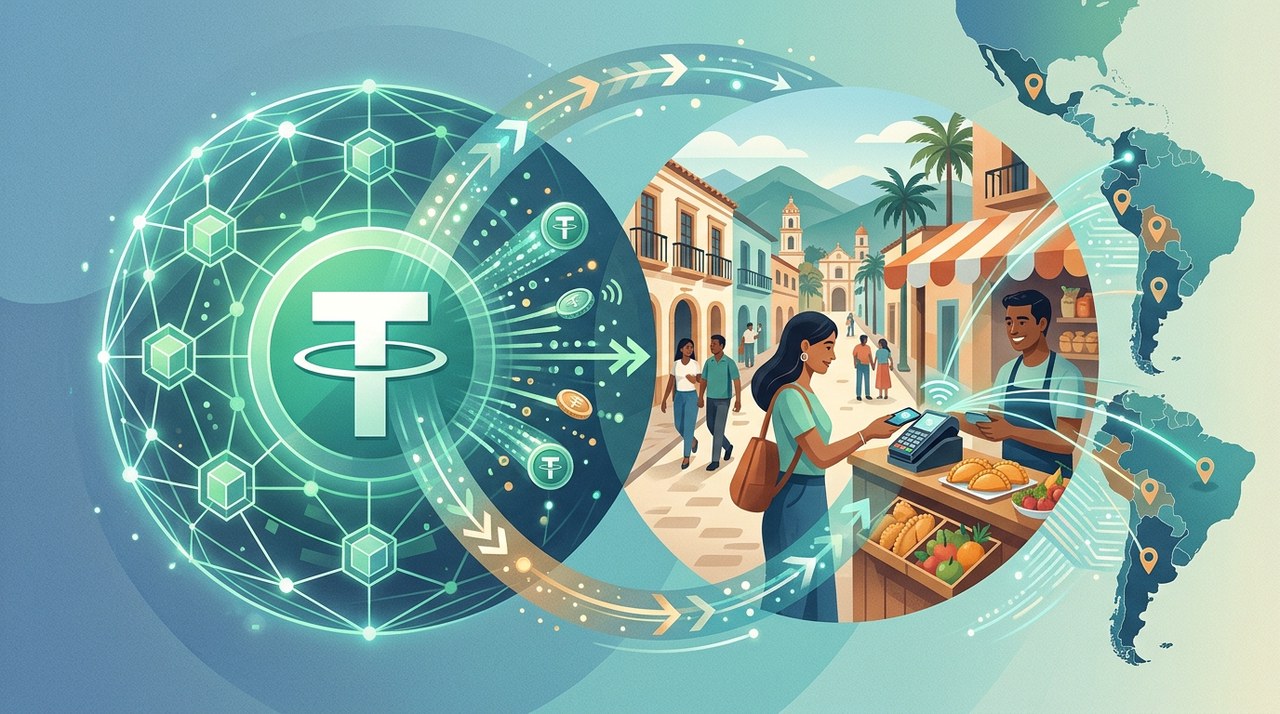
Tether, the company behind the USDT stablecoin, has announced a new strategic investment in Peso, a fintech startup based in Bolivia. This backing aims to fuel Peso's aggressive expansion across four key Latin American markets.
By supporting Peso, Tether is helping bridge the gap between traditional fiat banking networks and digital assets. The goal is to make digital dollar payments as seamless as tapping a debit card for everyday purchases.
Connecting Digital Dollars to Everyday Services
Peso specializes in linking stablecoin infrastructure directly to merchant services and local payment rails. Through its platform, users can spend USDT on daily tasks like ordering food delivery, paying bills, and making routine retail purchases.
Instead of waiting days to off-ramp crypto into local fiat currency through traditional exchanges, Peso enables real-time conversions right at the point of sale. This makes using stablecoins practical for average consumers and local shop owners alike.
Expanding Across Four Latin American Markets
The fresh funding will directly support Peso's rollout into four target markets in Latin America. Latin America has become one of the fastest-growing regions for stablecoin adoption globally.
In many Latin American nations, local currencies experience significant volatility or inflation. As a result, both individuals and small business owners frequently turn to USD-pegged stablecoins like USDT to preserve purchasing power and handle cross-border payments.
How Peso Integrates with Food Delivery and Banking Networks
One of Peso's key differentiators is its deep integration into everyday commerce and local financial ecosystems:
- Food Delivery Apps: Allowing consumers to pay for meals directly using their USDT balance.
- Local Banking Connections: Enabling quick settlement between stablecoin balances and traditional bank accounts.
- Merchant Terminal Integration: Giving local merchants the tools to accept stablecoins without worrying about complex crypto technicalities.
Tether's Broader Push into Emerging Markets
Tether has increasingly focused its corporate investments on infrastructure platforms that increase the real-world utility of stablecoins. By investing in regional fintech partners like Peso, Tether aims to solidify USDT as a core medium of exchange, rather than just a trading vehicle on crypto exchanges.
For local businesses, accepting stablecoins through integrated platforms can lower settlement fees and protect against rapid currency depreciations compared to local currency transactions.
Risks and Regulatory Factors to Keep in Mind
While stablecoin usage in emerging markets offers notable convenience, users and businesses should remain aware of potential market and operational risks:
- Regulatory Uncertainty: Financial regulators across Latin America are actively updating policies regarding digital assets and foreign currency limits.
- Technology Risks: Reliance on third-party fintech bridges requires trusting the security and liquidity of local partner applications.
- Asset Volatility: While stablecoins aim to maintain a 1:1 peg with fiat currencies, broader crypto market conditions can still impact liquidity during extreme events.
As Tether and Peso proceed with their expansion plans, the initiative will serve as an important case study for stablecoin adoption in everyday retail transactions across developing economies.
Latest blog posts



Fhenix Brings New Privacy Layer to Ethereum and Arbitrum
Fhenix launched its Co FHE mainnet on Ethereum and Arbitrum, allowing smart contracts to compute encrypted data without exposing public details.
|

Trump Omits 'Crypto' Term at Cybercrime Event
During a White House cybercrime roundtable, US President Donald Trump detailed various fraud schemes but referred only to 'cybercurrency' in relation to scams, completely omitting the term 'crypto'.
|
Meta Fined $25 Billion: Why Isn't Meta Stock Crashing?
A judge ordered Meta to pay $25 billion over privacy violations. Yet its stock price is climbing as investors focus on AI and earnings.