


Sberbank Wins Approval to Trade Bitcoin in Russia
What Just Happened in Russia?
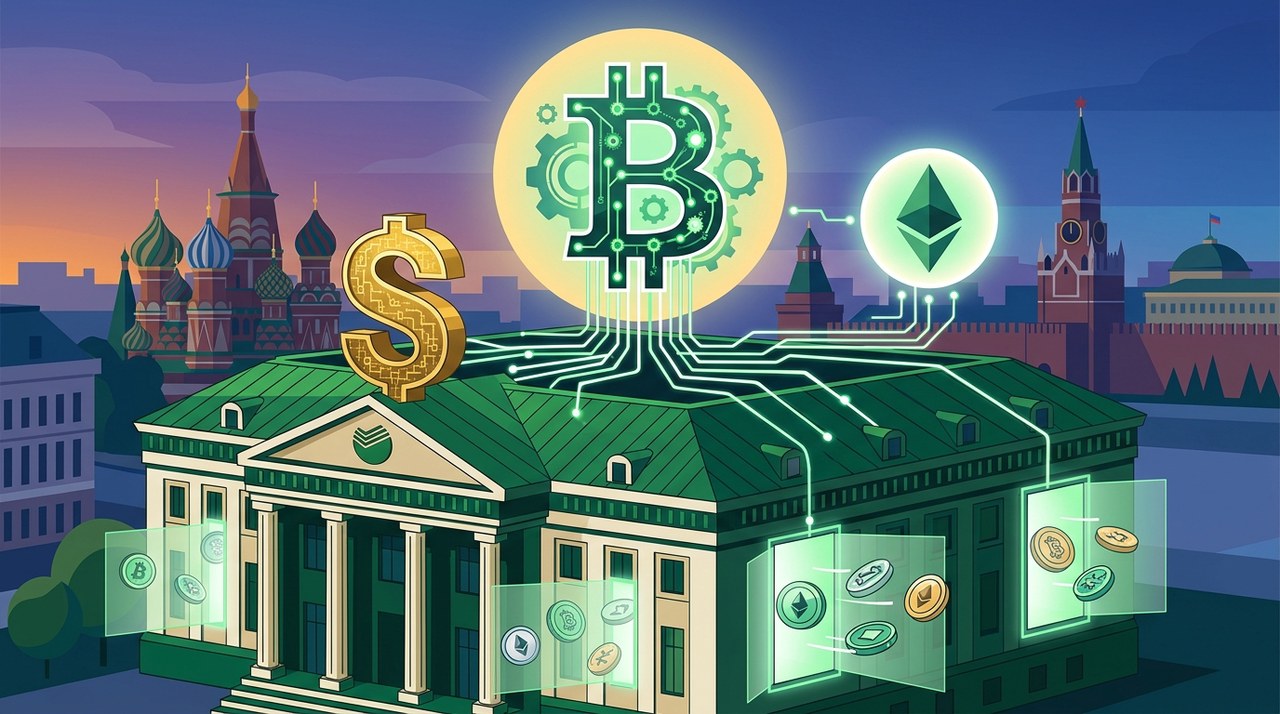
Russia's largest lender, Sberbank, has officially received the green light to operate as a digital currency exchange.
On October 12, the Bank of Russia formally added Sberbank to its official register of authorized crypto exchange operators.
This regulatory milestone arrived just six days after the central bank listed Sberbank as an approved digital depository on October 6.
By holding both statuses, Sberbank gains the authority to buy and sell digital assets in its own name using its own funds.
It also allows the bank to handle customer trades internally and maintain ownership ledgers without relying on external third-party venues.
What Does Sberbank Plan to Offer?
Sberbank plans to launch its first consumer cryptocurrency features starting December 1.
These digital asset services will integrate directly into the bank's primary digital portals that millions of customers access daily.
Clients will see these options inside Sber Bank Online, Sber Investments, and Sber Business.
The bank intends to launch trading support for three specific digital assets:
- Bitcoin (BTCBTC-1.32%) - The world's largest digital asset by market value.
- EthereumETH-2.80% - The primary smart contract blockchain network.
- TetherUSDT+0.24% - The market's most widely used fiat-collateralized stablecoin.
Sberbank officials noted that the December 1 launch timeline depends on secondary central bank regulations being finalized on schedule.
In addition to trading, Sberbank plans to allow clients to use Bitcoin, Ethereum, and USDT as collateral for loans.
However, offering crypto as loan collateral will only begin once the central bank officially permits these tokens for public circulation.
Connecting Crypto to Millions of Everyday Users
This regulatory approval connects digital assets directly to a massive user base across Russia.
According to its Q2 financial reports, Sberbank serves over 110.6 million retail clients and 3.5 million corporate accounts.
Embedding crypto services into existing banking applications turns digital asset access into a standard menu feature for existing customers.
Sberbank Deputy Chairman Anatoly Popov shared substantial volume estimates for Russia's new regulatory regime.
Popov projects that Russian crypto trading volume could reach 4 trillion rubles (around $46 billion) in its first full year.
By 2029, he projects annual trading volumes could expand to 7.5 trillion rubles (approximately $89.7 billion).
Note on market forecasts: These trading projections depend on full legal implementation and consistent customer demand. Actual trading activity could remain significantly lower if market sentiment shifts or if regulatory restrictions tighten in the future.
Investor Limits and Spending Restrictions
Russian lawmakers have established clear boundaries around individual crypto activity.
Under legislation signed by President Vladimir Putin in August, strict annual limits apply to non-qualified retail investors.
Retail buyers are restricted to spending a maximum of 300,000 rubles (roughly $3,800) per year per intermediary.
Individual investors must also pass a mandatory financial knowledge test before purchasing digital assets through regulated platforms.
Furthermore, the central bank's official draft list of approved coins limits trading strictly to Bitcoin, Ethereum, and USDT.
Crucially, paying for goods or services with cryptocurrency remains completely illegal inside Russia.
While Sberbank clients can buy, hold, or trade digital tokens, they cannot use them as money for consumer purchases at local stores.
A Major Shift in Russian Crypto Policy
This regulatory rollout reflects a significant shift in how Russian authorities manage digital assets.
Back in January 2022, the Bank of Russia formally proposed a total ban on all crypto trading, mining, and exchange operations.
At that time, central bank officials cited severe risks to national financial stability as the reason for a proposed ban.
Today, regulators are actively licensing the nation's dominant financial institution to operate a regulated crypto desk.
Organizations already listed on the central bank's official registers have until September 1, 2027, to fully adapt their operations to the complete legal framework.
Latest blog posts


Solana Sets Date for Major Upgrade to Boost Speed
Solana's upcoming Alpenglow upgrade on October 21 will replace Tower BFT, cutting block finality from 12.8 seconds down to just 150 milliseconds.
|

EU Names Circle's USDC a Significant Token Under MiCA
European Union authorities have classified Circle's USDC as a significant e-money token under MiCA rules, bringing direct supervision by French and EU regulators.
|

US Watchdog Exposes Debanking at 9 Major Banks
A major investigation by the OCC reveals that nine top US banks restricted access based on political views, lawful businesses, and crypto ties.
|