


Russia to Ban Peer-to-Peer Bitcoin Trading by July 2027
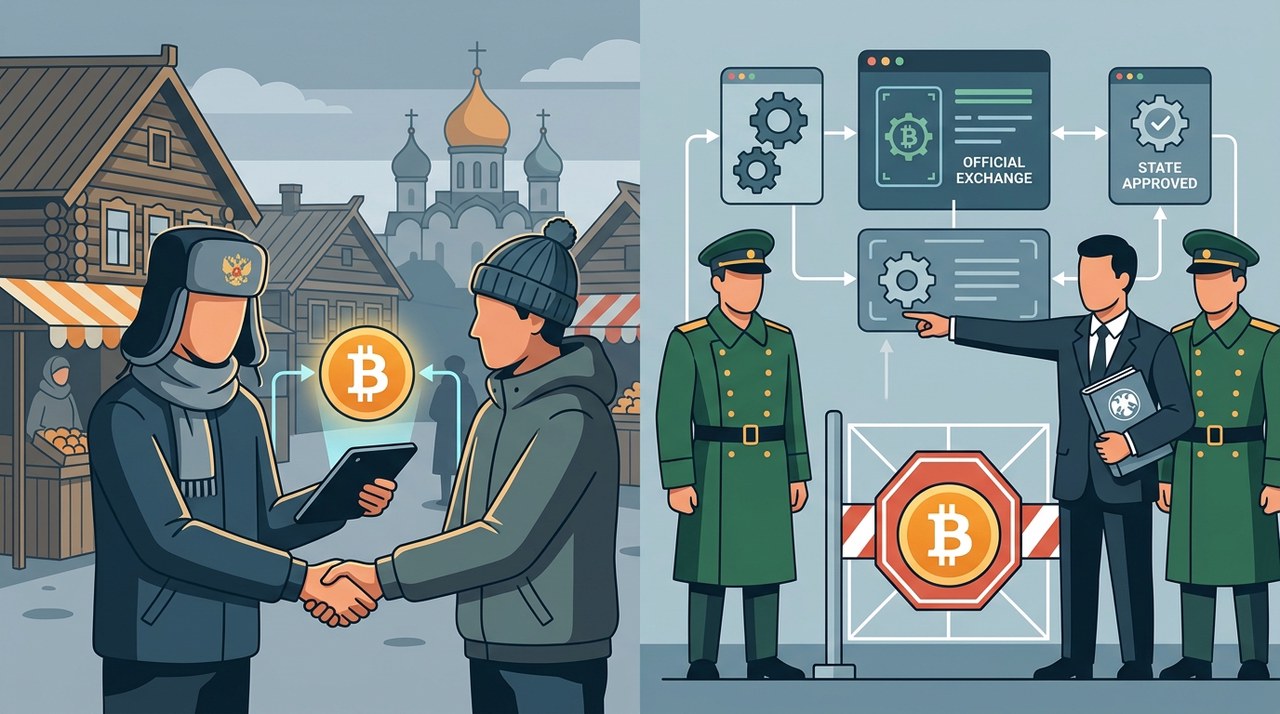
Russia Prepares to Phase Out Direct Peer-to-Peer Crypto Trading
If you follow international cryptocurrency news, big regulatory changes are taking shape in Eastern Europe. Russian authorities are officially preparing to end direct peer-to-peer (P2P) cryptocurrency trading between everyday individuals. According to official guidance confirmed by the Bank of Russia, citizens have a little over eight months left before strict new rules kick into gear, leading up to a complete transition by July 1, 2027.
After July 1, 2027, swapping Russian rubles directly for Bitcoin or stablecoins with another person—without a government-approved middleman—will no longer be legally permitted. Let us break down everything you need to know about this major law, why it is being implemented, and what it means for individual crypto users.
The Legal Basis: Federal Law No. 282-FZ
This policy shift is grounded in a specific piece of legislation known as Federal Law No. 282-FZ, titled 'On Digital Currencies and Digital Rights.' President Vladimir Putin signed this bill into law on August 4, and it officially took effect on September 1.
To clear up public confusion, the central bank posted updated guidance on its official website on October 12. The key details sit inside Article 30 of the law, which outlines which cryptocurrency activities regular citizens may carry out without using a licensed intermediary.
While direct trades between individuals remain permitted for now, that permission drops off the official list starting July 2027. From that date forward, Russian residents may only trade digital currencies through—or directly with—approved corporate entities that legally 'organize the circulation' of digital assets.
New Restrictions on Wallets, Transfers, and Lending
The updated guidelines from the Bank of Russia go far beyond simple trade transactions. They outline specific restrictions that impact how everyday users handle their digital tokens:
- Direct P2P Trading Ban: Swapping cash or bank transfers directly for crypto with another individual will be illegal after July 1, 2027.
- Non-Custodial Wallet Restrictions: Individuals will not be allowed to move cryptocurrency from a platform account into their own non-custodial wallet (where the owner holds their private keys directly).
- Depository Address Transfers Blocked: Person-to-person transfers through addresses managed by digital depositories—licensed firms that record coin ownership—will be prohibited, even if used to settle a trade.
- Crypto Lending Banned for Individuals: Ordinary users cannot act as lenders in crypto loans. Only licensed intermediaries are permitted to offer lending services.
Who Is Allowed to Facilitate Crypto Operations?
Under the new framework, the central bank limits all legal cryptocurrency operations strictly to regulated financial entities. Regular users will have to go through authorized channels to execute any trade.
The central bank specifies that only the following entities can act as intermediaries or lenders in digital asset operations:
- Brokers licensed by the Bank of Russia.
- Registered crypto exchange organizations listed in the central bank's official registry.
- Trustees, clearing houses, and regulated asset management firms.
Impact on Banks and Foreign Trading Platforms
Peer-to-peer trading grew significantly in Russia after global exchange Binance sold its local operations to CommEX in 2023. For many citizens, buying USDT (a dollar-pegged stablecoin) by sending rubles via bank card directly to a private seller became the go-to method for accessing digital assets.
The updated rules explicitly eliminate this method. Speaking with news outlet Kommersant FM, Andrei Tugarin, managing partner at GMT Legal, explained the practical implications for domestic banking users.
Tugarin noted that starting July 1, 2027, commercial Russian banks will be required to refuse client attempts to fund crypto wallets on foreign platforms. In addition, financial institutions will be prohibited from accepting ruble cash-outs originating from foreign platforms.
Rules for Retail and Qualified Investors
The law also creates distinct rules based on an investor's formal qualification level, placing annual purchasing limits on everyday retail buyers.
Non-Qualified (Retail) Investors
Everyday retail buyers without professional investor status must pass a basic financial knowledge test before buying crypto. Additionally, their purchases are capped at 300,000 rubles (approximately $3,600 USD) per year.
Furthermore, non-qualified investors are restricted to a small selection of digital assets approved by the central bank:
- Bitcoin (BTCBTC+0.16%)
- EthereumETH+1.13%
- TetherUSDT-0.30%
Qualified Investors
Investors who hold official qualified status face no annual cap on their purchases and have access to a broader variety of digital tokens.
Major Banks Step In to Offer Registered Services
As direct person-to-person trades are phased out, traditional financial institutions are preparing regulated alternatives. On October 12, Sberbank, Russia's largest commercial bank, officially joined the central bank's register of crypto exchange organizations.
According to reporting by news agency Interfax, Sberbank plans to launch its initial suite of retail crypto products on December 1. Other major domestic institutions, including VTB and T-Invest Lab, have also secured spots on the official register.
To qualify for entry into the central bank's registry, exchange organizations must meet strict operational standards:
- Must be a company incorporated in Russia.
- Must maintain at least 15 million rubles (around $179,000 USD) in equity capital.
- Must be fully registered on the Bank of Russia's registry list.
The law includes a transitional grace period: existing platforms are permitted to continue operating without full registry listing until the final deadline on July 1, 2027.
Domestic Payment Ban vs. International Trade Settlement
It is important to note that Russia continues to maintain a complete ban on using cryptocurrency for domestic payments. Citizens cannot legally pay for goods, dining, or local services using digital assets.
However, the legislation includes a dedicated exemption for international commerce. Russian companies are allowed to use cryptocurrency to settle payments with foreign business partners.
During the bill's first reading in April, Kaplan Panesh, deputy chair of the Duma's budget committee, openly acknowledged that this international trade carve-out was crafted as a mechanism to help local businesses maintain international trade amidst global financial sanctions.
Market Context and Volatility Awareness
As regulatory policies take shape globally, crypto market prices continue to fluctuate. At the time of these central bank announcements, Bitcoin (BTC) was trading around $82,128 (+0.51%), with a 24-hour high of $82,508, a low of $79,806, and daily trading volume reaching $1.8 billion.
While regulatory clarity can help build long-term structure, cryptocurrency investments inherently carry short-term price risks due to shifting liquidity and macroeconomic conditions. Investors should carefully evaluate market conditions before making financial decisions.
Past performance of digital assets is not a guarantee of future returns. You can view complete market information and historical price data at https://bitkub.com/th/market/BTC.
Summary of Key Dates
Here is a quick breakdown of the primary timeline for Russia's crypto regulation changes:
- August 4: President Putin signs Law No. 282-FZ into effect.
- September 1: Law No. 282-FZ takes official effect.
- October 12: Bank of Russia publishes updated FAQ guidance; Sberbank joins the exchange register.
- December 1: Sberbank plans to launch its first public crypto products.
- July 1, 2027: Peer-to-peer crypto trading between individuals is fully banned.
Latest blog posts


Bitcoin Could Jump 50% on Quantum Roadmap, Says Capriole CEO
Capriole Investments CEO Charles Edwards suggests a unified post-quantum security plan could trigger a major price revaluation for Bitcoin.
|
Michael Saylor Reacts to Study Showing AI Prefers Bitcoin
MicroStrategy's Michael Saylor shared a bullish response to research showing that artificial intelligence models favor Bitcoin as a long-term savings tool.
|

Solana Alpenglow Upgrade Set for Oct 21 Speed Boost
Solana's upcoming Alpenglow upgrade on Oct. 21 aims to cut transaction finality times down from 12.8 seconds to just 150 milliseconds.
|