


Polygon Targets Payments Sector with Key Coinme Acquisition
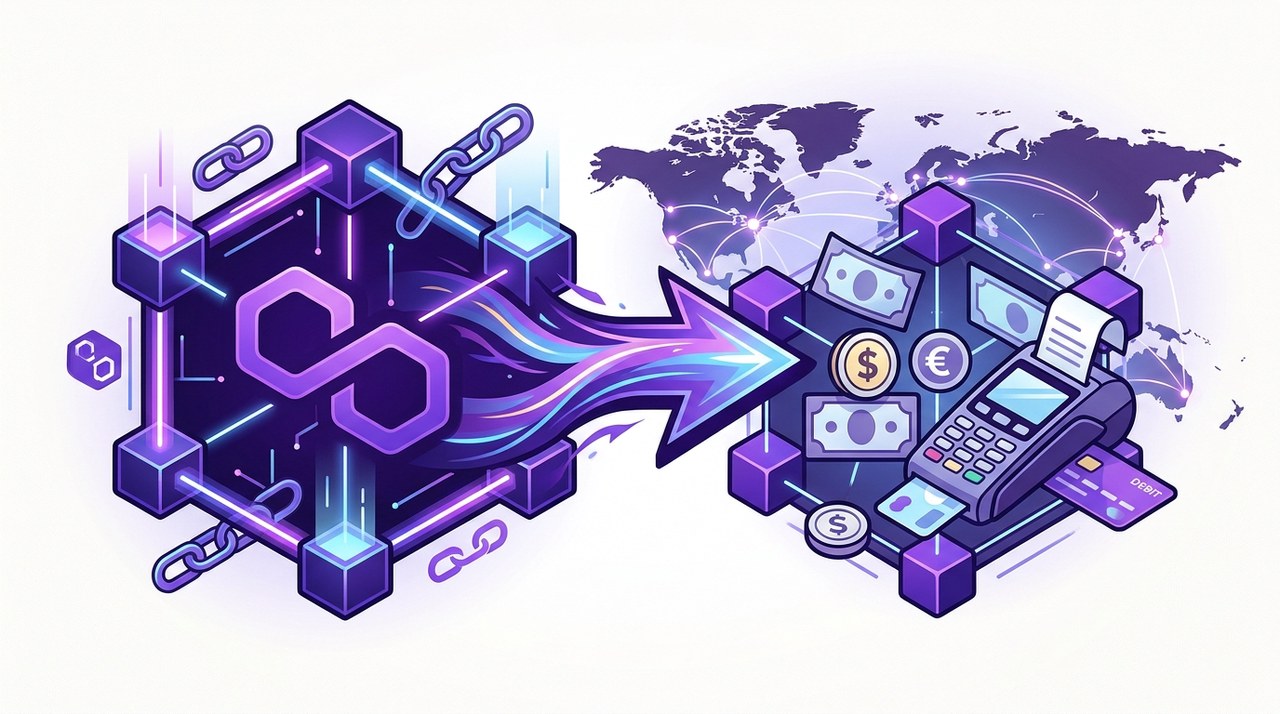
PolygonPOL-1.83% Steps Beyond Infrastructure into Global Payments
Polygon Labs is taking a massive leap forward. The development team behind the popular Polygon blockchain aims to turn its regulated payments business profitable by 2027.
To make this vision a reality, Polygon Labs officially completed its acquisition of Coinme. Coinme is a regulated crypto payments provider based in the United States.
This deal gives the Cayman Islands-based company the tools to handle direct conversions between cryptocurrencies, stablecoins, and traditional fiat currencies using its own in-house system.
Why Polygon Is Changing Its Core Strategy
For years, people knew Polygon simply as a fast blockchain network. However, executive leadership is actively changing that narrative.
CEO Marc Boiron shared that he no longer views Polygon as just competing against rival blockchains. Instead, he views Polygon as a payments-focused business that uses blockchain tech to move money efficiently.
I have not considered us to compete with blockchains for a while now, to be frank. It's very much that we're a payments-focused company that just uses blockchains to move money, and in particular, Polygon.
This business pivot actually started back in January when Polygon launched its Open Money Stack. That framework helped simplify cross-border transfers and stablecoin payments. By processing conversions directly, Polygon can now earn transaction fees that used to go to third-party intermediaries.
David vs. Goliath: Polygon Compared to Visa and Stripe
Entering the payment processing industry puts Polygon in the same space as established global financial giants. Legacy payment networks handle staggering amounts of money each year.
To put things into perspective, Visa processed over $12.3 trillion in payment volume during fiscal year 2025. Stripe handled roughly $1.9 trillion in transactions during a similar timeframe.
Polygon is still at the beginning of its journey in this space. Its unified payments platform remains in a technical preview stage, accessible only to a select group of early business partners.
Solving the Blockchain Middleman Problem
Blockchain builders have long dealt with a core operational challenge. They create the base technology for transactions, but they rarely control the direct customer relationship.
In the past, rival blockchain platforms could offer financial incentives to outside payment processors. That setup often convinced those providers to route their user traffic away from Polygon.
By owning a regulated provider like Coinme, Polygon can control customer relationships directly. Competitors can no longer convince third-party processing partners to divert transactions away from Polygon.
Unlocking New Sources of Corporate Revenue
Standard blockchain transaction fees, often called gas fees, are usually fractions of a cent on Polygon. Network priority fees are distributed directly to stakers and validators to help offset token emissions.
According to Boiron, network gas fees already offset token emissions while generating millions of dollars for validators and token stakers. However, payment processing introduces a very different revenue model.
Unlike flat network gas fees, payment processing earns revenue calculated as a percentage of total money transferred. This gives Polygon Labs access to much larger financial opportunities. Past returns or network performance metrics do not guarantee future earnings.
Traditional Finance Moves Into Blockchain
While Polygon is stepping toward traditional business models, traditional finance companies are expanding into blockchain transfers.
Stripe continues to build out its stablecoin payment tools. Meanwhile, Swift, the international banking messaging network, is developing blockchain infrastructure alongside major banking institutions.
Visa has also expanded its stablecoin settlement operations to include the Polygon network alongside others. Visa even launched a specialized platform letting commercial banks issue and manage stablecoins.
Because of these overlapping efforts, Polygon's main objective has changed. The team does not just need to convince companies to use its network; it must convince them to use Polygon Labs as their payment service.
Early Business Partners and Current Rollout
Polygon Labs is actively working with a select group of early business clients to test its integrated payment capabilities.
- Tazapay: A provider specializing in international cross-border payments.
- Mesh: A dedicated financial network focused on crypto payments.
- Toku: A global payroll platform built for modern corporate operations.
- Kira: A financial infrastructure company building scalable payment services.
The platform remains in a technical preview phase. That means it is currently undergoing closed testing and is not yet available to the general public.
Broader Market Trends: Stablecoins and Real-World Yields
Polygon's push into payments reflects broader shifts taking place across the global crypto market.
For instance, Circle is targeting expansion into 40 new global markets as worldwide demand for stablecoins grows. Meanwhile, research shows real-world asset (RWA) stablecoins are sustaining yields around 5% to 7% backed by private credit.
Analysts estimate the total addressable market for these yield-bearing stablecoins could reach $4 billion over three years. However, traditional banks could slow this growth if they offer higher interest rates to traditional bank depositors, according to research from the Bank for International Settlements (BIS).
Understanding Tech Advances and Market Risks
Beyond payment operations, users and investors should stay informed about broader technological developments across the crypto industry.
Recent breakthroughs in quantum computing, such as Google's Willow processor, have highlighted long-term security considerations for older Satoshi-era BitcoinBTC+0.00% holdings. Industry leaders have begun forming Quantum Alliances to safeguard long-term network security.
On the trading front, altcoins frequently experience short-term price movements. Tokens like CelestiaTIA-5.35% recently gained 16% during short-term market swings. However, crypto assets remain highly volatile, and quick price increases can reverse rapidly in unfavorable market conditions.
Historical returns of digital assets or past operational successes of blockchain companies do not guarantee future performance. Always evaluate market risks carefully.
Latest blog posts

 +2
+2Crypto ETFs See $152M Friday Outflow Led by BlackRock
U.S. Bitcoin and Ether ETFs faced $152 million in net outflows on Friday, capping a week of institutional sell-offs while NEAR saw fresh capital inflows.
|

Ethereum Derivatives Flash Mixed Signals as Market Volatility Continues
Ethereum derivatives show a complex picture as futures open interest remains above $30 billion while long liquidations rise.
|

Solana Uptime Hits 2 Years, Fidelity Notes Risks
Solana has achieved two years without mainnet outages, though Fidelity highlights key areas requiring ongoing observation.
|