


Mastercard Praises Ripple's RLUSD Stablecoin at XRPL Event
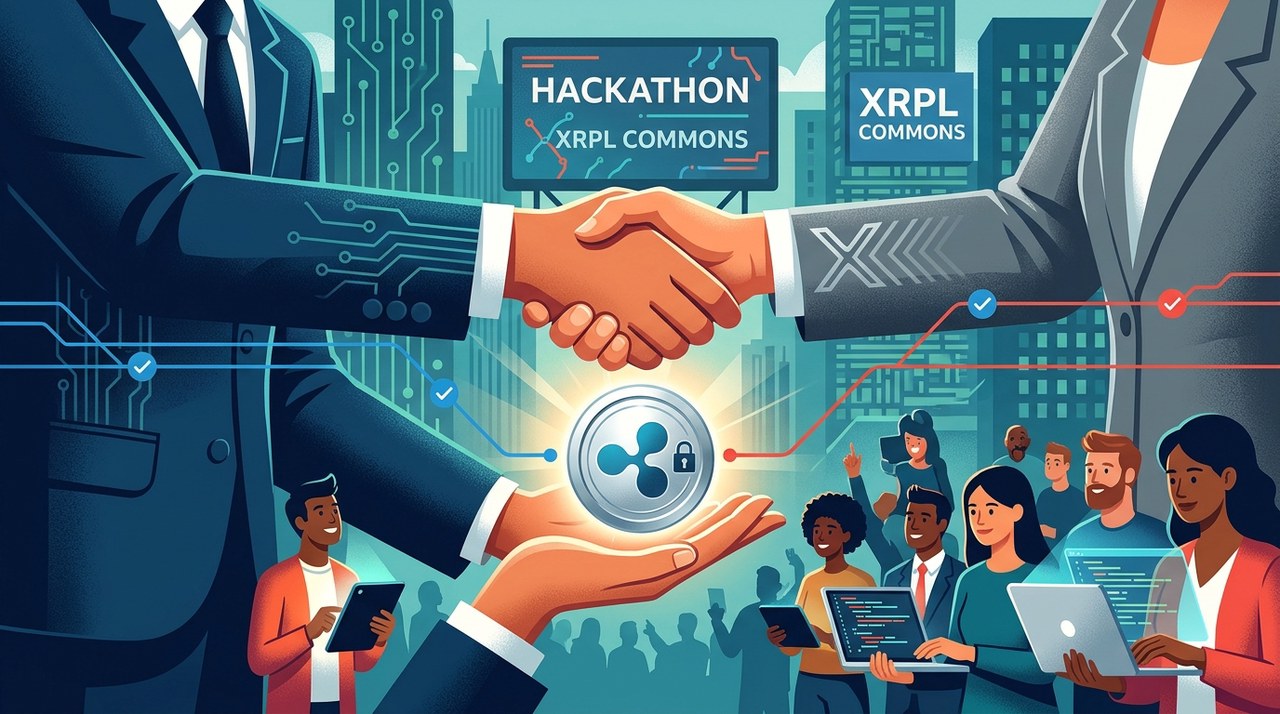
Mastercard Gives RippleXRP+1.25%'s RLUSD a Big Thumbs-Up
Something exciting happened in the world of digital payments. During the XRP Ledger Hackathon in New York City, financial giant Mastercard publicly praised Ripple's upcoming stablecoin, RLUSD.
The positive nod came directly from Mastercard representatives while they were explaining partner pitch requirements to developers at the event. XRP Ledger community member Lost Art first highlighted the moment on social media platform X on October 24, 2026.
While a compliment at a developer competition might seem simple, it points to a much bigger trend. It shows how traditional payment networks and modern crypto builders are continually finding ways to work together.
Inside the NYC XRP Ledger Hackathon
To understand why this recognition matters, it helps to look at the event itself. The AI & Fintech XRPL Hackathon was a fast-paced 36-hour developer showdown held in New York City from October 24 to October 25, 2026.
The gathering was organized by XRPL Commons. That is a non-profit group dedicated to supporting developers and building out the XRP Ledger ecosystem.
This hands-on event brought together a wide variety of talent. Software developers, entrepreneurs, graphic designers, and finance professionals all joined forces under one roof to create brand-new applications on the XRP Ledger.
To spur innovation, organizers offered more than $40,000 in prize money. Beyond the cash awards, developers received direct guidance from some of the biggest names in tech and finance.
Mastercard was an official partner alongside several other major industry leaders, including:
- Ripple: The enterprise blockchain solutions provider.
- XRP Ledger Foundation: The core body supporting the growth of the XRPL ecosystem.
- Ledger: The global leader in cryptocurrency hardware wallets and security.
- Amazon Web Services (AWS): Amazon's massive cloud infrastructure provider.
- QuickNode: A premier provider of blockchain developer tools and network infrastructure.
Exploring Four Tracks: AI Agents and Autonomous Payments
The 36-hour challenge gave participants clear target areas to focus their projects. The organizers divided the competition into four main tracks:
- Agentic Finance: Building autonomous financial tools powered by artificial intelligence.
- Lending & Borrowing: Developing decentralized lending protocols on the XRPL.
- Protocol Innovation: Upgrading and improving core blockchain mechanics.
- Why Not: A open catch-all track for unique, out-of-the-box ideas.
A central theme of the entire event was the rise of autonomous payments driven by artificial intelligence.
Imagine software programs driven by AI that can handle transactions completely on their own. Instead of relying on a human to approve every single bill, these smart agents can pay for services automatically behind the scenes.
To complete those automatic steps, AI tools need instant and reliable digital money. That is where tokens like XRP and Ripple's RLUSD stablecoin step in, functioning as digital currency for automated systems.
A Warm-Up to Ripple Swell 2026
The timing of this hackathon was strategic. It served as a precursor to Ripple's annual flagship gathering, Ripple Swell 2026.
Taking place from October 27 to October 29 in New York City, Swell brings together banking leaders, fintech founders, and global regulators to discuss the evolution of cross-border money movement.
By placing the hackathon right before Swell, XRPL Commons helped connect technical developers directly with high-level industry strategy.
Deepening Ties Between Mastercard and Ripple
Mastercard's supportive words at the event are part of an ongoing connection between the two companies.
Mastercard and Ripple have been actively working on practical payment projects together over recent years. Here is a brief look at how their relationship has developed:
August 2023: Central Bank Digital Currency Program
Back in August 2023, Ripple was named to the initial group of Mastercard's Central Bank Digital Currency (CBDC) Partner Program. Ripple worked alongside prominent industry peers like Consensys and Fireblocks to help central banks research digital currencies.
November 2025: Credit Card Settlement Studies
In November 2025, Ripple revealed a collaborative effort involving Mastercard, issuing institution WebBank, and crypto exchange Gemini.
The goal was to test RLUSD-based settlement for everyday credit card transactions. Under this model, RLUSD enables efficient blockchain settlement between Mastercard and WebBank, lowering backend operational steps.
June 2026: Expanded Stablecoin Options
In June 2026, Mastercard announced plans to introduce new settlement options built around regulated stablecoins, officially including Ripple's RLUSD.
Mastercard's multi-token framework also welcomed several other prominent stablecoin issuers:
- USDCUSDC+0.09%: USD-backed stablecoin issued by Circle.
- PYUSD: Dollar stablecoin from PayPal and Paxos.
- USDG & USDP: Regulated digital dollars managed by Paxos.
- SoFi USD: Digital currency launched by fintech platform SoFi.
Why Global Networks Are Embracing Stablecoins
Why are global credit card giants so focused on stablecoins like RLUSD? The answer comes down to settlement speed and operational simplicity.
Standard international banking settlements can take days to clear through legacy routing networks. They often require multiple corresponding banks, with each step adding time and processing overhead.
Stablecoins combine the stability of traditional fiat money, like the US dollar, with the instant transfer capabilities of blockchain technology. Settling via RLUSD allows financial entities to move value in seconds, 24 hours a day, 7 days a week.
Understanding Market Considerations and Asset Risks
While stablecoin settlements offer technical benefits, it is always important to consider the underlying operational environment.
Digital asset markets and blockchain infrastructure carry specific considerations that businesses and investors monitor carefully:
- Regulatory Guidance: Financial authorities globally are continually establishing rules for stablecoin reserves and issuer compliance.
- System Reliability: Payment infrastructure requires constant uptime to process high transaction volumes during peak times.
- Market Conditions: While stablecoins aim to hold a 1:1 value ratio with fiat money, broader digital asset markets can experience price fluctuations.
Past performance of digital assets or financial platforms does not guarantee future results. Market participants should always evaluate technical features alongside changing economic conditions.
The Path Ahead for Payment Networks
Mastercard's encouraging words for Ripple's RLUSD during the NYC hackathon highlight how quickly financial infrastructure is modernizing.
As software programs learn to manage automated tasks and established payment networks explore blockchain settlement, the space between traditional banking and crypto continues to close.
Events like the XRPL Hackathon demonstrate that the future of money movement is being actively built through collaboration between legacy financial icons and blockchain creators.
Latest blog posts


Heatbit Bitwater Turns Your Hot Shower Into Bitcoin Mining
Heatbit's new $899 Bitwater attachment replaces standard water heater elements with 20 ASIC chips that mine Bitcoin while warming household water.
|
Will Bitcoin Hold $80,000 Amid US-Iran Tensions?
Donald Trump noted potential military strikes or a deal with Iran as Bitcoin hovers around $80,000. Here is how past geopolitical events affected crypto markets.
|
Russia Hits 270,000 Digital Ruble Accounts in CBDC Launch
Russia's digital ruble has reached 270,000 accounts shortly after its official launch, driven by strong interest from small businesses.
|