
Luxor Raises $16M as Bitcoin Miners Pivot to AI Compute

BitcoinBTC+0.47% Mining Meets Artificial Intelligence
Imagine owning a massive fleet of high-powered computers. For years, those machines worked around the clock solving complex puzzles to earn Bitcoin.
Now, many of those same operations are taking on a brand-new job. They are renting out their vast computer power to artificial intelligence companies.
This major shift is giving birth to an entirely new market. Companies are now beginning to trade raw computing power much like oil or traditional commodities.
Luxor Secures $16 Million to Expand into AI
Seattle-based Luxor Technology has been a major player in Bitcoin mining services for years. Now, they are expanding heavily into the AI sector.
Luxor announced it raised $16 million in a fresh funding round. Venture firm CMT Digital led the round, with additional investments from major mining hardware makers Canaan and MicroBT.
The funding round includes both new investment capital and sales of existing shares. However, Luxor did not publicly break down the exact dollar split between the two.
Luxor plans to use the capital to scale its AI hardware brokerage business. They are also building a dedicated platform where companies can buy and sell future computing power.
The Multi-Billion Dollar Move to High-Performance Computing
The transition from crypto mining to artificial intelligence is moving very fast. Data from CoinShares shows that publicly traded Bitcoin miners had signed over $70 billion in AI and high-performance computing contracts by the end of March.
Why is this happening? Advanced AI models require massive amounts of electrical power and raw processing capability to train and operate.
Bitcoin miners already control huge electric power allocations and industrial spaces. That makes them natural partners for AI developers in urgent need of fast data capacity.
Staying the Course: Some Miners Still Focus on Bitcoin
Even with the massive industry focus on AI, not every mining company is switching gears.
For instance, Nasdaq-listed NIP Group (NIPG) announced plans to boost its core Bitcoin mining capacity by roughly 48%.
NIP Group expects to produce around 195 Bitcoins every month once its new hardware is fully deployed.
While crypto asset prices can experience market volatility, some operators remain committed to traditional proof-of-work mining alongside new tech trends.
Infrastructure Realities: Electricity Is Not the Only Requirement
Pivoting a Bitcoin mining site to host high-end AI servers sounds simple, but the actual technical transition is quite complex.
Ethan Vera, Chief Operating Officer at Luxor, shared key insights into this challenge. Luxor's software platform works alongside miners representing nearly two gigawatts of total power capacity.
Luxor assessed more than one gigawatt of that capacity to see if facilities were ready for immediate AI workloads.
They discovered that most sites possessed plenty of electricity and strong fiber-optic internet connections. However, the physical buildings presented a major hurdle.
Most locations need complete data center rebuilds because modern AI chips generate intense heat and require advanced cooling systems compared to standard mining equipment.
Trading Compute Power Like a Financial Commodity
Businesses thrive on cost predictability, yet high-tech computing prices fluctuate rapidly due to hardware demand and supply bottlenecks.
Luxor wants to help AI buyers and hardware sellers lock in prices ahead of time using forward contracts, similar to how miners manage changes in mining revenue.
Sam Hallene, a partner at CMT Digital, explained why AI firms need these specialized financial tools. Hardware equipment costs millions of dollars, and companies must protect themselves against sharp price swings.
We don’t know exactly what the market structure will look like at the end of the day,
Hallene noted regarding how the compute market will evolve over time.
To improve market transparency, Luxor introduced a specialized price index in August. This tool tracks daily asking prices for Nvidia AI server systems, giving market participants a clear reference point for equipment valuations.
Looking Ahead at the Fusion of Tech and Crypto
The convergence of Bitcoin infrastructure and artificial intelligence represents a unique evolution in high-tech infrastructure and energy utilization.
As computing capacity transforms into a tradable commodity, tech companies and crypto operators are discovering new ways to hedge risk and optimize resources.
Investors tracking these developments should keep in mind that digital asset markets remain subject to sudden price movements. Past performance of digital assets or tech equities does not guarantee future results.
Latest blog posts

Arthur Hayes Outlines AI Compute Futures Strategy for FLOP
BitMEX co-founder Arthur Hayes shared his financial vision for Flop Network, explaining how derivatives could turn AI compute into a tradable commodity.
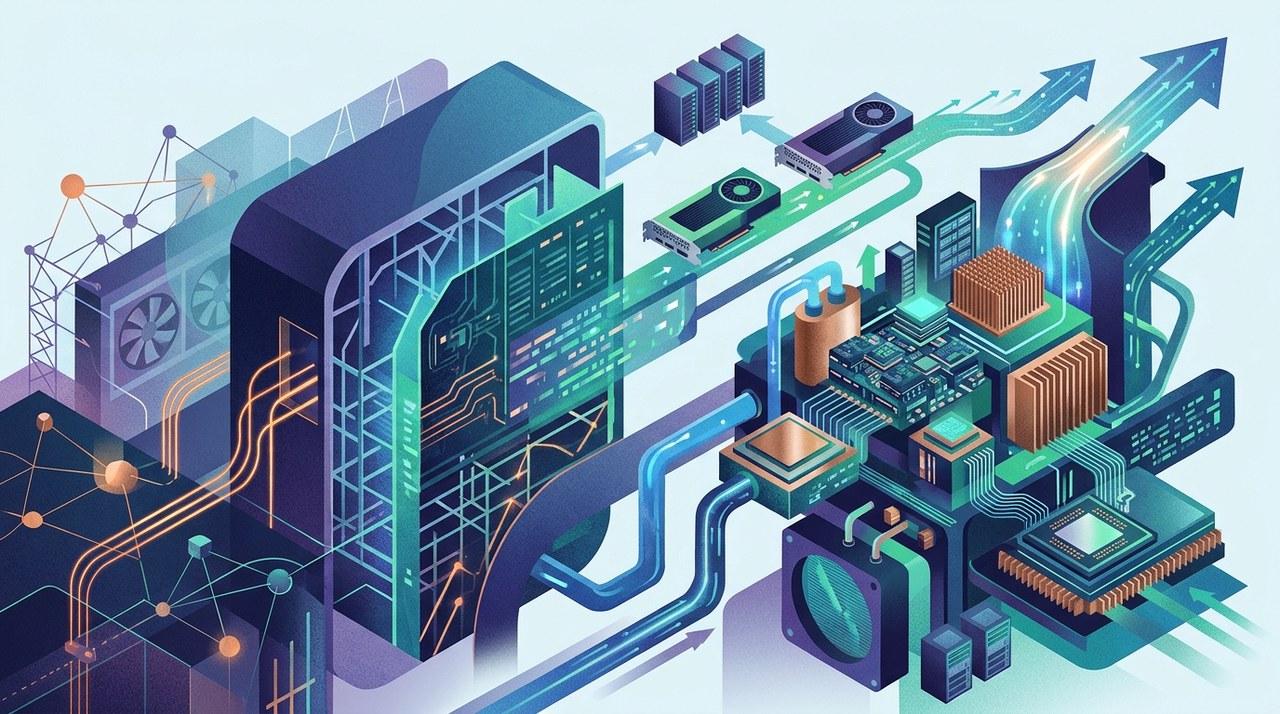
Luxor Raises $16M to Expand AI and GPU Sourcing
Luxor Technology raised $16 million from CMT Digital to scale its AI infrastructure and expand GPU sourcing services amid chip supply constraints.
|

Ripple and BNY Expand Tokenized Trade Finance Plans
Ripple and BNY have expanded their strategic partnership to support institutional custody for XRP and RLUSD while exploring tokenized trade finance on the XRP Ledger.
|