
Hardware Wallet Security 2026: Are Your Assets Safe?
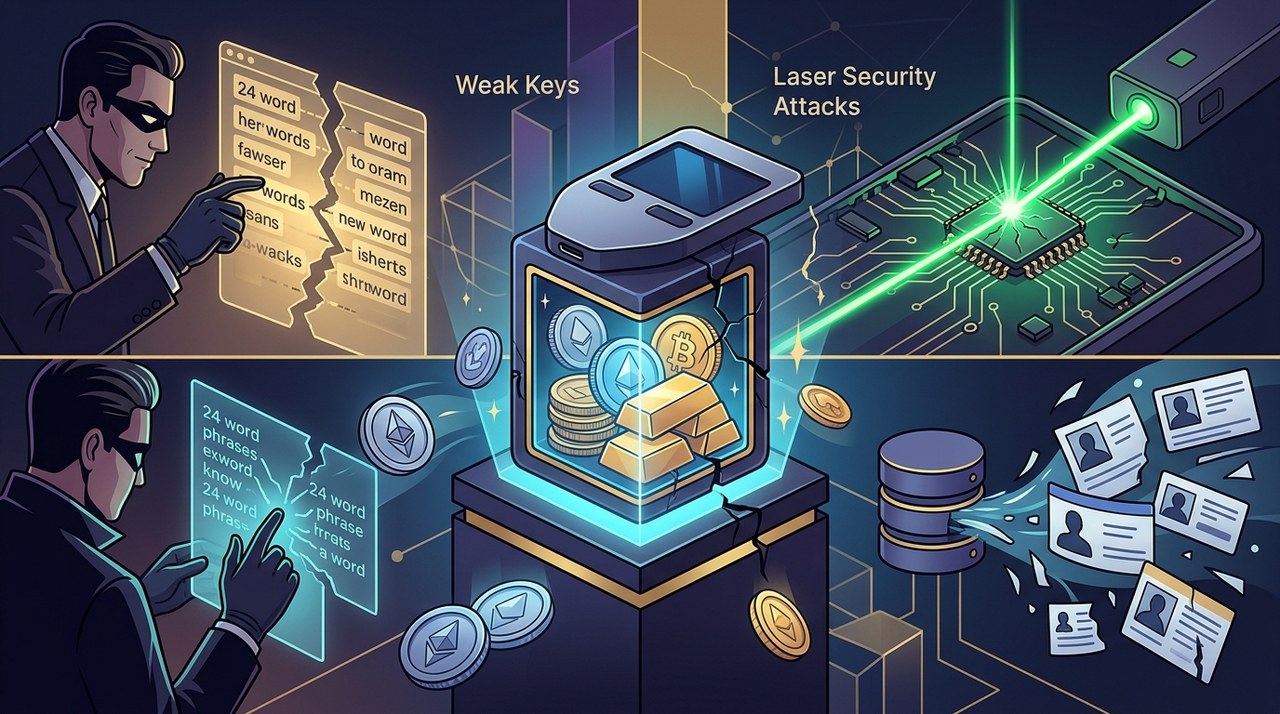
A Wild Year for Hardware Wallet Security
If you store your digital assets on a hardware wallet, you probably do it for peace of mind. These physical devices keep your secret 24-word recovery phrase offline and far away from internet hackers.
However, 2026 has put that peace of mind to the test. Six popular hardware wallet brands have reported security issues this year.
The good news is that users only lost funds in two of those six cases. The bad news is that the losses that did occur were significant.
2026 might go down as one of the wildest years for hardware wallet security.
Weak Keys, Lasers, and Data Leaks
Attackers spent 2026 targeting almost every link connected to the recovery phrase. They did not just attack software; they targeted hardware chips, supply chains, and customer data.
1. Weak Randomness Drains Coldcard Wallets
On July 30, thieves began stealing funds from Coldcard wallets whose recovery keys were created with weak randomness. When key generation lacks proper randomness, attackers can predict secret phrases much more easily.
Galaxy Research later estimated that total user losses associated with this Coldcard flaw passed $115 million.
2. Laser Security Attacks in Laboratory Settings
Physical security chips also faced testing. In June, Ledger's internal security team used specialized lasers to break chips inside the Trezor Safe 7.
In July, Ledger used a similar laser technique on Tangem cards. Both physical attacks required hands-on access to the device alongside expensive lab equipment.
Trezor confirmed that customer funds remained safe throughout. Tangem stated that the threat to everyday users was virtually non-existent, pointing out that the researchers involved were employed by a competitor.
3. Severe Firmware Patches at BitBox
In August, BitBox engineers identified and patched several severe firmware flaws. Thanks to quick internal reporting, no stolen funds were recorded.
4. Customer Data Leaks at Trezor and SafePal
Some incidents put user privacy at risk rather than their private keys. A shipping partner for Trezor leaked customer information belonging to 13,689 buyers.
Additionally, a data breach at SafePal exposed nearly 40,000 physical home addresses.
Physical Ledger Hardware Tampered Before Sale
The most concerning situation developed when physical devices were modified before reaching buyers. On Saturday, Ledger confirmed that a customer's device contained an unauthorized hardware implant.
By Sunday, Ledger announced that all confirmed tampered units were tied to CryptoBilis, an authorized reseller based in Malaysia.
72 hour update on reseller CryptoBilis incident: As the investigation continues, we are working with relevant authorities. The volume of impacted devices is limited. We know this is concerning, especially for those directly affected, and we are reaching out to impacted users...
On-chain researchers estimate total losses from this physical tampering scheme near $90 million. In one instance, a buyer lost 80 BitcoinBTC-0.90% just days after setting up their wallet.
Past performance of digital assets is not an indicator of future results. Digital asset prices are subject to market risks and volatility. You can track live market data at Bitkub Market.
Ledger has not officially confirmed a total financial loss figure. Following the event, CryptoBilis halted hardware wallet sales. Former co-founders stated on LinkedIn that they had transferred company ownership to new owners back in March.
Reports from European Buyers
Separately, several users reported that Ledger units recently purchased from an official European web store contained internal wiring that genuine units do not have.
Ledger has not verified any tampered devices outside the CryptoBilis reseller network so far.
How Manufacturers Recommend Protecting Your Crypto
Despite these challenges, hardware wallets remain a powerful security tool when handled carefully. Wallet makers advise users to follow several essential safety practices:
- Purchase directly: Always buy hardware wallets directly from the manufacturer or verified official partners.
- Avoid compromised stock: Ledger instructed CryptoBilis buyers not to set up unused devices and to migrate existing funds to a fresh recovery phrase.
- Run genuine checks: Ledger's Genuine Check application verifies the security chip's authenticity, though it cannot detect every external physical modification.
- Update firmware regularly: BitBox urges users to install all software updates and enter seed words exclusively on the physical device itself.
- Stay alert to phishing: Trezor reminded users that everyday online phishing scams remain the most common threat to crypto holdings.
Ledger has also called on other wallet producers to collaborate on shared anti-tamper protocols and supply chain standards.
Is Any Hardware Wallet Safe in 2026?
No security tool is completely invulnerable. While no security chip was cracked remotely outside a lab this year, physical tampering and weak key creation led to real losses for Coldcard and Ledger users.
By purchasing from reliable sources, checking device integrity, and keeping seed phrases offline, users can continue to protect their crypto assets effectively.
Latest blog posts



Ethereum Derivatives Flash Mixed Signals as Market Volatility Continues
Ethereum derivatives show a complex picture as futures open interest remains above $30 billion while long liquidations rise.
|

Solana Uptime Hits 2 Years, Fidelity Notes Risks
Solana has achieved two years without mainnet outages, though Fidelity highlights key areas requiring ongoing observation.
|
TokenMaxxing: How to Get the Most Out of Your AI Models
AI companies charge per token, and costs can skyrocket fast. Here is how you can optimize your prompts and agents to save money while getting top-tier results.