
Hacker Steals $86,000 From UNCX Shared Token Vault
What Happened to the UNCX Token Vault?
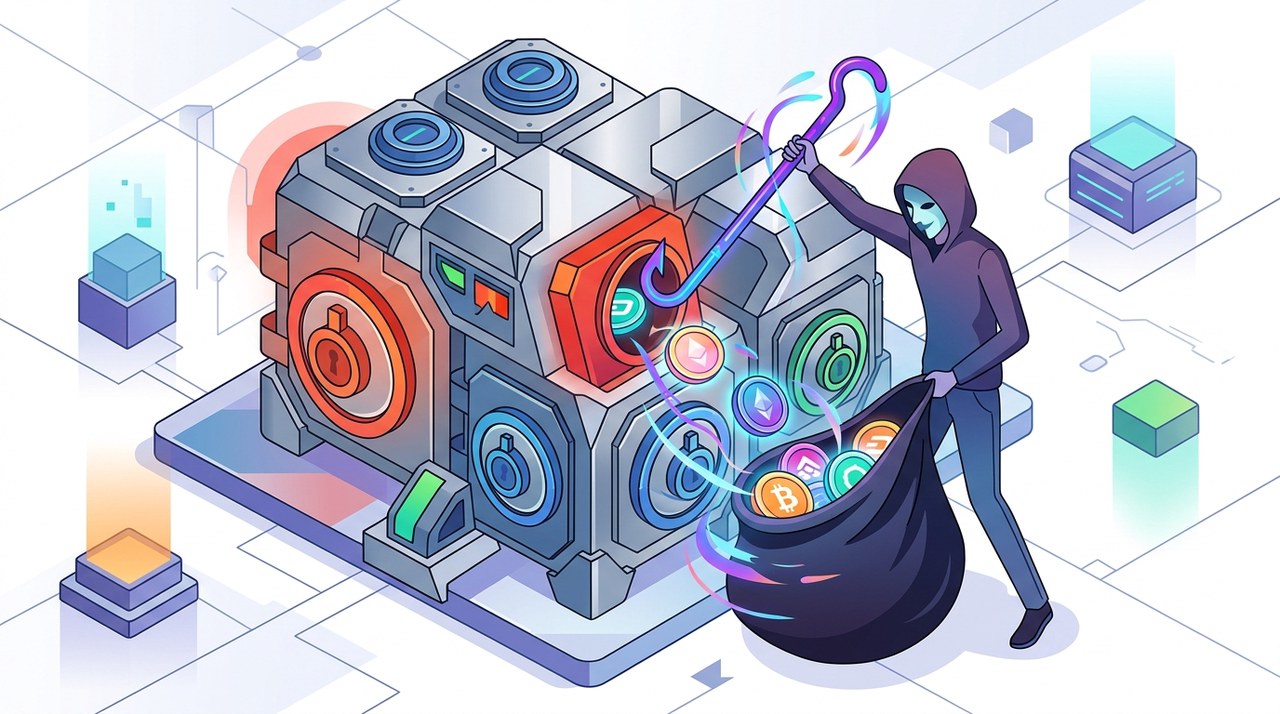
Imagine placing your valuables in a safe bank vault, only for a clever thief to figure out a trick that lets them empty your private lockbox. That is essentially what happened in the crypto world on Wednesday, October 14, 2026.
A hacker managed to drain roughly $86,000 from a shared token vesting pool run by UNCX Network on the EthereumETH-2.20% network. Web3 security firm Blockaid flagged the incident as an ongoing security exploit.
UNCX Network, previously known as UniCrypt, provides an essential service for young crypto projects. It lets founding teams lock up their tokens so they cannot sell them early and crash the market. This gives early investors peace of mind.
UNCX is a significant player in the ecosystem. Its smart contracts hold about $179.7 million across multiple blockchains, with approximately $111.4 million secured on Ethereum (ETH). To keep track of major assets like Ethereum, you can check live prices at bitkub.com/th/market/ETH.
How Did the Hacker Steal Other People's Tokens?
How could one user reach inside someone else's locked account? According to security research from Blockaid, the loss happened through a single draining transaction.
The vulnerability exists because many projects store their locked tokens inside the exact same shared contract pool rather than isolated individual contracts.
Here is how the attacker manipulated the contract's logic step by step:
- The attacker opened several vesting positions within the shared pool. A vesting position is a slot that releases tokens gradually over time.
- Next, the attacker released one large vesting position and deposited extra tokens directly into the shared pool.
- They then canceled a position that had been topped up with funds, leaving behind a tiny, residual position.
- Finally, this tiny leftover slot contained a flaw that allowed the attacker to withdraw tokens owned by completely different projects.
This attack bypasses the core security promise made by the platform. UNCX's official user documentation emphasizes that vested tokens are safely locked away inside audited smart contracts.
Tokens locked in the contract cannot be sent, sold, added to liquidity or staked.
Despite that promise, the attacker found a workaround in the code logic. Blockaid identified two attacker wallet addresses tied to the event. On-chain data from Etherscan showed one wallet holding about $5,874 across eight transactions shortly after the event.
Why an $86,000 Loss Still Matters for Small Projects
Compared to massive headline-grabbing multi-million dollar exploits, $86,000 might seem like a small number. However, for smaller crypto startups, losing locked operational tokens can be a fatal blow.
Early-stage crypto teams often rely on locked reserves to fund development, marketing, and operational expenses. When those funds vanish, the project may no longer be financially viable.
We have seen similar small-scale security incidents lead to severe consequences in recent months:
- In August, decentralized exchange Full Sail was forced to shut down after an exploit cost them around $91,000.
- In September, Notional Finance suffered a $1.73 million loss caused by an integer overflow bug in legacy smart contract code.
These examples show that smart contract security remains one of the most vital factors for project survival.
Market Reaction and What Comes Next
At the time of writing, UNCX Network had not published an official public statement regarding the security breach. The protocol's native token showed little reaction to the news.
UNCX Network (UNCX) traded around $24.80, up 0.16% over 24 hours, with a total market capitalization near $905,000. Past performance of digital assets or past operational results do not guarantee future returns or performance.
Token lockers are designed to build trust in decentralized finance. Investors count on them to guarantee that insiders cannot suddenly dump token supplies onto retail buyers.
Several key questions remain unanswered. Community members are waiting to see which specific projects lost funds, and whether UNCX Network can pause the affected pool to prevent additional unauthorized withdrawals.
Latest blog posts


Strategy CEO Predicts Major Increase in Bitcoin Banking
Strategy CEO Phong Le forecasts a historic wave of Bitcoin banking adoption driven by AI agents, inflation, and Wall Street demand.
|

Standard Chartered Shifts $2T Stablecoin Forecast to 2030
Standard Chartered projects the stablecoin market will reach $2 trillion by 2030, highlighting USDC leadership in payments and AI transactions.
|
CoreWeave Stock Drops 15% After Jim Cramer Endorsement
CoreWeave stock plunged 15% shortly after Jim Cramer praised the company, while surging bond yields sparked debate over AI debt.