

Global Economic Outlook 2027: Next Financial Crisis?
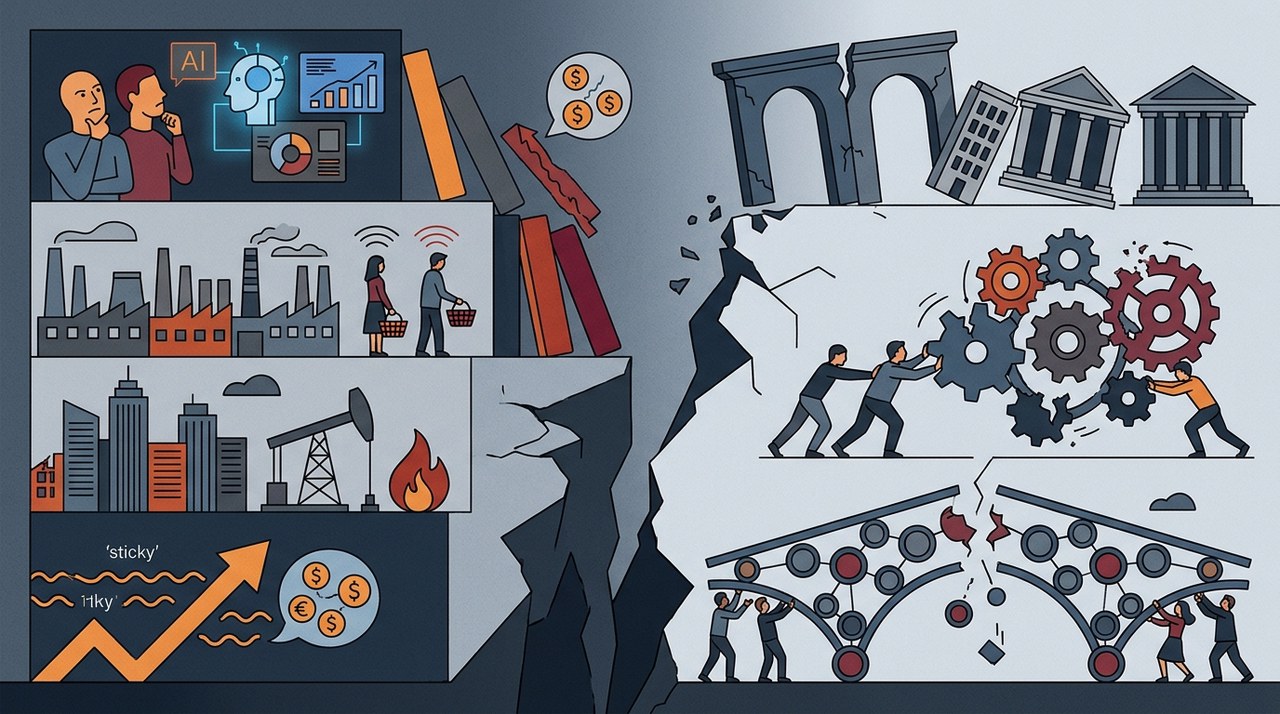
Is a Global Economic Crisis Brewing for 2027?
The global economy is entering a sensitive phase. While a severe collapse akin to the 1930s Great Depression remains a remote possibility, a prolonged economic slowdown, stock market corrections, and regional recessions are very real risks. What makes the current environment tricky is that several distinct problems are developing at the exact same time.
On Wall Street, investors are actively questioning whether massive investments in artificial intelligence will deliver sufficient returns. At the same time, domestic demand in China remains subdued, and persistent Middle East tensions have pushed Brent crude oil prices above $117 per barrel. With sticky inflation reducing central bank flexibility, these combined factors increase the likelihood of broader economic headwinds.
Understanding Market Crashes Versus Full Economic Crises
It is helpful to separate stock market swings from structural economic crises. Stock markets can drop 30% without causing a global depression. Real economic danger usually emerges when falling asset prices trigger widespread debt defaults, cause banks to restrict lending, and force businesses to cut spending and jobs.
While there is clear evidence of stock market repricing, evidence for an outright global economic breakdown remains weak. Major forecasts from international organizations like the IMF rely on baseline assumptions about energy supplies and credit availability that could change rapidly if market stress increases.
Risk #1: Could AI Spending Shocks RippleXRP-1.25% Through the Economy?
Artificial intelligence spending has become a primary driver of investment growth in the United States. It has also boosted revenue for Asian chipmakers and infrastructure providers. Consequently, any sharp reduction in AI budgets would impact a broad array of industries beyond technology stocks.
A key area of focus is circular financing across the tech sector. Tech investors fund AI companies, which then commit to purchasing cloud computing infrastructure from those same tech companies. These future revenue commitments are often used to justify further borrowing and expansion. If end-user revenue disappoints, several interconnected businesses could experience financial strain simultaneously.
The most concerning scenario involves a sequence of AI infrastructure bankruptcies followed by cancelled data center projects, which would signal that financial stress has moved from stock valuations into real economic activity.
Risk #2: Soaring Oil Prices and Persistent Inflation
Energy prices represent a second critical risk factor. Brent crude reached approximately $116–$117 per barrel on October 23, while the US 10-year Treasury yield hovered around 5%. Higher energy costs create a complicated situation for monetary authorities.
In a typical economic slowdown, central banks can lower interest rates to ease financial conditions for businesses and consumers. However, if elevated oil prices keep inflation high, cutting rates aggressively risks reigniting inflation.
Economist Steve Hanke commented on October 23, 2026: 'President Trump keeps boasting that the Strait of Hormuz is open and that more oil is coming out of the Strait than before the war. If that's true, why is the price SOARING? SOMETHING DOESN'T ADD UP.'
According to October IMF estimates, if ongoing regional conflict keeps oil above $130 through the first quarter of 2027, global economic growth could be trimmed by roughly 0.5 percentage points.
Risk #3: China's Economic Drag and Global Trade Effects
As one of the world's largest manufacturing economies and raw material consumers, China's internal economic dynamic matters globally. A lingering property sector slowdown has weighed on domestic consumer confidence, leading Chinese firms to cut prices to remain competitive.
This setup leads to two potential global spillovers. First, lower demand for raw materials impacts commodity-exporting nations. Second, increased export competition from lower-priced Chinese goods can help curb inflation in importing countries, but it also places margin pressure on competing domestic manufacturers.
Market analytics service Bull Theory noted on October 23, 2026, that roughly $10 trillion had been erased from global stock market highs, including pullbacks in South Korea (-43%), Indonesia (-42.39%), Turkey (-29%), and China (-19%).
China's significant state control over its domestic banking system provides a buffer against immediate financial contagion, although long-term economic weakness remains a continuous global drag.
Silver Linings: Why a 1930s-Style Collapse Is Still Unlikely
Despite economic pressures, several key metrics indicate that the global financial architecture remains intact. The US unemployment rate stood at 4.2% in September. While job creation was modest at 29,000 additions, widespread corporate layoffs have not taken hold.
Additionally, weekly initial jobless claims dropped to 194,000 in recent reports—the lowest point in three months. High-yield corporate credit spreads were around 3.27 percentage points on October 21. By comparison, spreads reached nearly 20 percentage points during the 2008 financial crisis, indicating that broad credit markets are currently open and operating normally.
Market observer Casey Donaldson highlighted on October 23, 2026, that US total unemployed rose from 5.7 million in September 2022 to 7.1 million in September 2026—up 24% over four years—underlining persistent cost-of-living challenges for consumers.
Four Economic Scenarios for 2027
Looking ahead 12 to 18 months, macro conditions could evolve across four key scenarios depending on energy market developments and corporate earning power:
- Base Case - Market Repricing with Uneven Growth: Tech valuations adjust and AI capital expenditure moderates. Oil prices gradually stabilize, allowing global GDP to expand at a modest pace.
- Moderate Downside - Persistent Inflation & Regional Recessions: High energy costs continue to damp spending. Certain major economies enter mild recessions while overall global growth slows.
- Severe Downside - Synchronized Global Recession: AI investment falls sharply, triggering debt defaults and tighter lending standards across financial institutions.
- Positive Turnaround - Lower Inflation & Improved Liquidity: Central banks gain room to reduce interest rates as energy pressures fade, creating more favorable global liquidity conditions.
What It Means for BitcoinBTC-0.45% and Crypto Markets
Digital asset markets remain highly attentive to global liquidity conditions. Bitcoin traded around $82,000 on October 23. US spot Bitcoin ETFs registered approximately $636 million in net outflows on October 22 following three prior days of net inflows.
Past performance of digital assets or past operational results is not a guarantee of future returns or future performance. Track real-time market metrics at bitkub.com/th/market/BTC.
Data from digital asset platform Talos showed Bitcoin's 30-day correlation with the Nasdaq index at roughly 0.6 on October 22. This points to a notable degree of short-term co-movement with tech equities, though macro correlations vary over time.
Impact Matrix: Macro Environments vs. Crypto Markets
- AI Stock Correction: Bitcoin could see increased short-term volatility, with higher pressure on speculative altcoins.
- Persistent High Inflation & Rates: Borrowing remains expensive, putting pressure on liquidity-sensitive assets.
- Recession & Deleveraging: Broader market cash demands could lead to forced liquidations across digital assets.
- Falling Inflation & Rate Cuts: Improved liquidity conditions would create a more supportive backdrop for digital asset recovery.
5 Warning Signs to Monitor in 2027
Investors can track the direction of the global economy by following these core metrics:
- AI Corporate Capital Expenditure: Significant cuts to data-center orders caused by lower-than-expected revenue.
- Oil Prices: Brent crude remaining above $120–$130 per barrel for a prolonged period.
- US Unemployment: A sustained rise in unemployment from 4.2% toward 5% or higher.
- Corporate Credit Spreads: US high-yield spreads widening beyond 5–6 percentage points.
- Banking & Private Credit: Accelerating default rates and tighter lending terms across institutions.
Latest blog posts

Argentine Court Clears President Milei in Libra Case
An Argentine federal court has cleared President Javier Milei and his sister Karina of all charges related to the collapse of the Libra meme coin.

XRPL Success and XRP Price: Insights from David Schwartz
Ripple CTO emeritus David Schwartz explains why the growing success of the XRP Ledger is closely linked to the demand and value of XRP.
|

Netanyahu Explores Crypto Strategy for Banking Sanctions
Israeli Prime Minister Benjamin Netanyahu revealed he asked for a strategy using blockchain to navigate potential foreign banking sanctions.
|