

XRPL Success and XRP Price: Insights from David Schwartz
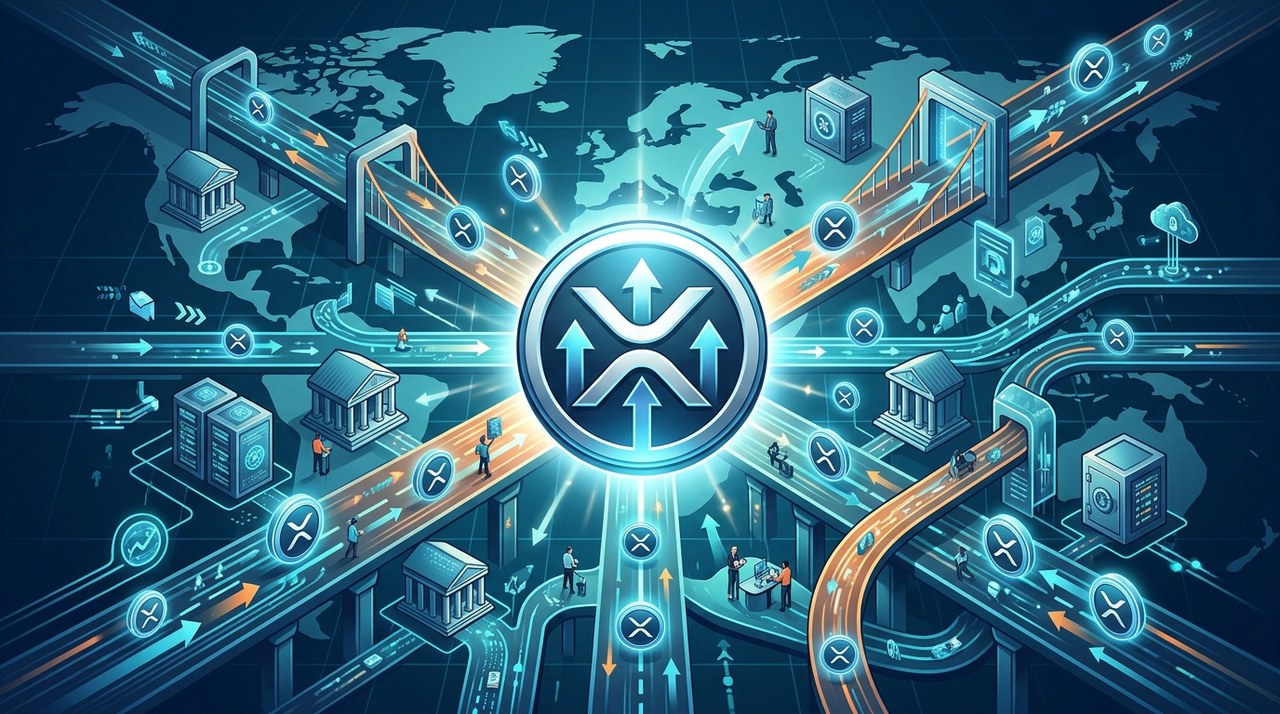
Why XRP Ledger Growth Matters to XRP Holders
Imagine building a busy highway system. Does increased traffic on that highway eventually boost the value of the official token used to pay tolls and access services?
This exact question has sparked lively debates among cryptocurrency enthusiasts for years. Some wonder whether institutional adoption of a blockchain actually benefits its native coin.
On October 23, 2026, David Schwartz, RippleXRP+0.11%'s CTO emeritus and one of the original architects of the XRP Ledger (XRPL), shared his perspective on X (formerly Twitter).
Schwartz argued that as the XRP Ledger expands its role in global financial applications, its native cryptocurrency, XRP, is very likely to experience stronger demand and higher value.
Addressing the Long-Standing Community Debate
For a long time, some market observers have questioned whether the XRP Ledger could succeed as enterprise software without lifting the price of XRP.
The concern was simple: what if major banks and financial institutions use the underlying ledger technology but bypass the XRP token entirely?
David Schwartz pushed back against this skeptical view during his social media discussion, calling such an outcome improbable.
I think a world where XRPL is highly successful in financial applications but XRP does not have high demand and value is very unlikely.
Three Key Features Driving Long-Term XRP Demand
To support his argument, Schwartz pointed out several structural features built directly into the design of the XRP Ledger.
1. The Only Counterparty-Free Asset on XRPL
Unlike stablecoins or tokenized real-world assets, XRP does not depend on a central third-party issuer.
When you hold a tokenized asset issued by a financial firm, you carry counterparty risk—meaning you rely on the issuer to back up that asset.
XRP is the only native, counterparty-free asset on the ledger, making it uniquely reliable for neutral cross-border settlements.
2. Mandatory Use for Transaction Fees and Account Reserves
Every transaction executed on the XRP Ledger requires a small fee paid in XRP, which is permanently burned.
Furthermore, active accounts on the network are required to hold a minimum reserve balance of XRP.
As total network usage and account creation grow, more XRP becomes locked in reserves or consumed by network fees.
3. Built-In Liquidity and Value Capture
Schwartz explained that these core mechanics naturally align network growth with demand for the underlying token.
Because financial activity relies on these base mechanisms, increased ledger adoption creates persistent demand for XRP.
What If BitcoinBTC+0.11% Dominates Global Settlement?
During the discussion, Schwartz tackled a hypothetical scenario where Bitcoin becomes the single dominant settlement asset for the global economy.
While Schwartz considers a single-asset world unlikely, he noted that XRP would still play a vital role even in that environment.
If Bitcoin handles almost all settlements worldwide, multiple versions of wrapped or bridged Bitcoin would still exist across various blockchains, including the XRPL.
For example, even if you imagine a world where nearly all settlement is done using bitcoin, if XRPL is successful, you will still probably have several versions of wrapped/bridged bitcoin on XRPL and XRP will capture value bridging them.
Broader Crypto Market Developments
Schwartz's analysis arrived alongside several major developments across the digital asset space reported by journalist Alex Dovbnya on October 23, 2026.
- Market Liquidity Shifts: XRP and Zcash absorbed millions of dollars in capital during a massive $635 million market flush in Bitcoin.
- Institutional ETF Progress: Financial giant Franklin Templeton, managing $1.8 trillion in assets, received a approval nod from Nasdaq for its Bitcoin ETFs.
- Community News: The crypto community expressed support for Ripple CEO Brad Garlinghouse following the sad news of his father's passing.
Analyzing Potential Outcomes and Risks
When evaluating price forecasts linked to ledger adoption, it is essential to look at the underlying market conditions and risks involved.
If financial institutions continue expanding their use of the XRP Ledger and liquidity demands increase, the asset's overall market valuation could potentially grow over time.
However, investors should consider both sides of the market equation:
- Potential Upside Drivers: Increased transaction volumes, institutional bridge asset usage, and growing reserve requirements could create positive demand pressure.
- Downside and Risk Factors: Broad market downturns, regulatory changes, or institutional adoption moving toward private ledgers could reduce token demand and push prices downward.
- Fee Mechanics: Because XRPL fees are intentionally kept low, fee burning alone may not significantly alter token supply unless overall transaction volume reaches extreme levels.
Past performance of digital assets or market operators is not a guarantee of future results. Investors can follow current price dynamics and order books directly on the Bitkub XRP Market.
Final Thoughts
David Schwartz's comments provide helpful insight into how blockchain architecture connects with token economics.
By designing XRP as the primary counterparty-free asset and fee token on the XRP Ledger, the network directly connects technical adoption with the long-term role of its native coin.
Latest blog posts

Netanyahu Explores Crypto Strategy for Banking Sanctions
Israeli Prime Minister Benjamin Netanyahu revealed he asked for a strategy using blockchain to navigate potential foreign banking sanctions.
|


JPMorgan Expands Tokenized Funds to Solana Blockchain
J.P. Morgan Asset Management brings its tokenized money market funds MONY and JLTXX to Solana for qualified U.S. investors.
|


Circle Shareholder Sues Trump Over UAE Crypto Deals
A Circle shareholder has filed a federal lawsuit against US President Donald Trump, claiming foreign crypto deals violate the US Constitution.
|