

DWF Labs Subsidiaries Sue BitGo for $141 Million Over Token Lock-Up
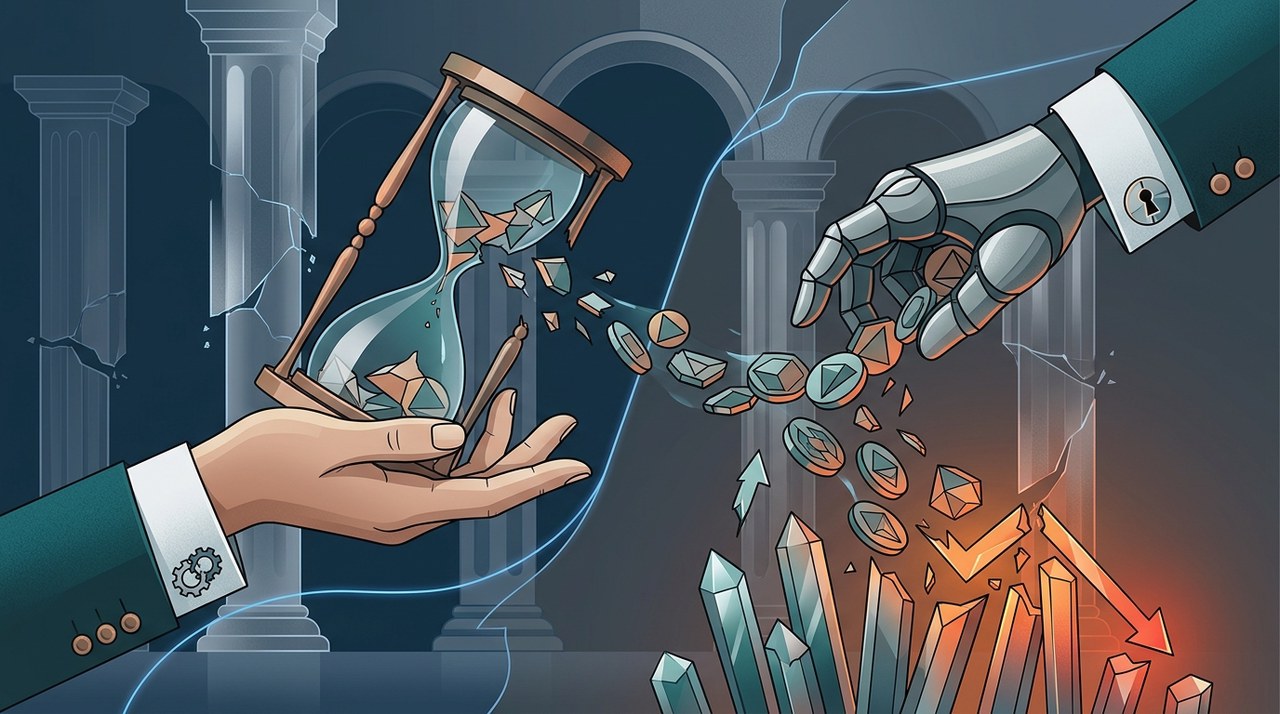
Legal Battle Breaks Out Over Alleged Token Dumping
Two investment subsidiaries of prominent market maker DWF Labs have launched a major lawsuit against cryptocurrency custodian BitGo in London's High Court.
The conflict centers on an agreement where DWF sold digital tokens to BitGo at a discount. In return, BitGo agreed to keep those tokens locked for a set period. However, DWF claims BitGo broke that agreement and sold the tokens early.
As a result of these premature sales, DWF alleges that market prices dropped sharply. They are now seeking $114 million in damages (with initial claim figures reaching up to $141 million) to cover direct financial losses.
How Token Lock-Up Agreements Work
To understand why this legal fight is so significant, it helps to look at how private token sales operate in the crypto industry.
Crypto projects frequently sell digital tokens at a discount to private investors or institutional buyers to raise working capital. To protect retail investors and project stability, these deals come with a lock-up period.
A lock-up period is a contractual promise that the buyer will not sell or transfer the tokens for a specified amount of time. This prevents buyers from dumping discount tokens onto public exchanges immediately to make a quick profit.
The Details Behind the Allegations Against BitGo
The lawsuit was brought by British Virgin Islands-based DWF Maas and Panama-based Falcon Digital, both of which are investment arms of DWF Labs.
According to court filings reported in October 2026, the two entities sold Falcon Finance (FFFF+0.00%) tokens and ESPORTS tokens at a discounted rate to BitGo. The contract required a strict three-month lock-up period.
DWF alleges that BitGo ignored these terms and moved the discounted tokens onto crypto exchanges roughly two months before the first unlock date arrived.
"The discount BitGo received was conditional on the tokens remaining locked, and they were moved to exchanges roughly two months before the first unlock," DWF stated in court reports.
How the Alleged Early Sales Impacted Token Prices
DWF asserts that selling large amounts of discounted tokens ahead of schedule flooded the market and triggered steep price declines across both assets:
- Falcon Finance (FF): Fell from 8 cents at the start of the lock-up in early March to around 7 cents by late April.
- ESPORTS: Dropped sharply from around 28 cents in mid-March down to 7 cents by early June.
DWF claims these substantial price drops directly caused the financial damage they are fighting to recover in court.
Past performance of digital assets is not an indication of future results.
Failed Negotiations Lead to Courtroom Action
Before filing the lawsuit in London, DWF stated that it attempted to resolve the issue directly with BitGo.
DWF raised formal concerns with BitGo during April and May. However, after BitGo failed to provide an acceptable undertaking or resolution, DWF decided legal action was necessary.
"We raised this with BitGo in April and May, and with no undertaking forthcoming, court action became necessary," DWF explained.
Background Context on DWF Labs
This lawsuit comes amid broader public attention on DWF Labs and its global investment deals.
Last year, DWF purchased $25 million worth of WLFI tokens, the native cryptocurrency of World Liberty FinancialWLFI-1.52%, a project backed by President Donald Trump and his family.
That investment prompted scrutiny from lawmakers in Washington, D.C., who pointed to potential ties between DWF founder Andrei Grachev and Russia. Grachev previously served as the CEO of Huobi's Russian division between 2018 and 2019, an entity that later faced sanctions across multiple jurisdictions.
Current Status and Industry Outlook
Neither DWF Labs nor BitGo immediately responded to requests for comment regarding the active legal proceedings.
As the case moves forward in London's High Court, industry observers will be watching closely to see how judges treat private token sale agreements and legal enforcement around contractual lock-up periods.
Latest blog posts


Money Market Funds Grab $166 Billion: Why Investors Fled
A massive $166.4 billion rushed into money market funds in one week as surging bond yields spooked traditional and crypto markets alike.
|


Could AI Break the Math Protecting Crypto Wallets?
Cryptographers are questioning if artificial intelligence could find shortcuts in the complex math that protects Bitcoin and Ethereum wallets.
|

F2Pool Co-Founder Swaps $19M Bitcoin for Ether
A wallet linked to F2Pool co-founder Wang Chun swapped 235.5 WBTC for 7,848.5 ETH following a recent market pullback.
|