

Crypto Rally Masks Hidden Risks as Futures Bets Top $100B

What Is Happening in the Crypto Market Right Now?
Imagine running a bustling neighborhood shop where price tags keep rising, but fewer customers walk through the front door. That image captures the crypto market during the third quarter of 2026.
On paper, the overall crypto market added a massive $840 billion over three months. Data from CoinGecko shows total crypto market capitalization jumped 39.6%, reaching nearly $3 trillion. However, underneath this impressive growth, actual trading activity on centralized spot exchanges tells a very different story.
Past performance of digital assets is not a guarantee of future returns. You can inspect real-time market trends at bitkub.com/th/market/BTC.
The Spot Volume Reality Check: Why Fewer Buyers Matter
Spot trading is straightforward buying and selling where traders exchange actual cryptocurrency tokens. During Q3, spot trading volume across the top ten centralized exchanges dropped 14.2% quarter-over-quarter down to $1.65 trillion.
Why does this gap between rising prices and lower trading volume matter? Healthy market rallies usually need steady, widespread buying to back up higher asset valuations. When trading volumes decline while prices rise, the market can become far more fragile.
If a wave of sellers decides to exit the market suddenly, a lack of active buyers can lead to sharper price drops. It is worth noting, however, that spot trading figures do not capture every single trade, and activity did show noticeable signs of improvement toward September.
The $100 Billion Leveraged Futures Tower
While spot trading cooled down, speculative trading in derivatives surged significantly. Open interest across the top ten perpetual futures exchanges surged 40.6%, reaching $102.2 billion.
Open interest measures the total value of outstanding derivative contracts that have not yet been settled. Many of these contracts rely on leverage, where traders borrow capital to amplify potential gains. While leverage magnifies returns when prices go in the expected direction, it also magnifies losses if the market moves against those positions — creating heightened short-term price volatility.
Lessons From Recent History: Cascading Liquidations
The last time open interest remained consistently above the $100 billion threshold was between May and November 2025. That period provided a clear example of how heavy market leverage can react to sudden external news.
On October 10 during that stretch, tariff threats from Donald Trump against China sparked an immediate market selloff. That initial drop quickly triggered automated liquidations on over-leveraged long positions, snowballing into over $19 billion in forced liquidations within hours.
- BitcoinBTC-0.26% fell 14.5% during the cascading selloff.
- EthereumETH-1.75% dropped 12.2% over the same timeframe.
- Automated margin calls forced sudden liquidations, accelerating downward price momentum.
When open interest reaches record highs, unexpected macro news can turn routine pullbacks into rapid liquidation cascades.
Ethereum's Paradox: Strong ETF Inflows vs. Low Daily Volume
Ethereum experienced a strong price recovery during Q3, gaining 71% to reach $2,684. Much of this upward momentum was driven by $3.1 billion in net inflows into US spot Ethereum ETFs.
Yet despite these institutional inflows, average daily trading volume for Ethereum dropped 23.2% to $11.5 billion. Investors were paying significantly higher prices per token even as total daily trading activity slowed down.
While institutional ETF demand provides genuine structural backing, quieter spot trading volumes highlight that participation remains uneven across retail and institutional segments.
What This Means for the Broader Crypto Market
High open interest by itself does not guarantee an immediate market crash or signal guaranteed bullish expansion. Market conditions depend on multiple factors, including broader macroeconomic trends, interest rates, and liquidity flows.
When prices move ahead of underlying spot trading volume, the market retains less of a cushion to absorb unexpected shocks. Keeping an eye on both spot volume trends and derivatives open interest offers valuable perspective on current market health.
Latest blog posts

Why Bitcoin Could Win Whether AI Booms or Busts
Bitwise CIO Matt Hougan explains how Bitcoin is uniquely positioned to benefit regardless of whether the AI boom continues or turns into a bubble.
|
 +1
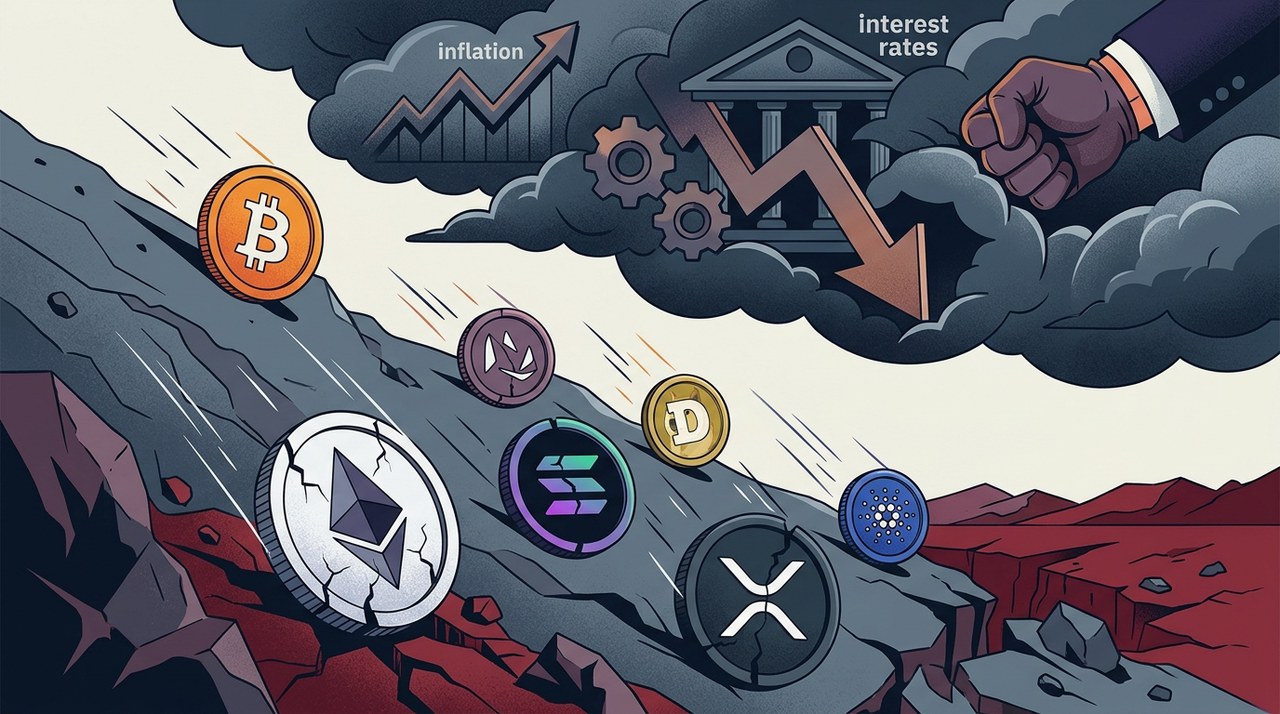
+1Altcoins Face Sharp Drop Amid Broader Macro Pressures
Ethereum, Solana, and XRP dropped sharper than Bitcoin as economic concerns and interest rate expectations weighed on the crypto market.
|
Russia Plans to Ban Direct P2P Crypto Trading by July 2027
Russia plans to ban direct peer-to-peer crypto trades from July 1, 2027, following earlier rules prohibiting transfers to self-custody wallets.