CoreWeave Stock Jumps 6% as Debt Concerns Mount

CoreWeave shares jumped more than 6% on Tuesday morning after the artificial intelligence infrastructure company shared some positive expansion news.
The company confirmed that most of its planned data-center capacity in Copenhagen is now fully operational. This announcement gave shareholders fresh hope that CoreWeave's aggressive expansion strategy is moving in the right direction.
However, behind the temporary stock surge lies a growing cloud of financial uncertainty. Investors in the bond market are demanding unusually high returns to lend money to CoreWeave, reflecting serious fears over its ability to manage heavy debt loads.
Why Are Investors Worried About CoreWeave's Debt?
CoreWeave plays a crucial role in the modern AI boom by renting out powerful Nvidia graphics processing units (GPUs) to companies building complex artificial intelligence models.
Building massive data centers to house these high-end chips costs billions of dollars. To fund this rapid growth, CoreWeave has taken on significant loans, leading to mounting financial pressure.
- CoreWeave's quarterly net interest expense reached $640 million between April and June.
- That is a steep jump compared to the $267 million in net interest expense recorded during the same period last year.
- A major $2.75 billion CoreWeave bond issue promises a 9.75% annual interest rate through 2031.
The bond market tells an even more concerning story. As bond prices fall, their yields rise. The yield on CoreWeave's $2.75 billion bond issue recently climbed as high as 15.76%.
Think of it this way: when investors demand a 15.76% return to hold a company's debt, it means they perceive substantial risk that the borrower might struggle to make payments down the road.
Jim Cramer Challenges Nvidia to Step In
The rising yields caught the attention of CNBC host Jim Cramer, who publicly challenged Nvidia CEO Jensen Huang on social media.
Cramer argued that if Nvidia truly believes CoreWeave is financially stable, Nvidia should put its own money on the line by purchasing those high-yielding bonds itself.
If Jensen thinks that CoreWeave is money good he should buy up their 15% debt
Huang had previously voiced strong confidence in CoreWeave during an interview with Bloomberg, stating he was optimistic and noting that CoreWeave's overall cost of capital was actually decreasing.
Nvidia is already deeply tied to CoreWeave. It owns roughly 10% of the company and has committed to a $6.3 billion agreement to buy unused computing capacity through 2032.
While buying CoreWeave's existing bonds would signal strong confidence, it would increase Nvidia's financial exposure without actually injecting fresh capital directly into CoreWeave's bank accounts.
Analyst Targets and Potential Scenario Risks
Despite these debt concerns, Wall Street analysts maintain a generally optimistic outlook on CoreWeave's stock price, though forecasts vary dramatically based on different economic conditions.
Data from TipRanks shows that 22 out of 30 analysts recommend buying the stock, with an average 12-month target of $130.92—representing a theoretical 124% upside from its $58.54 price on Tuesday morning.
However, these price predictions depend heavily on specific market scenarios and underlying assumptions:
- Bullish Scenario (Up to $250): Assumes AI compute demand remains exceptionally high, data center buildouts complete smoothly, and cash flow grows fast enough to easily service interest payments.
- Base Scenario ($130.92 average): Assumes steady expansion and manageable refinancing conditions over the next 12 months.
- Bearish Scenario (Down to $39): If high interest expenses consume too much operating cash flow or AI spending cools down, several investment banks caution the stock could drop significantly toward lower target range estimates.
For potential investors, the key factor to watch is whether CoreWeave can generate sufficient revenue from its new Copenhagen facility and global operations to comfortably offset its substantial financing costs.
Past performance of assets or company equities does not guarantee future results. Investors should carefully evaluate both high expansion potential and underlying debt risks before making financial decisions.
Latest blog posts
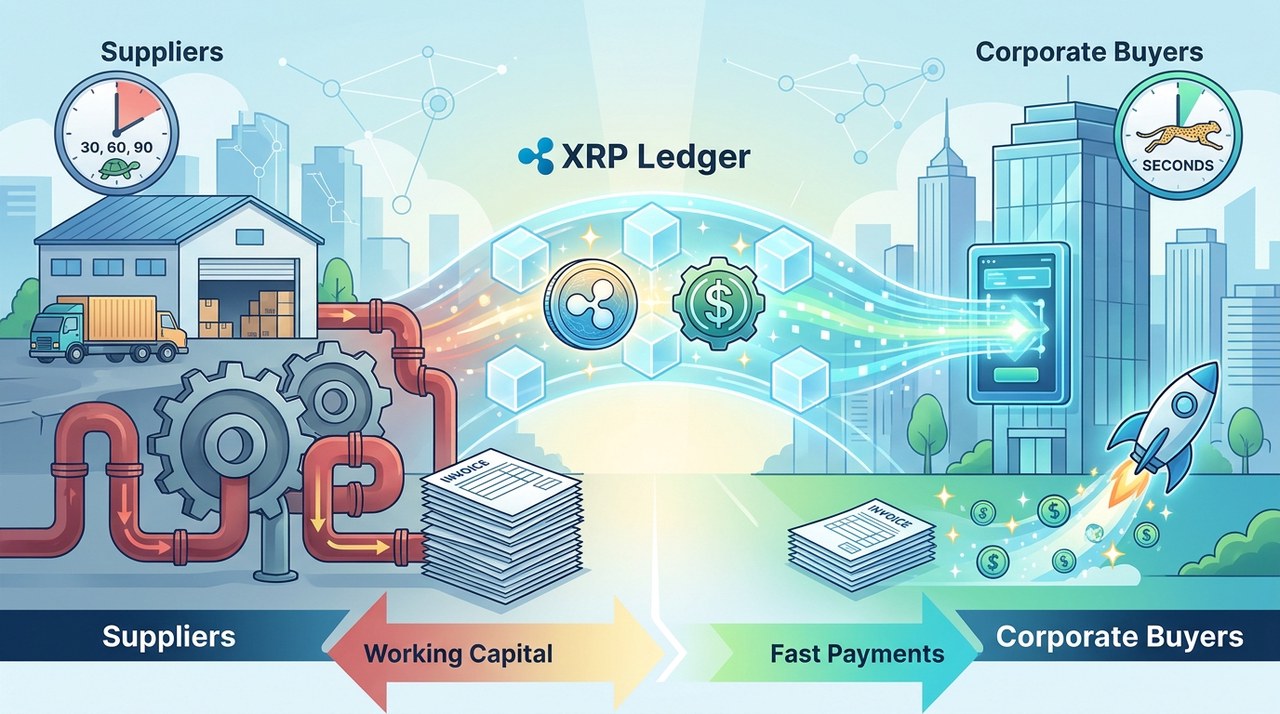

Ripple and C2FO Tap XRPL to Speed Up Supplier Payments
Ripple and C2FO are bringing invoice financing to the XRP Ledger, using the RLUSD stablecoin to settle business payments in seconds.
|
Why Crypto Lacks Political Power in Latin America
While crypto has gained massive political clout in the US through PACs and lobbying, Latin American crypto users remain politically invisible despite high adoption rates.
|


CFTC Sues Utah Over Prediction Market Rules
The CFTC has filed a lawsuit against Utah, claiming exclusive federal authority over prediction markets like Kalshi following state gambling crackdowns.
|