

CFTC Sues Utah Over Prediction Market Rules
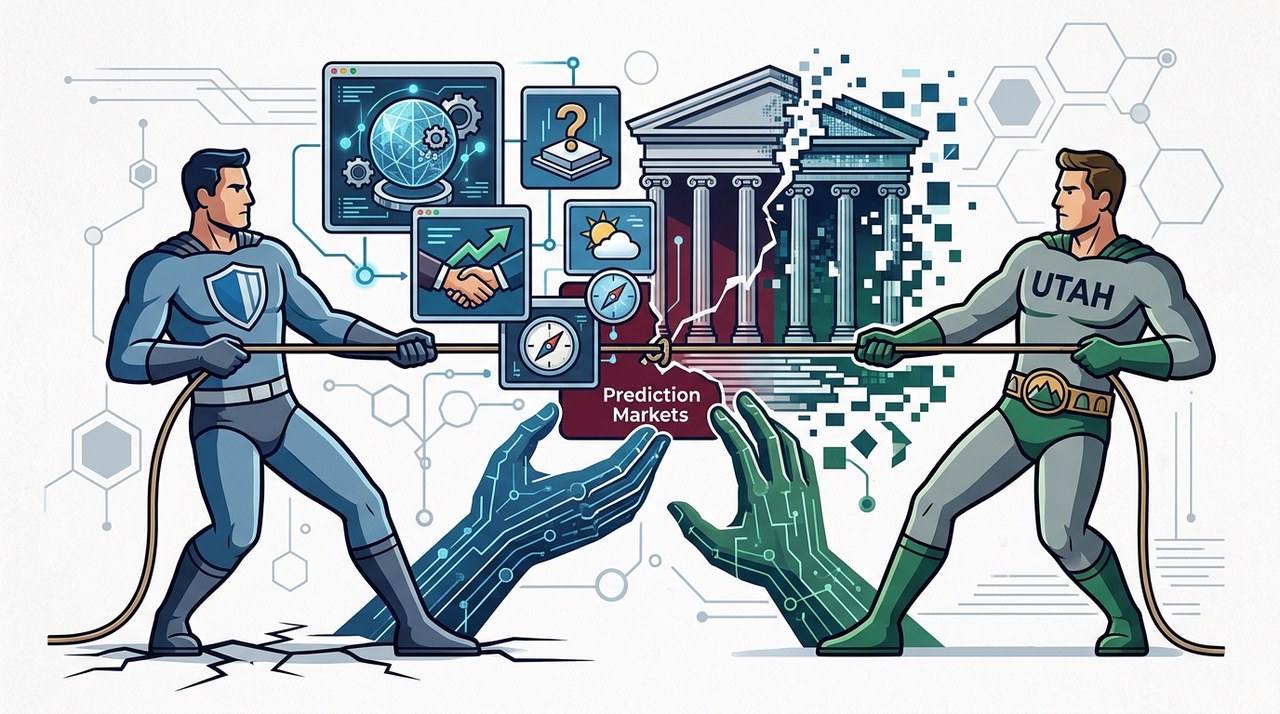
A major legal fight has broken out between federal regulators and state officials. The debate centers on who gets to regulate online prediction markets.
Federal Regulators Sue Utah Over Event Trading
On October 27, 2026, the Commodity Futures Trading Commission (CFTC) and the U.S. government sued the state of Utah.
The lawsuit was filed in federal district court under case number 2:26-cv-01055 against Utah and Attorney General Derek Brown.
Federal officials want to stop Utah from applying local gambling laws to federally regulated prediction platforms.
The CFTC Claims Exclusive Authority Over Derivatives
The CFTC argues that the Commodity Exchange Act (CEA) gives it sole oversight of event contracts on designated exchanges.
Utah is not the only state targeted. The CFTC has taken legal action against ten states overall regarding federal oversight boundaries.
- Utah
- New York
- Kentucky
- Rhode Island
- Arizona
- Minnesota
- Wisconsin
- New Mexico
- Connecticut
- Illinois
CFTC Chairman Michael S. Selig defended the agency's position on prediction markets clearly.
Utah seeks to shut down prediction markets across a wide variety of markets. Event contracts do not just serve hedging and investment purposes—they also provide the public with information about the outcome of future events.
Selig emphasized that Congress tasked the CFTC with sole responsibility to oversee commodity derivatives.
Utah Targets Kalshi Over Trading Losses and Fees
This federal lawsuit follows an enforcement action filed by Utah on October 20, 2026.
Attorney General Derek Brown sued Kalshi, its affiliates, and two Susquehanna entities for operating what he called an illegal gambling business.
The state claims Kalshi offered contracts on sports, elections, politics, and entertainment while collecting $30.6 million to $61.2 million in fees.
Utah officials also stated that over 32,000 resident accounts suffered around $5.5 million in total losses earlier in 2026.
Utah Attorney General Derek Brown accused Kalshi of operating an online casino in Utah and calling it a prediction market.
Legal Challenges Complicate the Federal Stance
Kalshi previously faced a legal setback in this dispute.
On August 4, U.S. District Judge Robert J. Shelby ruled federal law did not block Utah from enforcing gambling rules on sports contracts.
Kalshi appealed, but the 10th U.S. Circuit Court of Appeals denied an injunction request on September 8.
The CFTC is now pushing three arguments: express federal authority, comprehensive regulation, and clear conflicts between state and national rules.
What This Means for Traders and Markets
If the federal court sides with the CFTC, it will establish uniform national rules for event contracts.
If Utah wins, individual states will gain broader powers to restrict derivatives trading locally.
Market participants should remember that trading derivatives involves financial risk, and past performance of digital assets or contracts is no guarantee of future results.
Related News: Gamdom Hack Extortion Demand
In separate industry news, crypto casino Gamdom faced a $15 million BitcoinBTC+1.04% ransom demand.
A cyber-extortion group called Whitearmor claimed to have stolen internal platform records.
Latest blog posts

Bitcoin Sees $1 Billion Exchange Outflow: What It Means
Over 12,500 Bitcoin worth more than $1 billion left crypto exchanges on October 27, marking one of the largest daily outflows this month.
|

U.S. Treasury Sees Crypto as Key to Dollar Dominance
U.S. Treasury Secretary Scott Bessent explained how stablecoins, tech leadership, and SEC-CFTC cooperation can keep the dollar on top.
|
Quantum Fears Limit Bitcoin Growth Says Stacks Founder
Stacks founder Muneeb Ali warned on the Chain Reaction podcast that quantum computing uncertainty could deter institutional investors from Bitcoin.
|