
China Unveils 13-Foot Robot, Elon Musk Teases Optimus Prime
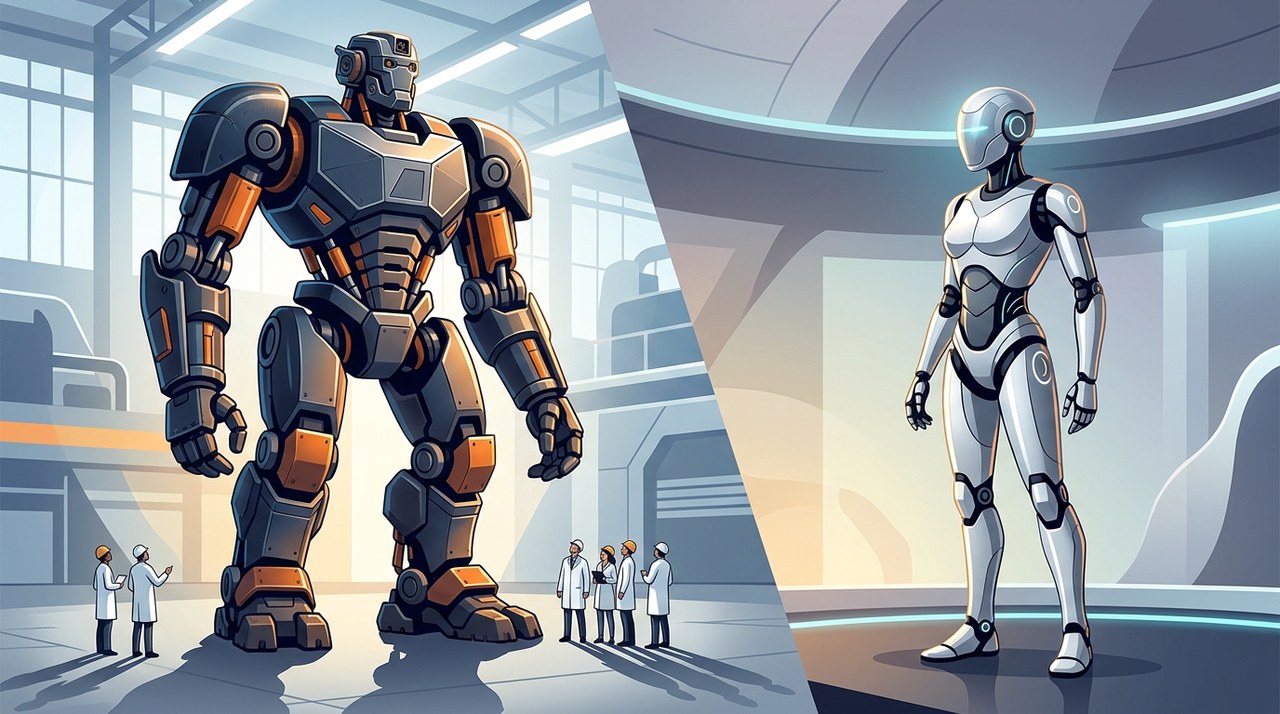
Sci-Fi Meets Reality in the Global Robotics Race
Imagine walking into a factory and standing next to a robot as tall as a two-story house. That sounds like a scene straight out of a Hollywood movie, but it just became reality in China.
A Beijing-based robotics startup called NeodraDynamics unveiled a massive 13-foot humanoid robot. Shortly after the reveal, Tesla CEO Elon Musk chimed in on social media with a witty comment about building a real-life Optimus Prime.
While Musk's post was clearly lighthearted, it points to a very real split in how global engineering teams view the future of robotics. China is building gigantic steel machines for heavy industrial work, while Tesla is doubling down on human-sized helpers.
Meet Neo1: China's 13-Foot Industrial Goliath
The newly revealed machine is named Neo1. NeodraDynamics introduced what it calls a 'super humanoid' at the 2026 China International Industry Fair held in Beijing.
According to official details released by the company, Neo1 comes with some impressive physical stats:
- Height: Stands about 4 meters tall (roughly 13 feet), making it more than twice the height of Tesla's Optimus.
- Weight: Tipping the scales at roughly 1.2 tons (around 2,400 pounds).
- Lifting Power: Its two arms can jointly lift up to 500 kilograms (over 1,100 pounds).
- Joint Mechanics: Features 41 joints powered mostly by small hydraulic actuators rather than standard electric motors.
On October 16, 2026, prediction market platform Polymarket shared a video clip of the massive humanoid on X (formerly Twitter), sparking widespread attention across tech communities.
Why Use Hydraulics Instead of Electric Motors?
To understand why Neo1 is built this way, it helps to look at the mechanics. Most human-sized robots rely on electric motors because they allow smooth and precise movements, which are great for folding clothes or picking up tools.
However, when you need raw power to lift over a thousand pounds, hydraulic systems are much more effective. Think of hydraulics like the heavy arm of an excavator on a construction site—using fluid pressure to deliver intense physical strength.
Because Neo1 trades delicate flexibility for raw lifting power, NeodraDynamics plans to pitch the machine for heavy-duty industrial environments:
- Port Handling: Moving heavy shipping crates and cargo around docks.
- Mining Operations: Handling massive tools and debris underground.
- Disaster Rescue: Clearing heavy rubble to help save lives after natural disasters.
- Extreme Maintenance: Operating safely in deep-sea environments or nuclear plants where humans cannot go.
Elon Musk Reacts: 'Optimus Will Build Optimus Prime'
The news of China's giant robot quickly caught the attention of social media users. One X user directly tagged Elon Musk, asking if Tesla could build a real-life 'Evangelion'—referring to the iconic giant piloted mechas from Japanese anime.
On October 17, 2026, Musk responded with a brief joke that sent sci-fi fans into a frenzy:
Optimus will build Optimus Prime
Optimus Prime is the legendary leader of the Transformers, known for his massive size and strength. Even though Musk's comment was a joke, it highlighted the two distinct philosophies shaping robotics development worldwide.
Human-Sized Helpers vs. Heavy Industrial Giants
Tesla's Optimus is built to match human dimensions, standing roughly 5 feet 8 inches tall. The logic behind this design is simple: our world—from door handles to factory workstations—is built for humans. A human-sized robot can fit straight into existing spaces without needing new infrastructure.
In contrast, Chinese prototypes like Neo1 give up everyday versatility and human spaces in exchange for heavy construction power. Instead of replacing a worker at a factory bench, Neo1 functions more like a intelligent, bipedal crane.
Wall Street Predictions, Skeptics, and Industry Opinions
The robotics boom remains one of the most heavily debated topics among technology analysts and investors.
Wedbush analyst Dan Ives expects that Tesla's focus on autonomous robotaxis and Optimus could make 2027 a strong year for the company—assuming autonomous software milestones and mass production scaling pan out, though regulatory hurdles or manufacturing delays remain key risks.
On the other hand, billionaire investor Mark Cuban recently offered a counter-perspective, predicting that humanoid robots might fail commercially within a decade due to high production costs and practical limitations.
Meanwhile, competition in Asia is moving rapidly. The founder of Chinese robotics maker Unitree expects AI-powered physical robots to reach their own breakthrough 'ChatGPT moment' within two to ten years. At the same time, Musk continues making hardware promises, recently displaying a prototype of a flying Tesla Roadster in Texas.
Impact on AI and Market Ecosystems
As hardware breakthroughs continue to capture public attention, excitement around AI and autonomous tech often carries over into related technology sectors. Web3 and AI-focused token ecosystems, such as PRIME (Echelon PrimePRIME-0.61%), often track general sentiment around emerging technological adoption.
As always, readers should remember that past performance of digital assets or tech equities is not an indication of future results, and tech sectors can experience high market volatility during rapid development cycles.
Latest blog posts



Why Stablecoins Rely on Legacy Banks: Frgmnt CEO
Stablecoins are shifting from speculative crypto tools to everyday digital dollars, but their reliance on traditional banks remains a core challenge.
|
Robert Kiyosaki Warns of the Sixth Major Money Trap
Rich Dad Poor Dad author Robert Kiyosaki shared six critical money problems, explaining why losing sudden wealth is the most dangerous trap of all.

France Proposes 31.4% Tax on Stablecoin Swaps
French lawmakers narrowly approved a proposal to levy a 31.4% capital gains tax on crypto-to-stablecoin swaps starting in 2027.
|