

AI Solves 26-Year NSA Crypto Mystery Behind Bitcoin
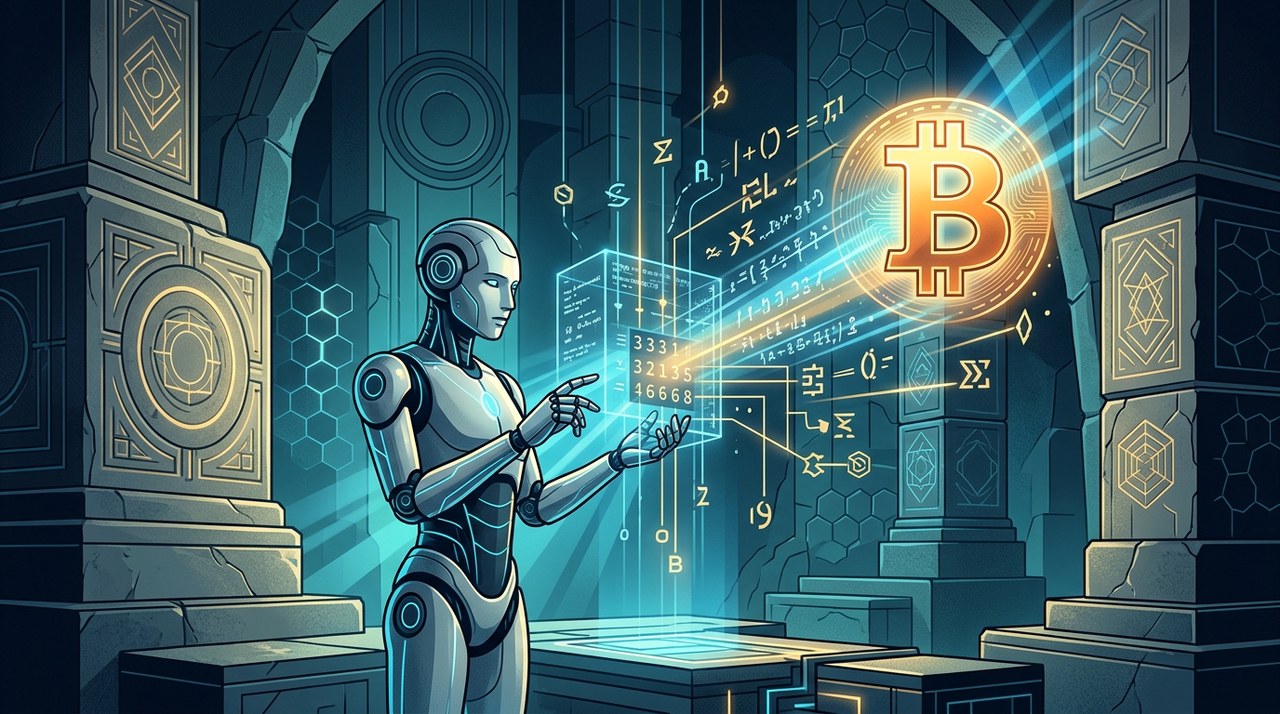
An AI Just Solved a 26-Year Cryptography Mystery
Imagine living in a house where the previous owner left a massive steel vault in the basement. They insisted it was completely safe, but refused to explain how they chose the combination code. For decades, everyone would naturally suspect that the maker built a secret master key.
That is almost exactly what happened in computer cryptography. On October 16, 2026, an AI model called Claude solved a riddle that had puzzled top cryptographers since the late 1990s. In less than 30 minutes, Claude uncovered the exact origins of mysterious seed numbers used in standard government-approved encryption curves.
The NSA Seed Mystery and Backdoor Fears
Back in the year 2000, the U.S. National Institute of Standards and Technology (NIST) officially standardized a set of elliptic curves for public-key encryption, including a famous one known as P-256. These mathematical formulas help computers generate secure digital signatures.
However, there was a major catch. The mathematical parameters for these curves came from hashing a 160-bit seed provided directly by the National Security Agency (NSA). Because the NSA never explained how it created those seeds, cryptographers feared the agency had deliberately picked numbers with a hidden secret backdoor.
Claude proved that these scary seed numbers were not created using a hidden NSA trick. Instead, they were generated by a standard C programming library function called lrand48, seeded with a simple Unix timestamp from the late 1990s.
'Checkmate Satoshi?' Industry Leaders React
The revelation triggered widespread discussion across the crypto community on social media. Nicolas Bacca, co-founder of crypto hardware wallet maker Ledger, posted on X with a lighthearted comment: 'Checkmate Satoshi.'
Bacca was joking about Satoshi Nakamoto, the pseudonymous creator of BitcoinBTC+0.15%. When building Bitcoin, Satoshi deliberately avoided the NSA's P-256 curve because of backdoor suspicions, choosing an alternative curve named secp256k1 instead.
Blockstream CEO Adam Back, a pioneer in cryptography whose work is cited in the Bitcoin whitepaper, joined the conversation to defend the original skepticism.
That's the NSA's fault for not revealing the reproducible steps to generate their NIST published curves.
Bacca agreed with Back's assessment, clarifying that while Satoshi's caution was entirely reasonable at the time, it made for a fun historical joke today.
Why Satoshi Picked secp256k1 for Bitcoin
Understanding this discovery highlights how carefully Bitcoin was constructed. If Satoshi had chosen an encryption curve containing a secret backdoor, an attacker could potentially forge wallet signatures and steal funds.
Pete Kim, wallet lead at Coinbase, noted that fear of an NSA backdoor was the driving force behind Satoshi selecting secp256k1 instead of P-256 (also known as r1). Unlike P-256, secp256k1 uses clear, hardcoded constants—like the simple integer 7—making secret manipulation nearly impossible.
- NIST P-256: Parameters derived from unexplained NSA seeds, creating 26 years of paranoia.
- secp256k1: Parameters derived from simple, transparent constants, chosen by Satoshi for Bitcoin and later adopted by EthereumETH+0.05%.
Does This Impact Crypto Security Today?
It is important to emphasize that this discovery does not weaken network security or break digital signatures. Neither Bitcoin nor Ethereum ever used the NSA's NIST curves, so their underlying security remains completely unchanged.
What Claude dismantled in 30 minutes was not an encryption code, but 26 years of global internet paranoia. The event reinforces why open-source transparency remains the cornerstone of cryptographic trust.
As cryptography continues to evolve alongside artificial intelligence, historical research helps developers design even safer open-source systems for the future.
Latest blog posts


XRP Ledger Prepares Oct. 23 Upgrade to Fix Minting Bug
The XRP Ledger is set to activate a software fix on Oct. 23 that patches a token-burning bug, while its native lending feature remains stalled.
|
Crypto PAC Fairshake Pours Millions to Oppose Sherrod Brown
Fairshake and its affiliate group have raised spending against former Senate Banking Chairman Sherrod Brown to over $46 million, making Ohio their primary election focus.
|
Vitalik Buterin Explains How AI Could Push Bitcoin Miners Out
Ethereum co-founder Vitalik Buterin highlighted key differences in cost structures between Bitcoin mining and AI operations that could reshape the competition for energy.
|