

9 US Companies Object to OKXICE Tokenized Stock Trading
A Sudden Speed Bump for 24/7 Stock Trading
Imagine being able to trade top American stocks at any time of day or night, even on weekends. That was the big vision behind OKXICE, a joint venture designed to bring round-the-clock stock trading onto the blockchain.
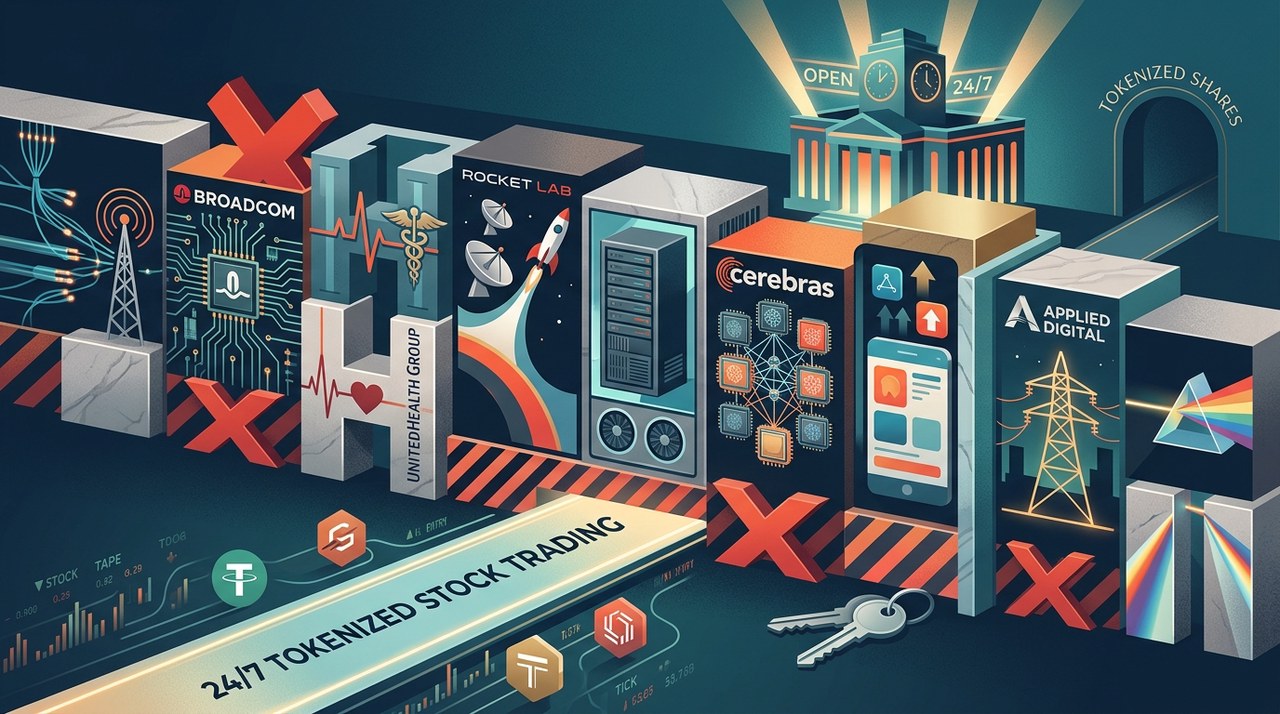
However, that ambitious plan has just hit an unexpected hurdle. Nine major companies listed in the United States have officially filed formal objections against having tokenized versions of their shares traded on the OKXICE platform.
According to an official public notice published on October 15, 2026, companies like Verizon and Broadcom filed formal issuer objections. The Wall Street Journal was the first outlet to report on this development.
Which Nine Companies Filed Objections?
The list of objecting issuers includes well-known businesses across technology, telecommunications, space exploration, and healthcare:
- Cerebras Systems (CBRS)
- Applovin (APP)
- Applied Digital (APLD)
- Rocket Lab (RKLB)
- Coreweave (CRWV)
- Verizon (VZ)
- Applied Optoelectronics (AAOI)
- Broadcom (AVGO)
- Unitedhealth Group (UNH)
This move marks a notable clash between traditional public corporations and new crypto-based trading setups. While these companies might not oppose blockchain tech in general, they are actively refusing to participate in this specific tokenized stock arrangement.
How OKXICE's Tokenization Model Works
To understand why this pushback is happening, it helps to look at how OKXICE was designed to function. The platform is an equal joint venture between OKC USA Holding Inc. and Intercontinental Exchange (ICE), which is the parent company of the New York Stock Exchange.
Traditional stock exchanges operate during strict business hours. OKXICE wanted to bypass those limits by offering digital equity tokens that can be traded 24 hours a day, seven days a week.
Under the proposed structure, an independent third party would buy and hold physical corporate shares through a registered broker-dealer. For every real share held, OKXICE would issue a digital token representing an entitlement to that underlying share.
These digital tokens were meant to carry standard equity rights, including dividend payments and voting power.
The Tech Behind the Platform
Instead of using a classic order book like a traditional stock exchange, OKXICE planned to use decentralized liquidity pools.
Specifically, the platform designed permissioned UniswapUNI-1.01% v4 pools running on X Layer, which is OKX's dedicated blockchain network. Investors would swap their tokenized stocks directly against popular stablecoins, including USDCUSDC-0.06%, USDT, and USDG.
To keep things regulated, trading requires complete identity verification (KYC) and an approved digital wallet. The platform operates under temporary exemptive relief from the Securities and Exchange Commission (SEC), rather than standard exchange registration.
Why These Objections Pose a Real Challenge
You might wonder if a company can really stop someone from tokenizing its shares. In this case, the answer is yes, thanks to SEC rules.
When the SEC set up the temporary exemption framework for OKXICE, it included an issuer objection mechanism. This feature allows any public company to object to third-party tokenization of its securities.
If a company files a formal objection, it can legally prevent its tokenized shares from entering the platform's trading pools. Because of this, the nine objections are far more than just complaints—they are practical legal barriers.
Wall Street Meets Web3 Friction
The October 15 public filing did not reveal the specific reasons why these nine corporations decided to object. There is also no clear sign that they reject tokenization in principle.
However, the situation highlights a growing friction point for financial innovation. Developers can write code for 24/7 trading, and regulators can offer special pathways for testing. Yet, the companies behind the stocks still hold significant power over how their equities are handled.
As traditional finance and crypto continue to merge, gaining explicit approval from corporate issuers will likely be just as critical as building the underlying blockchain technology.
Latest blog posts


Vitalik Buterin Builds Paranoid Mode for AI Privacy
Ethereum co-founder Vitalik Buterin released an experimental privacy tool called Paranoid Mode to help hide sensitive user data and financial secrets from AI models.
|

EU and 8 Nations Sign New Treaty to Fight Crypto Crime
The European Union and eight allied countries have signed an updated international protocol to track, freeze, and share illicit crypto assets across borders.
|
Anthropic Junk Rating Sparks Debate on Bitcoin
Anthropic's BB+ credit rating has sparked fresh discussions about AI funding risks, rising bond yields, and Bitcoin's role in traditional portfolios.
|