
22 Major Companies Reject Tokenized Stock Plan
What Is Happening with Tokenized Stocks?
Imagine being able to trade stock in major American companies whenever you want, day or night. That was the big vision behind a high-profile crypto project called OKXICE.
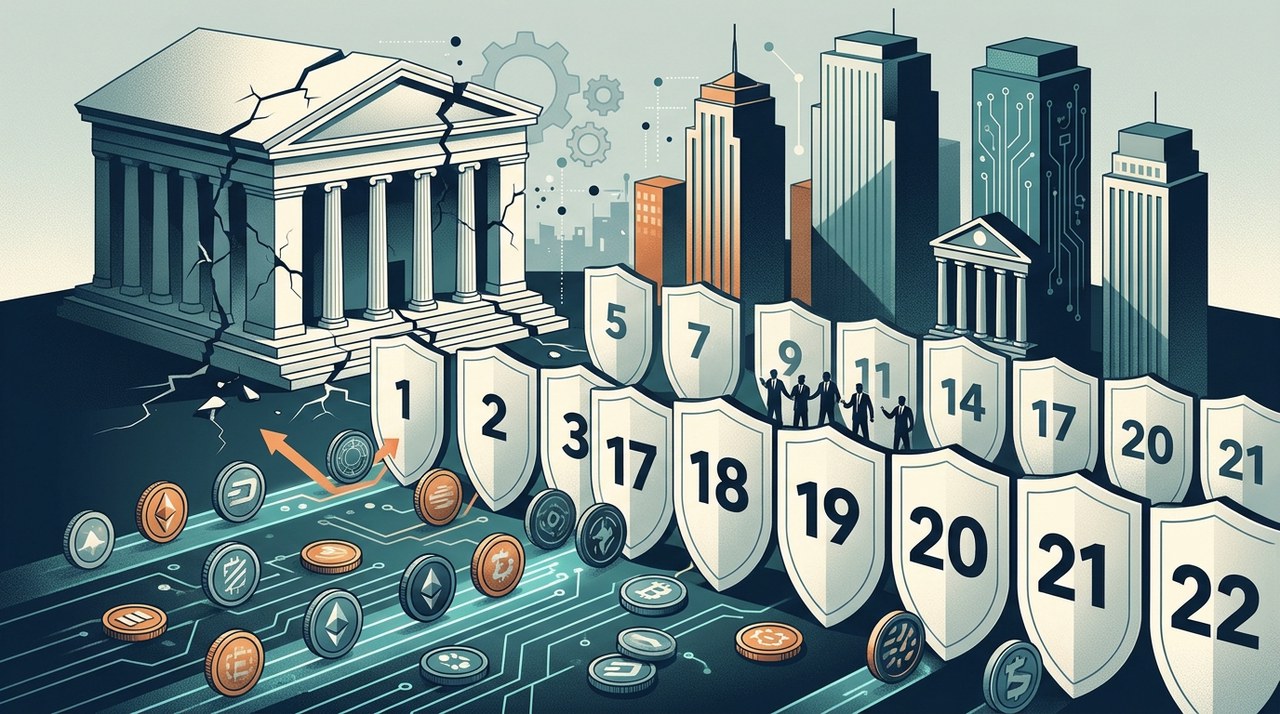
However, a growing number of corporate heavyweights are putting on the brakes. Six more major companies have formally objected to having their shares tokenized on the blockchain.
This latest pushback brings the total number of corporate holdouts to 22. Wall Street's ambitious experiment with 24/7 stock trading is hitting a major speed bump.
The Latest Companies to Say No
According to regulatory documents obtained by Reuters on Friday, banking giant Wells Fargo, software creator Intuit, and chip designer Arm Holdings are among the six latest companies to object.
When asked for a comment, a Wells Fargo spokesperson declined to speak with Reuters. Representatives for both Arm and Intuit did not immediately provide responses.
These six new objections build on a previous wave of pushback seen earlier in the week, growing the total count from 16 to 22.
A Who's Who of Corporate America Opting Out
The list of companies resisting this tokenization push reads like an index of the world's most powerful corporations.
In an October 19 regulatory update, several major household names joined the opposition movement:
- Microsoft
- Alphabet (Google's parent company)
- Goldman Sachs
- Qualcomm
- Caterpillar
- McDonald's
- Western Digital
Those firms added their names to an initial group that had already raised objections earlier. That original group included Broadcom, Verizon, UnitedHealth Group, CoreWeave, Rocket Lab, AppLovin, Cerebras Systems, Applied Digital, and Applied Optoelectronics.
What Is OKXICE and How Does Tokenization Work?
To understand why companies are pushing back, it helps to look at how OKXICE operates.
OKXICE is a joint project between popular cryptocurrency exchange OKX and Intercontinental Exchange (ICE). ICE happens to be the parent company of the New York Stock Exchange (NYSE).
Their goal was to modernize equity markets by offering blockchain-based tokens that represent real shares of stock. Under their proposed design, the mechanics look like this:
- Real Shares in Backup: Every digital token would be backed 1:1 by actual stock held through a licensed broker-dealer.
- Shareholder Protections: Investors holding tokens would still keep their regular dividend and voting rights.
- Blockchain Infrastructure: Trading would happen on OKX's X Layer blockchain using permissioned UniswapUNI+3.30% v4 liquidity pools.
- Stablecoin Settlement: Transactions would settle instantly using digital stablecoins instead of standard cash.
The SEC Rule That Gives Companies a Veto
In September, the U.S. Securities and Exchange Commission (SEC) created a temporary regulatory framework. This allowed qualified platforms to run tokenized stock markets with certain temporary exemptions.
OKXICE initially planned to tokenize shares for 63 major publicly traded companies under this new system.
However, the SEC included a critical safeguard for corporations. Platforms must notify public companies before tokenizing their shares, and companies retain the right to formally object and block the listing.
Why Are Companies Hesitant?
Why would companies turn down round-the-clock trading for their investors?
Industry experts explain that objecting to OKXICE does not necessarily mean companies dislike blockchain technology entirely. Instead, it comes down to control and brand management.
Corporations care deeply about where and how their shares trade. They are naturally cautious about having their equity listed on third-party crypto platforms that they do not directly oversee.
While digital tokenization offers innovative trading hours, blockchain networks also present unique operational considerations that corporate legal teams evaluate carefully.
Andrew Cuomo Weighs In on Corporate Pushback
Former New York Governor Andrew Cuomo, who serves on OKX's board and co-chairs the OKXICE initiative, spoke about the situation during an October 20 press conference.
Cuomo described the SEC's framework as a learning process where adoption will naturally happen in waves.
"There'll be other companies that say: I want to be the first in the pool," Cuomo told reporters.
He argued that traditional stock market operating hours no longer match how global investors manage money today.
"This is a 24-seven world," Cuomo declared.
Cuomo explained that tokenization could eventually expand access to American equities for international buyers. Still, he acknowledged that corporate participation depends on building trust in the market infrastructure.
Interestingly, Cuomo has noted his interest in crypto dates back to 2011. Today, he continues working with OKX as they roll out consumer safety measures, such as their recent $500,000 security shield.
What Lies Ahead for Tokenized Assets?
The growing list of 22 company objections shows that technology and regulatory approvals are only part of the equation.
The real challenge for crypto platforms is proving to traditional executives that tokenized trading is secure, orderly, and beneficial for their shareholders.
Until exchanges win over corporate leadership, widespread 24/7 tokenized stock trading will remain an evolving experiment rather than standard practice.
Latest blog posts
NY Seeks $1.37B From Fled Crypto Founders
New York Attorney General Letitia James is demanding $1.37 billion from Nova Tech founders who fled after preying on religious prayer groups.


Stellar Hosts Historic U.S. Debt Backed Repo Transaction
Ascend Markets and M1X Global executed a historic short-term loan backed by U.S. Treasuries on the Stellar network for less than a cent in total fees.
|


 +2
Shiba Inu Exchange Netflow Hits 77 Billion SHIB
Shiba Inu exchange netflow jumped 4% to over 77 billion SHIB in 24 hours, pointing to increased exchange supply while price briefly rebounded.
|