บทความ
Eclipse (ES) โปรเจกต์ Layer 2 สะพานเชื่อมความเร็วระดับ Solana สู่ความปลอดภัยของ Ethereum
ในโลกของบล็อกเชนที่ผู้ใช้งานมักจะต้องเลือกระหว่าง “ความปลอดภัยสูง” ของ Ethereum หรือ “ความเร็วที่เร็วปานสายฟ้า” ของ Solana แต่จะดีกว่าไหมถ้าเราได้ทั้งสองอย่าง? นี่คือเหตุผลที่ Eclipse (ES) ถูกสร้างขึ้นมา ทั้งยังเป็น Layer 2 (L2) รายแรกที่นำความเร็วของ Solana มาไว้บนระบบนิเวศของ Ethereum
Eclipse คืออะไร?
Eclipse คือบล็อกเชนแบบ “Modular Layer 2” ที่ออกแบบมาเพื่อแก้ปัญหาการขยายตัวของระบบ ในขณะที่บล็อกเชนทั่วไปพยายามทำทุกอย่าง (ประมวลผล, รักษาความปลอดภัย, จัดเก็บข้อมูล) บนเครือข่ายเดียว แต่ Eclipse กลับแยกส่วนงานเหล่านี้ออกจากกัน เน้นไปที่การประมวลผลธุรกรรมนอกเครือข่ายหลักแล้วค่อยส่งข้อมูลกลับไปบันทึกบน Ethereum เพื่อความปลอดภัยสูงสุด
เทคโนโลยีและคุณสมบัติเด่น
สถาปัตยกรรมของ Eclipse ถูกนิยามว่าเป็น “ส่วนผสมที่ลงตัวที่สุด” เพราะเลือกดึงจุดแข็งของแต่ละเทคโนโลยีมาใช้งาน
– Solana Virtual Machine (SVM): Eclipse ไม่ได้ใช้ซอฟต์แวร์ของ Ethereum แต่ใช้ SVM ของ Solana ในการประมวลผล ทำให้สามารถทำธุรกรรมแบบคู่ขนาน (Parallel Processing) ได้รวดเร็วถึง 9,000+ TPS (ธุรกรรมต่อวินาที)
– Ethereum ในเรื่องความปลอดภัย: แม้จะประมวลผลเร็วเหมือน Solana แต่ข้อมูลสุดท้ายจะถูกบันทึกบน Ethereum ทำให้มั่นใจได้ว่าสินทรัพย์ของคุณจะปลอดภัยภายใต้เครือข่ายที่มีเสถียรภาพ
– Celestia เพื่อการจัดเก็บข้อมูล: ช่วยทำให้ค่าธรรมเนียม (Gas Fee) ถูกลงจนเกือบเป็นศูนย์ โดย Eclipse ใช้ Celestia ในการจัดเก็บข้อมูลธุรกรรม ซึ่งช่วยลดภาระของเครือข่ายได้อย่างมหาศาล
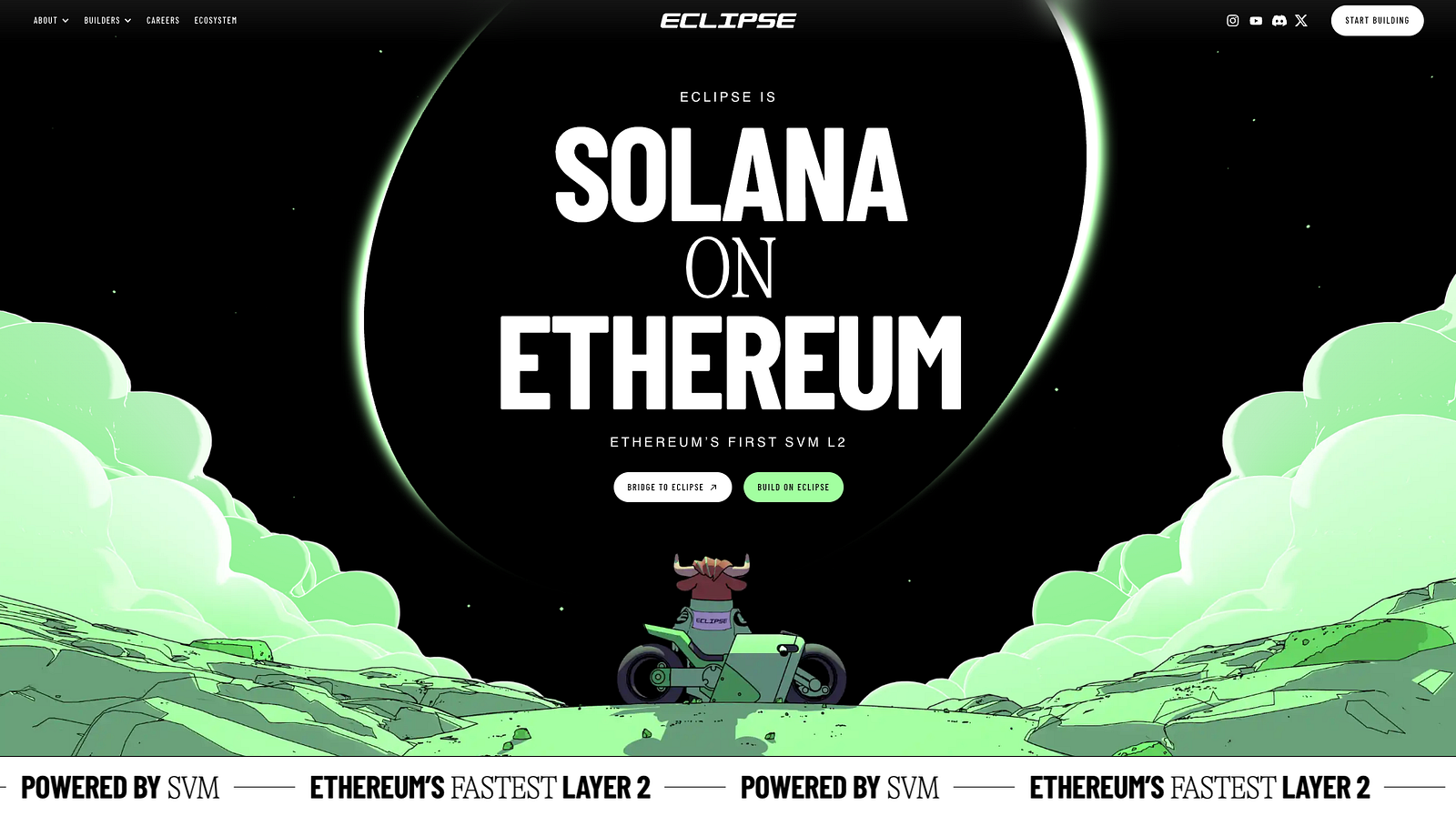
ผู้ก่อตั้งและทีมงาน
Eclipse ก่อตั้งในปี 2022 โดย Neel Somani อดีตนักเทรด Quant Trader และวิศวกรซอฟต์แวร์ ผู้มองเห็นความจำเป็นในการเพิ่มขีดความสามารถของ Ethereum โครงการนี้ได้รับความไว้วางใจจากนักลงทุนระดับโลกอย่าง Polychain Capital และ Placeholder โดยระดมทุนไปได้มากกว่า 65 ล้านดอลลาร์
ต่อมาในกลางปี 2024 Vijay Chetty ผู้เชี่ยวชาญที่มีประสบการณ์จาก Uniswap และ BlackRock ได้ก้าวขึ้นมารับตำแหน่ง CEO เพื่อนำทัพ Eclipse เข้าสู่ช่วงเปิดตัว Mainnet และขยายระบบนิเวศให้เติบโต
โทเคน ES คืออะไร?
โทเคน ES เป็น Native Token ของโปรโตคอล Eclipse ทำหน้าที่หลายประการไม่เพียงแต่ใช้เป็นค่าแก๊ส (Gas Fee) และด้านการกำกับดูแล (Governance) แต่ยังมีกลไกที่ออกแบบมาเพื่อรักษามูลค่าในระยะยาว เพื่อขับเคลื่อน “เศรษฐกิจของ Eclipse” (Eclipse Economy):
– Gas Token: ใช้เป็นค่าธรรมเนียมในการทำธุรกรรมบนเครือข่าย Eclipse ผ่านระบบ Paymaster ของตัวเอง
– Decentralized Governance: ผู้ถือเหรียญสามารถมีส่วนร่วมในการตัดสินใจสำคัญ เช่น การอัปเกรดโปรโตคอล หรือการกำหนดอัตราส่วนแบ่งรายได้จาก MEV (Maximal Extractable Value)
– Staking & Economic Sharing: สามารถนำเหรียญไป Stake ให้กับแอปพลิเคชันต่าง ๆ เพื่อรับส่วนแบ่งรายได้หรือรางวัลจากการปล่อยเหรียญ (Emissions)
– Custom Sequencing: แอปพลิเคชันที่ได้รับการโหวตหรือมีการ Stake เหรียญให้สูงสุด อาจได้รับสิทธิ์พิเศษในการกำหนดกฎการจัดเรียงธุรกรรม (Sequencing Rules) ของตัวเอง
– Fraud Proof Bonds: ในอนาคตอาจใช้เป็นเงินประกัน (Bonds) สำหรับผู้ที่เข้ามาตรวจสอบและโต้แย้งธุรกรรมที่ไม่ถูกต้อง (Fraud Proof) เพื่อรับรางวัล
Tokenomics และการจัดสรร (Allocation)
จำนวนเหรียญ ES ทั้งหมดถูกกำหนดไว้คงที่ที่ 1,000,000,000 ES โดยมีการจัดสรรสัดส่วนดังนี้
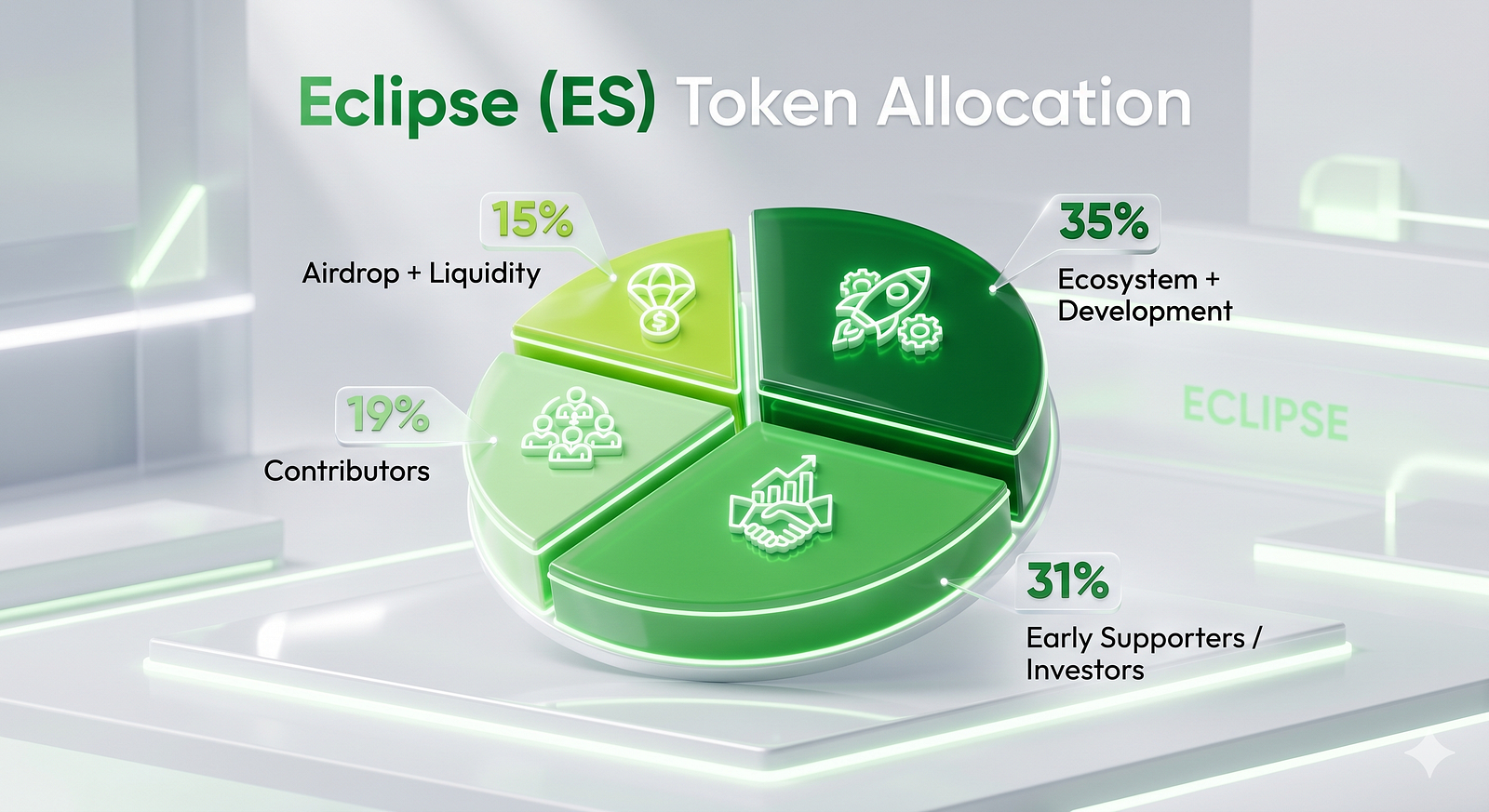
– Ecosystem + Development (35%): ใช้สำหรับสนับสนุนนักพัฒนาและโครงการวิจัย R&D เพื่อขยายระบบนิเวศ รวมถึงเป็นทุนสำรองของมูลนิธิ (Foundation) สำหรับการดำเนินงานในระยะยาว
– Early Supporters / Investors (31%): จัดสรรให้กลุ่มผู้สนับสนุนและนักลงทุนในช่วงเริ่มต้นที่ให้ทุนพัฒนาโครงการ มีกำหนดล็อกเหรียญ (Lockup) นาน 3 ปี เพื่อให้สอดคล้องกับการเติบโตของโครงการ
– Contributors (19%): สำหรับทีมงานชุดปัจจุบันและอนาคตที่สร้างโปรโตคอลมาตั้งแต่เริ่มต้น มีการล็อกเหรียญนาน 3 ปี และทยอยปลดล็อก (Vesting) จนครบ 4 ปี เพื่อให้ทีมงานมุ่งมั่นกับโครงการในระยะยาว
– Airdrop + Liquidity (15%): Airdrop: แบ่งเป็นซีซันแรก 6.10% (แจกจ่ายแล้ว) และสำรองไว้สำหรับซีซันถัดไปอีก 4.00% Liquidity: จัดสรรให้ผู้ดูแลสภาพคล่อง (Market Makers) 1.46% และกระดานเทรด (Exchanges) 2.01% DeFi Emissions: อีก 1.43% ใช้เป็นรางวัลเพื่อดึงดูดสภาพคล่อง (TVL) เข้ามาในระบบ DeFi
ข้อมูลน่าสนใจด้านราคาของ ES
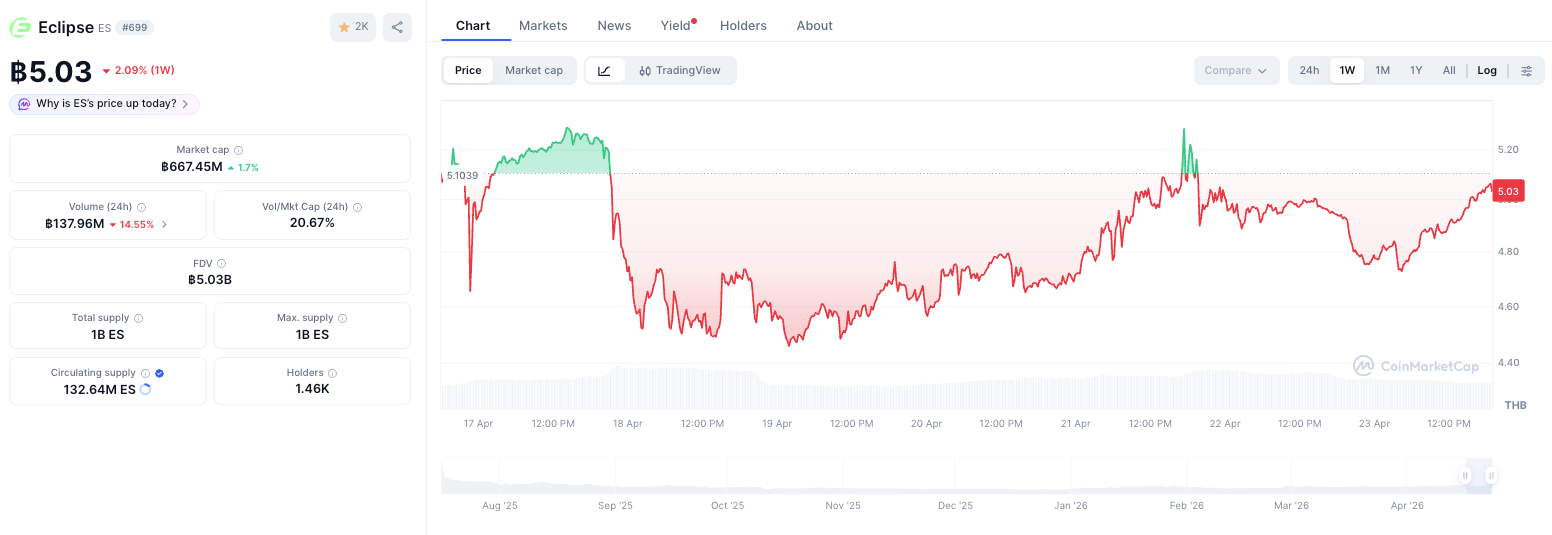
ข้อมูลจากเว็บไซต์ CoinMarketCap เมื่อวันที่ 23 เม.ย. 2026 เหรียญ ES มีมูลค่าตามราคาตลาด (Market cap) ที่ 20,620,672.47 ดอลลาร์สหรัฐฯ หรือประมาณ 667,456,274.07 บาท
ณ เวลาที่เขียนบทความนี้ เหรียญ ES ซื้อขายกันอยู่ที่ราคาประมาณ 0.02527 ดอลลาร์ หรือประมาณ 0.1554 บาทต่อ 1 ESโดย ES เคยทำราคาสูงสุด (All-time high) ที่ 0.7107 ดอลลาร์ หรือประมาณ 23 บาท ต่อ 1 ES เมื่อวันที่ 16 กรกฎาคม 2025
เช็กราคาเหรียญได้ที่ Bitkub
อ้างอิง: Eclipse Official Website, CoinMarketCap
— — — — — — — — — —
คำเตือน:
-คริปโทเคอร์เรนซีและโทเคนดิจิทัลมีความเสี่ยงสูง ท่านอาจสูญเสียเงินลงทุนได้ทั้งจํานวน โปรดศึกษาและลงทุนให้เหมาะสมกับระดับความเสี่ยงที่ยอมรับได้
-ผลตอบแทนของสินทรัพย์ดิจิทัลในอดีตหรือผลการดําเนินงานในอดีต มิได้เป็นสิ่งยืนยันถึงผลตอบแทน ของสินทรัพย์ดิจิทัลหรือผลการดําเนินงานในอนาคต
— — — — — — — — — —
หากคุณยังเป็นมือใหม่ ค้นหาข้อมูลเพิ่มเติมได้ในบทความ “แหล่งความรู้ มือใหม่หัดเทรดคริปโต เริ่มต้นที่นี่” แล้วมาเริ่มต้นเทรดได้วันนี้ที่ Bitkub Exchange → คลิกสมัครเลย
— — — — — — — — — —
Eclipse (ES): The Layer 2 Project Bridging Solana’s Speed with Ethereum’s Security
In the rapidly evolving world of blockchain, users often face a trade-off: the robust security of Ethereum or the lightning-fast performance of Solana. Eclipse (ES) has emerged to eliminate this dilemma. As the first modular Layer 2 (L2) solution, Eclipse integrates Solana’s high-performance execution environment directly into the Ethereum ecosystem.
What is Eclipse (ES)?
Eclipse is a modular Layer 2 blockchain designed to solve the “blockchain trilemma” of scalability, security, and decentralization. Unlike monolithic blockchains that handle all tasks on one chain, Eclipse unbundles these functions. It processes transactions off-chain and settles them on Ethereum, ensuring the network remains both fast and incredibly secure.
Eclipse Technology: The Best of Both Worlds
The architecture of Eclipse is often called the “ultimate modular stack” because it utilizes the strengths of three industry leaders:
– Solana Virtual Machine (SVM) for Speed: By using the SVM, Eclipse can execute transactions in parallel. This allows the network to reach speeds of 9,000+ TPS, significantly outperforming traditional Ethereum-based L2s.
– Ethereum for Security: Eclipse settles all transactions on Ethereum. This ensures that your assets are protected by the most decentralized and secure smart contract layer in existence.
– Celestia for Data Availability: To keep gas fees near zero, Eclipse uses Celestia to store transaction data. This modular approach ensures the network can scale without the high costs associated with on-chain data storage.
The Visionaries: Founders and Team
Founded in 2022 by Neel Somani, a former Quant Trader and software engineer, Eclipse was born from a vision to scale Ethereum without compromise. The project is backed by $65 million in funding from heavyweights like Polychain Capital and Placeholder.
In 2024, the project welcomed Vijay Chetty as CEO. With a background at Uniswap and BlackRock, Chetty is leading the charge toward a “Giga-scale” future for the Eclipse Mainnet.
What is the ES Token? Utility and Use Cases
The ES token is the native utility and governance token of the Eclipse protocol. It is designed to drive the “Eclipse Economy” through several key functions:
– Gas Fees: ES is the primary currency used to pay for transactions on the network.
– Decentralized Governance: Holders can vote on protocol upgrades and MEV (Maximal Extractable Value) redistribution rates.
– Staking Rewards: Users can stake ES to support network applications and earn a share of protocol emissions.
– Custom Sequencing: Large stakers can gain the right to define specific sequencing rules for their applications.
– Fraud Proof Bonds: In the future, ES will be used as collateral for “Fraud Proof Heroes” who secure the network against invalid transactions.
ES Tokenomics and Allocation
The total supply of ES is fixed at 1,000,000,000 (1 billion) tokens. The allocation is strategically designed for long-term sustainability:
– Ecosystem + Development (35%): Supports R&D, developer grants, and Foundation reserves.
– Early Supporters / Investors (31%): Allocated to early backers with a 3-year lockup period.
– Contributors (19%): Reserved for the core team with a 3-year lockup and 4-year vesting schedule.
– Airdrop + Liquidity (15%):
Airdrops: 6.10% for Season 1 (Live) and 4.00% for future seasons.
Market Liquidity: Distributed among exchanges and market makers.
DeFi Incentives: 1.43% to attract Total Value Locked (TVL) via emissions.
Interesting Price Data for ES
According to data from CoinMarketCap as of April 23, 2026, the Eclipse (ES) token has a Market Capitalization of $20,620,672.47 USD, or approximately ฿667,456,274.07 THB.
At the time of writing this article, the ES token is trading at approximately $0.02527 USD, or about ฿0.1554 THB per 1 ES. ES previously reached its All-time high (ATH) of $0.7107 USD, or approximately ฿23 THB per 1 ES, on July 16, 2025.
Check real-time cryptocurrency prices today at Bitkub
Source: Eclipse Official Website, CoinMarketCap
— — — — — — — — — —
Disclaimer:
- Cryptocurrency and digital tokens involve high risks; investors may lose all investment money and should study information carefully and make investments according to their own risk profile.
-Past Returns does not guarantee future returns/performance.
— — — — — — — — — —
Start your crypto trading journey today! If you’re new to the space, get all the information you need in our guide, “Crypto Trading for Beginners: Start Here.”
Ready to trade? Sign up now on Bitkub Exchange → Click to register!
— — — — — — — — — —
ที่มา:
Medium