บทความ
เก็บเงินสด VS เงินลงทุน แบบไหนดีกว่ากัน? สรุปข้อดี-ข้อเสียฉบับมือใหม่
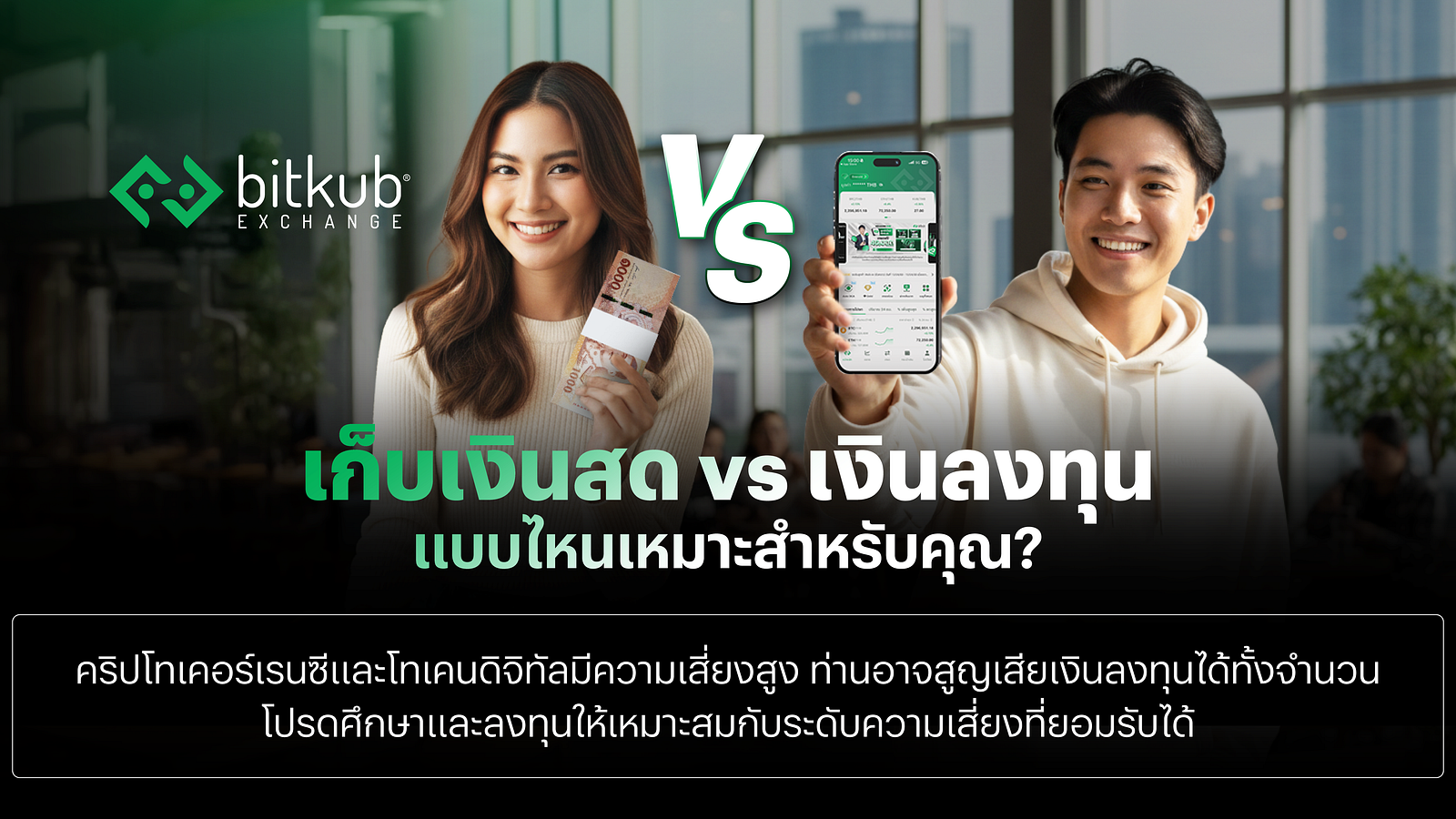
หลายคนอาจสงสัยว่า ทำไมเราควรเข้าใจความแตกต่างระหว่าง “การเก็บเงินสด” กับ “การนำเงินไปลงทุน” เพราะถ้าหากเราวางเงินไว้ผิดที่ อาจเป็นการปิดกั้นโอกาสให้เงินงอกเงย หรืออาจทำให้มูลค่าของเงินค่อย ๆ ลดลงโดยที่เราไม่รู้ตัว การรู้ข้อดีและข้อเสียของเงินทั้งสองรูปแบบ จะเป็นเหมือนเข็มทิศที่ช่วยให้เราออกแบบแผนการเงินที่ทั้ง “ปลอดภัย” เมื่อเกิดเหตุฉุกเฉิน และ “เติบโต” ได้ในอนาคต
การถือครองเงินสด (Cash Holding)
ข้อดี มูลค่าของเงินสดไม่เปลี่ยนแปลง ซึ่งอาจจะไม่ได้รับผลกระทบจากความผันผวนของตลาดทุนหรือตลาดสินทรัพย์ดิจิทัล โดยมีข้อได้เปรียบสูงสุดคือ “สภาพคล่อง” ที่สามารถนำไปใช้จ่ายสินค้า บริการ หรือชำระหนี้ได้ทันทีตามกฎหมาย จึงเหมาะสม อย่างยิ่งสำหรับการจัดเตรียมเป็นเงินสำรองฉุกเฉินเพื่อรองรับเหตุการณ์ที่ไม่คาดฝัน
ข้อเสีย ความเสี่ยงหลักของเงินสด คือ “สภาวะเงินเฟ้อ” (Inflation) เมื่อระดับราคาสินค้าในท้องตลาดปรับตัวสูงขึ้น อำนาจการซื้อของเงินจำนวนเดิมจะลดลง แม้ข้อมูลจาก TPSO จะระบุว่า อัตราเงินเฟ้อทั่วไปของเดือนมีนาคม 2569 ลดลง 0.08% แต่เมื่อเข้าไตรมาสที่ 2 ของปีนี้ มีแนวโน้มที่จะเพิ่มขึ้นเป็น 1.5% — 2.5% ซึ่งแสดงถึงความเสี่ยงของสถาวะเงินเฟ้อที่อาจจะเกิดขึ้นได้ นอกจากนี้ ด้วยสภาพคล่องที่สูงและการเข้าถึงที่ง่ายดาย อาจส่งผลให้ผู้ถือเงินสดขาดวินัยและเกิดพฤติกรรมการใช้จ่ายเกินความจำเป็นได้
การนำเงินไปลงทุน (Investment)
“การกระจายเงินทุน” (Asset Allocation) คือ การจัดสรรเงินลงทุนไปในสินทรัพย์ที่หลากหลายประเภทให้สอดคล้องกับเป้าหมาย ระดับความเสี่ยงที่ยอมรับได้ และระยะเวลาการลงทุน หากนักลงทุนสามารถจัดสัดส่วนได้อย่างเหมาะสม วิธีนี้จะช่วยกระจายและลดความเสี่ยงโดยรวมได้อย่างมีประสิทธิภาพ
ข้อดี การลงทุน คือ กลไกสำคัญในการสร้างความมั่งคั่ง และปกป้องเงินทุนจากสภาวะเงินเฟ้อ ผ่านผลตอบแทนในรูปแบบต่าง ๆ เช่น ดอกเบี้ย เงินปันผล หรือส่วนต่างราคา ยิ่งมีระยะเวลาการลงทุนที่ยาวนาน โอกาสที่จะได้ “ผลตอบแทนทบต้น” (Compound Interest) จะยิ่งทวีคูณมูลค่า
ข้อเสีย มูลค่าของสินทรัพย์การลงทุนมีความผันผวนตามปัจจัยทางเศรษฐกิจและกลไกตลาด ทำให้อาจเผชิญสภาวะขาดทุนได้ในบางช่วงเวลา นอกจากนี้ สินทรัพย์การลงทุนหลายประเภทจำเป็นต้องใช้ระยะเวลาในการแปลงสภาพกลับมาเป็นเงินสด จึงไม่ตอบโจทย์สำหรับการใช้จ่ายแบบเร่งด่วน

สรุป
การบริหารเงินที่มีประสิทธิภาพที่สุดไม่ใช่การเลือกถือครองเพียง “เงินสด” หรือทุ่มไปกับ “การลงทุน” อย่างใดอย่างหนึ่ง แต่คือการสร้างสมดุลระหว่างสองสิ่งนี้ เงินสดเปรียบเสมือน “เกราะป้องกัน” ที่มอบความอุ่นใจและสภาพคล่องในยามวิกฤต ในขณะที่การลงทุนเปรียบเสมือน “เครื่องยนต์” ที่ช่วยขับเคลื่อนเงินทุนของคุณให้เติบโต และสามารถสร้างความมั่งคงได้ โดยมี “การจัดสรรสินทรัพย์” (Asset Allocation) เป็นกุญแจสำคัญที่จะนำไปสู่ความสำเร็จทางการเงิน เพื่อสร้างรากฐานที่ทั้ง “ปลอดภัย” ในวันนี้ และ “เติบโต” อย่างยั่งยืนในอนาคต
อ้างอิง: Krungsri The COACH — ถือเงินสดไว้ หรือเอาไปลงทุน แบบไหนดีกว่ากันนะ?, Krungsri The COACH — รู้จัก Asset Allocation และ Rebalancing กับเทคนิคปรับพอร์ตสู้ตลาดผันผวน, TPSO
— — — — — — — — — —
คำเตือน:
-คริปโทเคอร์เรนซีและโทเคนดิจิทัลมีความเสี่ยงสูง ท่านอาจสูญเสียเงินลงทุนได้ทั้งจํานวน โปรดศึกษาและลงทุนให้เหมาะสมกับระดับความเสี่ยงที่ยอมรับได้
-ผลตอบแทนของสินทรัพย์ดิจิทัลในอดีตหรือผลการดําเนินงานในอดีต มิได้เป็นสิ่งยืนยันถึงผลตอบแทน ของสินทรัพย์ดิจิทัลหรือผลการดําเนินงานในอนาคต
— — — — — — — — — —
หากคุณยังเป็นมือใหม่ ค้นหาข้อมูลเพิ่มเติมได้ในบทความ “แหล่งความรู้ มือใหม่หัดเทรดคริปโต เริ่มต้นที่นี่” แล้วมาเริ่มต้นเทรดได้วันนี้ที่ Bitkub Exchange → คลิกสมัครเลย
— — — — — — — — — —
Should You Save Cash or Invest? Pros and Cons Explained for Beginners
Most people think saving and investing are the same thing, but they’re actually worlds apart. If you’re just letting your money sit in the wrong place, you’re not just missing out on growth — you’re actually watching its value slip away without even knowing it. Think of this as your financial GPS: we’re going to weigh the pros and cons so you can stay safe for a rainy day while still letting your money work hard for your future.
Save Cash
— Pros: The value of cash remains unchanged and is generally unaffected by the volatility of capital markets or digital asset markets. Its greatest advantage is “liquidity,” meaning it can be immediately used to pay for goods, services, or settle debts. Therefore, it is highly suitable for preparing an emergency fund to handle unexpected events.
— Cons: The main risk of holding cash is “inflation.” When the general price level of goods in the market rises, the purchasing power of the same amount of money decreases. Although data from the Trade Policy and Strategy Office (TPSO) indicates that the headline inflation rate for March 2026 decreased by 0.08%, it is expected to rise to 1.5% — 2.5% as we enter the second quarter of this year, highlighting the potential risk of inflation. Additionally, high liquidity and easy access might lead cash holders to lack financial discipline and overspend unnecessarily.
Investment
“Asset Allocation” is the strategy of distributing investment funds across various asset classes to align with your financial goals, risk tolerance, and investment horizon. If investors can appropriately balance this proportion, this method effectively helps diversify and reduce overall risk.
— Pros: Investing is a crucial mechanism for building wealth and protecting capital from inflation through various forms of returns, such as interest, dividends, or capital gains. The longer the investment horizon, the higher the chance of generating “compound interest,” which exponentially multiplies the value of your money.
— Cons: The value of investment assets fluctuates based on economic factors and market mechanisms, meaning you may face losses during certain periods. Moreover, many types of investment assets require time to be liquidated or converted back into cash, making them unsuitable for urgent spending needs.
Conclusion
Managing your money isn’t an ‘either-or’ situation. You don’t have to choose between keeping cash and going all-in on the market; it’s all about finding that sweet spot between the two. Think of your cash as your shield. It’s there to keep you safe when life gets messy. Investing, on the other hand, is your growth engine. The secret sauce is Asset Allocation. It’s just a fancy way of saying: build a setup that keeps you sleeping soundly tonight while your wealth builds for tomorrow.
References: Krungsri The COACH — ถือเงินสดไว้ หรือเอาไปลงทุน แบบไหนดีกว่ากันนะ?, Krungsri The COACH — รู้จัก Asset Allocation และ Rebalancing กับเทคนิคปรับพอร์ตสู้ตลาดผันผวน, TPSO
— — — — — — — — — —
Disclaimer:
- Cryptocurrency and digital tokens involve high risks; investors may lose all investment money and should study information carefully and make investments according to their own risk profile.
-Past Returns does not guarantee future returns/performance.
— — — — — — — — — —
Start your crypto trading journey today! If you’re new to the space, get all the information you need in our guide, “Crypto Trading for Beginners: Start Here.”
Ready to trade? Sign up now on Bitkub Exchange → Click to register!
— — — — — — — — — —
ที่มา:
Medium