XT Exchange at 8: Why UX Will Drive Crypto Adoption

Focusing on the User Experience
On September 23, 2026, XT Exchange celebrated its eighth anniversary with a special X Space event titled 'Building for the NeXT Billion: What Can Crypto Make Possible?' Hosted by Theo, the live discussion brought together Arman Achmed, the Chief Operating Officer of XT Exchange, alongside market analysts and content creators Fisher, Mr. White, and DmiCota.
For years, people across the crypto industry have asked how to bring more people on-chain. But during this event, Arman Achmed suggested looking at things from a practical angle. Instead of asking how to teach people about complex code, he asked what people actually need to accomplish in their daily lives and where current financial tools fail them.
Why Understanding Crypto Isn't Enough
Arman pointed out that onboarding new people isn't about pitching a single feature to a single type of user. Different people have completely different needs. Some users are active traders looking for market movements. But many others just want to receive their salary, send money home to family across borders, protect their savings against local inflation, or access new investment options.
"Knowing how crypto works doesn't necessarily give you a reason to use it." — Arman Achmed
That distinction is crucial for exchange operators and software designers. Knowing how an engine works doesn't mean you want to drive the car unless it actually takes you where you need to go. Crypto services need to start with the user's ultimate goal and design backward. They must build simple interfaces so people can finish their tasks without needing to become technology experts.
Real-World Scenarios: The International Freelancer
To make this idea clearer, analyst Fisher shared a practical example. Imagine a freelancer living in Africa who works for clients located all over the globe. That freelancer doesn't care about complex blockchain vocabulary or technical protocols.
Instead, they care about three main practical questions:
- Did my payment arrive quickly?
- How much value was lost in transfer fees along the way?
- Can I easily spend this money after it arrives?
If a financial tool answers those three questions with a clear yes, the user will keep using it. The underlying tech stays safely hidden in the background, just like how people send emails without thinking about server protocols.
The Off-Ramp Challenge: Don't Leave Money Stranded
Creator DmiCota brought up another vital part of the puzzle: what happens at the end of a transaction. A stablecoin like USDT might solve the challenge of moving money across borders quickly. However, if the recipient faces a difficult cash-out process, the funds remain practically stranded.
A payment system is only useful if the person on the receiving end can actually use what they received. If the off-ramp is too hard, the initial transfer loses its value. That final step often determines whether the user stays or leaves.
Everyday Utility with XT Pay
Arman applied these ideas to XT Pay, describing how eligible users in supported markets can use USDT balances through participating merchant options. It turns digital tokens into a practical tool for everyday transactions.
When evaluating any stablecoin flow, Arman highlighted three core questions that platform operators must constantly address:
- What did it cost the user to acquire the digital asset initially?
- How much will it cost the recipient to convert or spend those funds?
- How long does it take before that money can actually be used in daily life?
Because merchant acceptance and local rules vary around the world, looking at the entire user journey matters far more than focusing on single headline features.
Understanding Tokenized Assets and RWAs
The panel also discussed tokenization and Real-World Assets (RWAs). Arman explained that any tokenized product should be judged by four main criteria:
- Minimum entry point for investors
- Eligibility and regional requirements
- Overall product usability
- Clear exit or redemption paths
For instance, a tokenized fund and a futures contract might track the exact same asset, but they offer completely different rights and serve different purposes for the user. On platforms offering RWA zones and Traditional Finance (TradFi) futures, the primary goal isn't just releasing new instruments—it is making sure users understand their options and can act on them easily.
Measuring Real Growth vs. Marketing Hype
From a market perspective, Mr. White noted that tracking stablecoin inflows, spot trading activity, and on-chain movements helps separate fresh liquidity from existing traders simply shuffling funds around.
DmiCota added a user behavior test to match: long-term retention happens when people return because a product solved a real problem, not because a temporary promo campaign caught their attention.
"It would be seeing more people come back because something worked for an ordinary need." — Arman Achmed
Looking Ahead to Crypto's Next Chapter
Founded in 2018, XT Exchange now serves over 12 million registered users across more than 200 countries and regions. The platform offers spot, margin, and futures trading, alongside TradFi market access, an RWA marketplace, and payment services via XT Pay.
As XT Exchange enters its ninth year under its 'Build the NeXT' initiative, the focus remains on building trust and broadening practical access. Winning the next wave of users won't come down to fancy slogans. It will belong to platforms that solve practical financial problems reliably, allowing the technology to fade into the background once the job is done.
Note: Digital asset returns in the past do not guarantee future returns. Digital assets involve market risks and price volatility. Users should review their risk tolerance before trading.
Latest blog posts



Ripple Prime Wins Major Honor at 2026 Hedgeweek US Awards
Ripple's institutional division, Ripple Prime, has been named Prime Broker of the Year: EMEA at the 2026 Hedgeweek US Awards.
|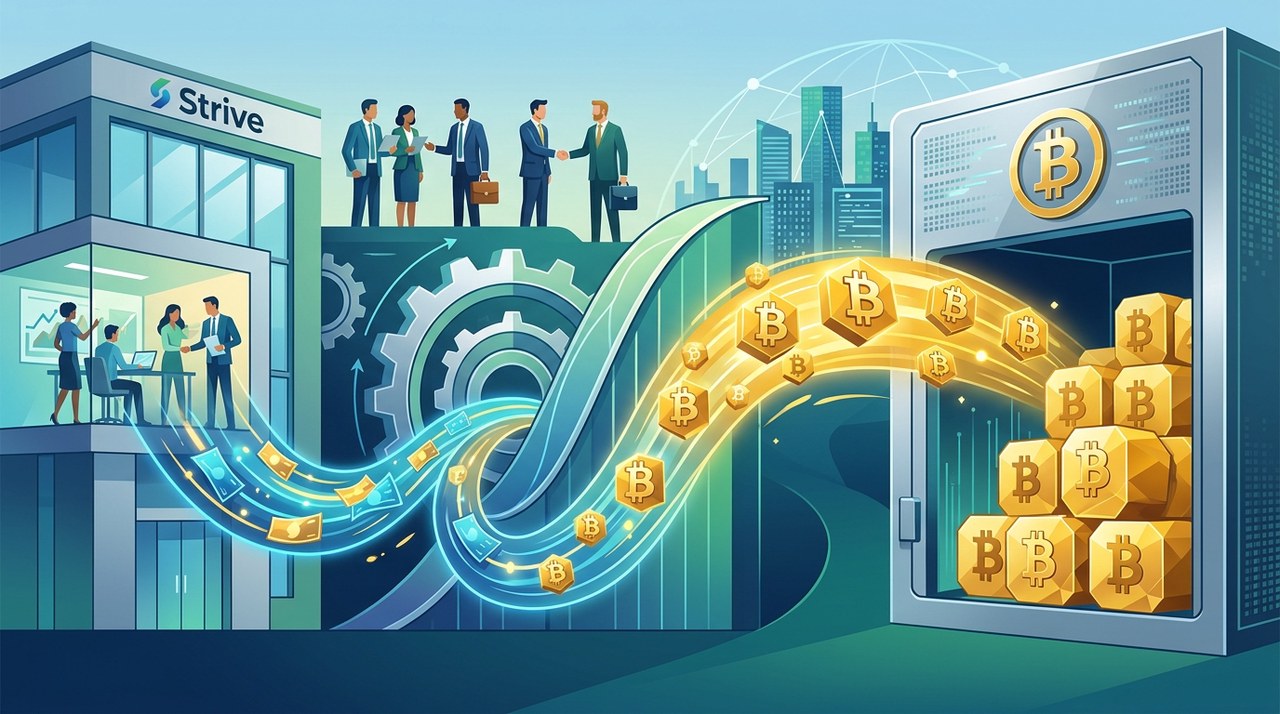


Strive Follows Strategy Playbook to Raise Cash for Bitcoin
Strive raised an estimated $55 million through its preferred stock in a single week, generating enough capital to purchase approximately 638 Bitcoin.
|
EU Chief Says Europe Can Guard Against Rogue AI Risks
Following recent safety incidents at OpenAI and Anthropic, an EU tech official emphasized that Europe has the tools to defend against uncontrolled AI agents.