
XRP Exchange Reserves Hit Yearly High: What It Means
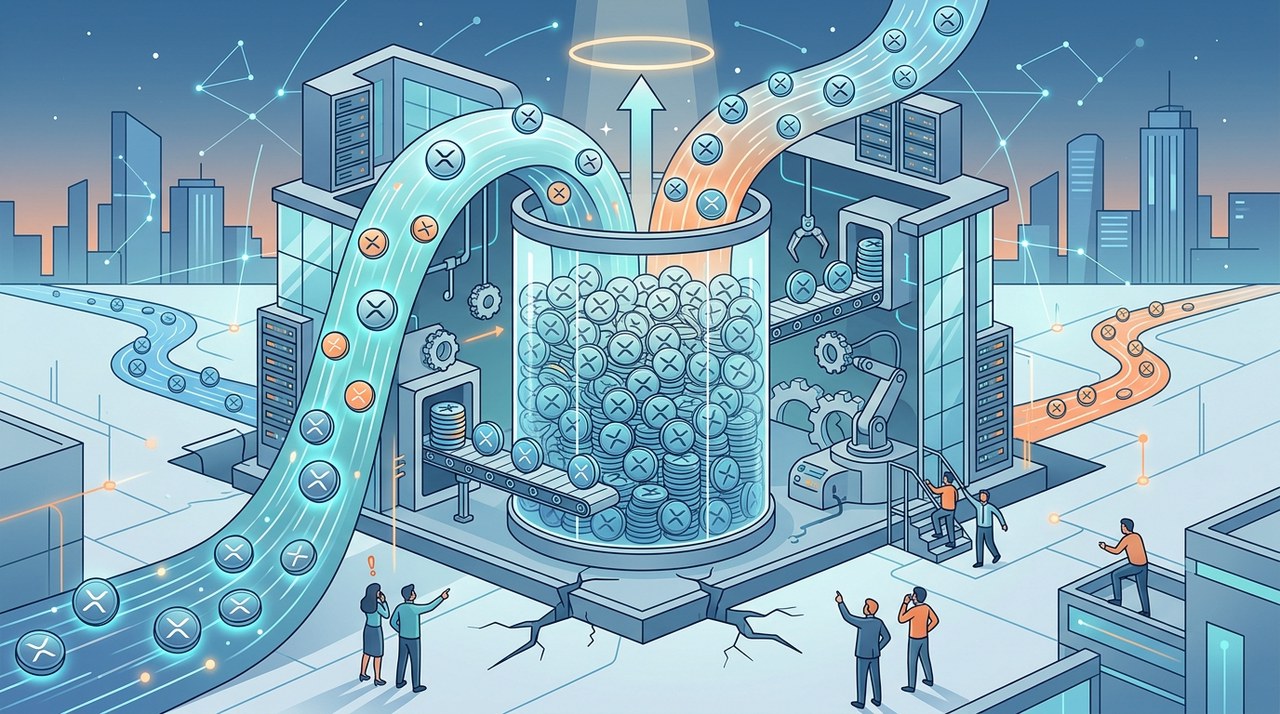
What Is Happening with XRPXRP+2.37% Right Now?
If you follow cryptocurrency markets, you might have noticed recent discussions surrounding XRP. Right now, token reserves stored on centralized trading platforms have reached a major annual milestone.
Data from analytics firm CryptoQuant reveals that XRP exchange reserves climbed to approximately 11.81 billion tokens. That places current exchange balances in the 99th percentile for the past year, meaning reserves are higher now than they have been almost all year long.
At the time of writing, XRP trades near $1.31. This comes after bouncing back from recent price lows between $1.25 and $1.29. However, short-term price movements in the crypto market remain highly volatile and subject to rapid change.
Before diving deeper into the numbers, it is always important to keep market history in perspective. Past performance of digital assets is not a guarantee of future returns. You can monitor live prices and trading history on the Bitkub XRP Market.
Understanding Exchange Reserves: The Supermarket Analogy
To make sense of why market participants care about exchange reserves, it helps to use a simple everyday analogy.
Imagine a local grocery store that sells fresh apples. If local farmers suddenly back up ten huge trucks and stack thousands of apple boxes right on the store display floor, what do you think customers will assume?
Most shoppers will expect that there are too many apples available. If buyers do not purchase them fast enough, the store manager might have to lower prices to sell them all before they spoil.
In the crypto world, centralized exchanges act like those store display floors. When investors transfer tokens from their private wallets onto exchange platforms, it usually signals an intent to trade or sell.
Therefore, when total exchange reserves hit 11.81 billion tokens, it shows that a massive supply of XRP is sitting on platform shelves, ready to be traded at a moment's notice.
A Closer Look: Binance vs. Other Centralized Exchanges
While the overall aggregate reserve figure sounds quite high, the underlying breakdown tells a more nuanced story.
Interestingly, Binance's own XRP reserves are sitting only in the 30th percentile of their one-year range. This means Binance itself is not overcrowded with XRP compared to its historical averages.
Instead, the massive buildup to the 99th percentile is concentrated across other centralized exchanges worldwide. This distribution is an important detail for several reasons:
- It shows that selling pressure is not originating from a single dominant platform.
- It suggests that holders across various global regions are moving funds onto exchanges.
- It highlights the need to analyze exchange metrics across the entire ecosystem rather than focusing on one venue.
The Recent Leverage Reset in the XRP Market
Alongside the rise in token deposits, the XRP market recently went through a significant reset in its derivatives trading sector.
During this period, XRP experienced a price pullback from roughly $1.52 down to $1.29 before finding a floor and stabilizing around $1.30 to $1.31.
What exactly happened behind the scenes during this move? Several key metrics explain the action:
- Binance Open Interest: Open interest fell by about 15.8% down to $453 million, showing a reduction in open futures contracts.
- Long Liquidations: Bullish traders holding leveraged long positions suffered roughly $25.7 million in liquidations over October 7 and October 8.
- Funding Rates: Funding rates turned negative across multiple days, indicating that speculative long bets were flushed out.
In simple terms, speculative traders who borrowed funds to bet on immediate price increases were cleared out of the market. Rather than rapidly rebuilding leveraged positions, traders took a step back to evaluate market conditions.
Could Rising Reserves Lead to a Deeper Sell-Off?
The big question on every trader's mind is whether this 11.81 billion token reserve will trigger a deeper price drop.
The answer depends on what holders decide to do with those deposited tokens. High exchange balances expand the total supply available for immediate sale, which historically increases the risk of short-term volatility or range-bound trading.
However, elevated reserves do not automatically guarantee a price decline. There are two primary paths these tokens could take:
- Path 1: Deposited for Selling — If holders begin executing market sell orders, the order books could be overwhelmed, putting downward pressure on prices.
- Path 2: Moved for Liquidity or Custody — If holders deposited tokens for collateral, staking, or institutional trading and later withdraw them into cold storage, the immediate threat of selling pressure fades.
Looking back at previous market cycles, leverage resets often clear away excess market noise. Once over-leveraged traders exit and circulating supply is absorbed by long-term buyers, prices have frequently established healthier bases.
Institutional Demand and Counterweight Factors
Even when exchange reserves are high, strong buyer demand can act as a powerful counterweight to potential selling pressure.
Institutional interest remains a critical factor to keep an eye on. Inflows into spot crypto investment products, institutional treasury allocations, and large-scale whale accumulation can absorb excess token supply.
If exchange net flows flip back into negative territory — meaning more tokens are being withdrawn than deposited — it would indicate that high-net-worth investors are pulling XRP into private cold storage.
Such withdrawals effectively shrink the active selling supply on trading platforms, providing support for market prices.
What Are Technical Analysts Seeing on the Charts?
Technical analysts are watching key price levels to gauge where XRP might head next.
Popular crypto analyst Ali Martinez recently highlighted a notable surge in on-chain transaction volume on the XRP Ledger near the $1.25 support zone. A sudden rise in on-chain volume near support often indicates that buyers are stepping in to accumulate tokens, potentially forming a local price bottom.
Looking ahead, analysts view potential price scenarios through a balanced lens depending on how market conditions evolve:
Under a bullish scenario, if buyer demand remains strong and XRP manages a sustained close above the $1.56 resistance level, some technical targets suggest a potential path toward $2.00 over the coming months. However, this relies on continued positive market sentiment and steady absorption of exchange supply.
Under a bearish scenario, if macroeconomic pressure or heavy exchange deposits lead to sustained selling, a breakdown below the key $1.25 support level could push prices lower toward the $1.00 support level.
In a neutral scenario, XRP may simply trade within a range between $1.25 and $1.56 while market participants wait for clearer signs from exchange flow data.
Final Thoughts: What Should Investors Watch Next?
The recent spike in XRP exchange reserves to 11.81 billion tokens highlights an important phase of market rebalancing.
While high reserves increase available trading supply, derivatives data shows that over-leveraged long positions have already been cleared out, reducing the risk of cascading liquidations.
As the market digests these developments, investors should monitor upcoming exchange reserve trends, funding rates, and volume levels near key support and resistance zones before making investment decisions.
Latest blog posts


SkyAI Liquidates Solana Treasury for $201M Buyback
SkyAI has sold its full Solana treasury holdings, building a $223.8 million cash reserve and launching a $201 million buyback through October 29.
|

Zerohash Launches Tool to Move Crypto Without Wallet Addresses
Zerohash has released AUTH, a new service allowing users to transfer digital assets without copying wallet addresses or selecting networks.
|
MrBeast Promotes Step App Without Crypto Features
YouTube star MrBeast is actively promoting the Step app, though the financial platform currently features no cryptocurrency functionality.
|