World ID Tackles Deepfake Fraud With New Banking Tools
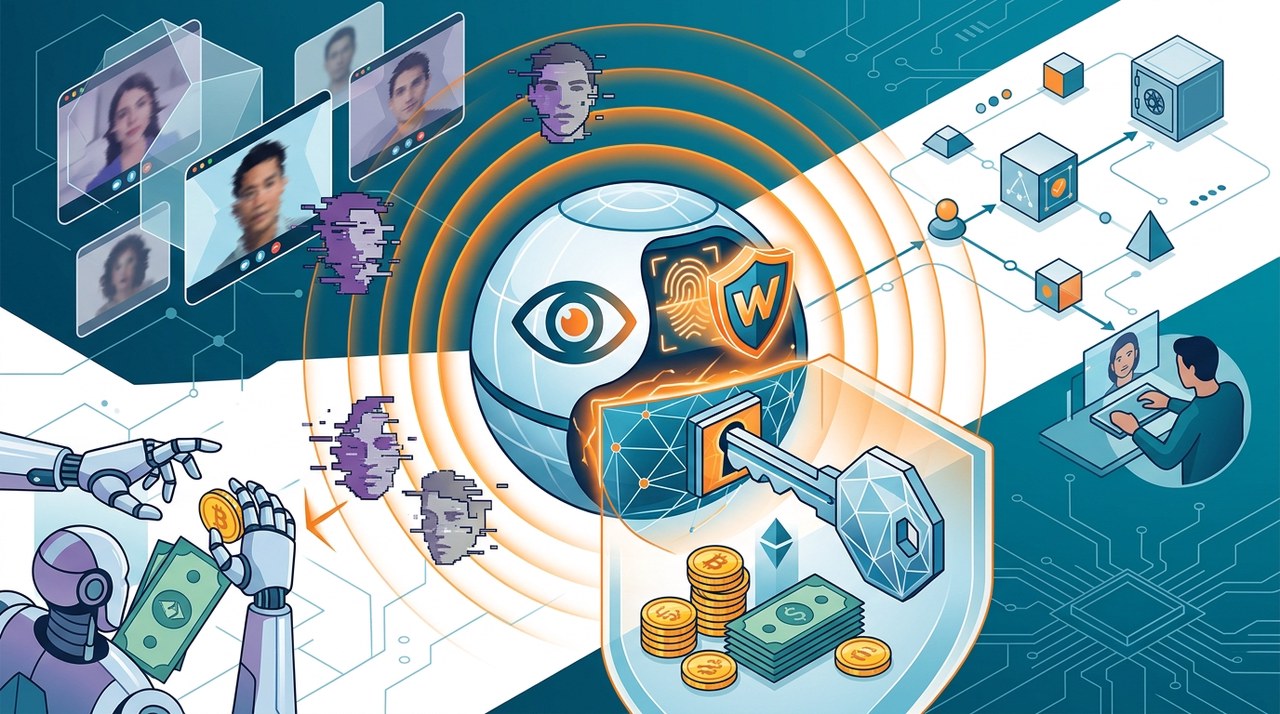
Stopping Deepfake Scams Before They Cost Millions
Imagine hopping on a video call with your boss and team, only to realize later that none of them were real people. That might sound like a scene from a science fiction movie, but it is already happening in the real world today.
World, the identity project co-founded by OpenAI Chief Executive Officer Sam Altman, has announced a new suite of security tools to help combat these high-tech scams. These tools allow banks and financial companies to confirm that an actual human is on the other end of a call.
To highlight why this security is so urgent, World pointed to a shocking case from 2024. An employee at the engineering firm Arup transferred $25.6 million after attending a video conference where every single other participant was an AI-generated deepfake.
Since that incident, fake video technology has become even more convincing. At the same time, autonomous AI agents are handling an increasing amount of financial transactions.
Introducing World ID for Zoom and AI Agents
To fix this growing trust issue, World is rolling out two major security features for businesses.
The first feature is World ID for Zoom. When people join a meeting, they can prove they are the exact same human verified by an Orb device connected to their account.
Users who clear these identity checks receive a small blue badge next to their name. Individual companies get to decide when and where to make this check mandatory.
World ID for Zoom is designed to protect sensitive, high-stakes conversations by proving that a real and unique human is present.
The second tool is called World ID for agents. This feature enables AI agents to carry special digital credentials delegated to them by a real person.
Chief Product Officer Tiago Sada explained that this system works like a digital power of attorney. Each user can assign credentials to only one trusted AI agent, which online merchants can then treat as that person's official digital alter ego.
Several major financial firms and venture capital funds have already joined as initial design partners. These include Bain Capital, OpenExchange, Outtake, Pantera Capital, and VanEck Funds.
How Verification and the Orb Hardware Work
How do team members complete these checks? Financial institutions working with World will keep physical Orb devices in their offices for staff members who need their irises scanned.
However, not every security check requires an eye scan. World uses three distinct verification levels depending on the required security level:
- Level 1 (Lowest): Uses standard official government identification documents.
- Level 2 (Middle): Adds basic verification checks for standard daily use.
- Level 3 (Proof of Human): Matches a live selfie directly against the encrypted Orb record.
Privacy remains a big concern for many people when dealing with eye scans. World emphasizes that the football-sized Orb device encrypts every scan immediately on the hardware itself.
Because of this encryption, World itself cannot read the scan data, and no central database of personal identities exists.
Tiago Sada compared public hesitation about iris scans to early skepticism around smartphone fingerprint scanners and facial recognition technology.
People understand you don't have to give Sam or any of us your photo... Everything is open source and auditable.
Competing Strategies in the AI Economy
Major technology firms currently hold differing views on how to handle automated AI traffic.
Companies like Amazon and JPMorgan have chosen to block automated bots completely. Sada argued that outright blocking could limit companies from participating in agentic commerce, where AI agents buy and sell goods for people.
On the other hand, web performance firm Cloudflare is pursuing a model similar to World. In August, Cloudflare launched an agent ID tool alongside a crypto wallet for AI agents.
Cloudflare Chief Strategy Officer Stephanie Cohen noted during their launch that automated bots should be viewed as a massive business opportunity rather than just a security threat.
WLD Token Performance and Market Reality
Despite these major corporate integrations and the Zoom partnership, the news did not trigger a major rally for World's native token, WLD.
At the time of writing, WLD was trading near $0.49. This marks a 0.7% decrease over 24 hours and a drop of over 11% across a seven-day period. On a monthly scale, however, the token has gained more than 14% over the past 30 days.
WLD remains nearly 96% below its all-time high of $11.74. Volatility is common for the token; back in June, it fell more than 10% to $0.34, even right after raising $52.5 million in funding to build out its identity infrastructure.
Crypto markets can move quickly in both directions. Readers can track real-time price updates on market platforms like bitkub.com/th/market/WLD. Past performance of digital assets is not an indicator of future returns.
Latest blog posts


XRP ETFs End 13-Week Streak as On-Chain Activity Slows
U.S. spot XRP ETFs recorded their first weekly net outflow in three months, alongside a sudden drop in XRP Ledger payment volume.
|

5 Key Macro Events That Could Move Bitcoin This Week
Bitcoin faces potential short-term volatility as Federal Reserve officials go quiet and major economic reports roll in.
|

 +2
Grayscale Research Lead Highlights ETH, SOL, and BNB
Grayscale research lead Zach Pandl suggests investors shouldn't sleep on Ethereum, Solana, and BNB Chain while traders chase newer crypto trends.
|